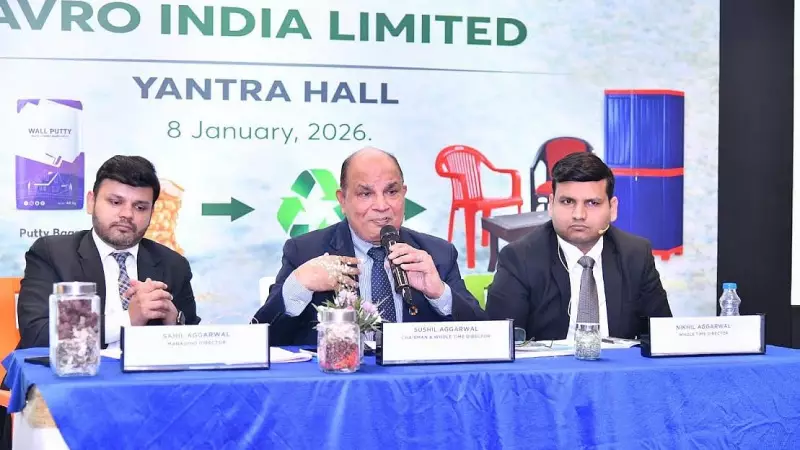
In a significant move to bolster India's sustainability infrastructure, Avro India Limited has unveiled ambitious plans to double its plastic recycling capacity. The company, a key player in rigid plastic packaging, is targeting the end of the current financial year, March 2025, to complete this major expansion.
Doubling Down on a Sustainable Future
The expansion project is set to increase Avro India's annual plastic recycling capability from the current 12,000 tonnes to 24,000 tonnes. This substantial investment underscores the company's commitment to the principles of a circular economy, where waste is transformed back into valuable resources. The initiative directly addresses the growing national and global imperative to manage plastic waste more effectively and reduce environmental impact.
Avro India specializes in recycling Polyethylene Terephthalate (PET), a material widely used for packaging beverages, food, and personal care products. By scaling up its operations, the company will be able to process a much larger volume of post-consumer PET waste, converting it into high-quality recycled material suitable for producing new packaging.

Strategic Growth and Market Leadership
This capacity enhancement is a core part of Avro India's strategic growth plan. The company has been steadily increasing its recycling footprint, having already expanded from an initial capacity of 6,000 tonnes to the present 12,000 tonnes. The upcoming doubling represents the most aggressive phase of this growth trajectory.
The timing of this expansion aligns with increasing regulatory push and consumer demand for sustainable packaging solutions in India. Policies promoting Extended Producer Responsibility (EPR) are making brands more accountable for the end-of-life of their packaging, creating a robust market for recycled plastics. Avro India's move positions it to capture a larger share of this growing demand.
Krunal Patel, the Executive Director of Avro India, has been instrumental in steering the company's sustainability agenda. Under this leadership, the expansion is not just about scale but also about integrating advanced recycling technologies to ensure the output meets stringent quality standards for food-grade and other high-end applications.
Implications for India's Green Economy
The ripple effects of this expansion are expected to be positive and multi-faceted. Firstly, it will contribute significantly to India's national goals of reducing plastic pollution and promoting resource efficiency. By diverting thousands of additional tonnes of plastic from landfills and the environment, the project supports a cleaner ecosystem.
Secondly, it strengthens the domestic supply chain for recycled raw materials, reducing dependence on virgin plastic and imported recycled content. This enhances the overall resilience and sustainability of India's manufacturing sector, particularly in fast-moving consumer goods (FMCG).
Finally, the expansion is likely to generate economic benefits, including potential job creation in collection, sorting, and processing activities within the recycling value chain. It sets a strong precedent for other Indian companies in the packaging industry, demonstrating that environmental responsibility and business growth can go hand in hand.
As the March 2025 deadline approaches, the industry will be watching Avro India's progress closely. This project is more than a corporate expansion; it is a concrete step towards building a more sustainable and self-reliant circular economy for plastics in India.