Asian LNG Prices Soar to Three-Year High Following Iranian Missile Strikes on Qatar
The benchmark for liquefied natural gas (LNG) in Asia approached a three-year peak on Friday, driven by significant disruptions to Qatar's export capacity after missile attacks from Iran. This event has sent shockwaves through global energy markets, particularly affecting import-dependent nations like India.
Price Surge and Market Impact
According to a Reuters report, the Japan-Korea-Marker (JKM), a key Asian LNG benchmark, was recorded at USD 22.732 per million British thermal units (mmBtu). Although the price experienced a day-on-day decline of 10.55%, this drop reflects the immediate impact on futures markets, with damages expected to influence pricing through 2027, as noted by Platts, a division of S&P Global Energy.
Extensive Damage to Qatar's LNG Infrastructure
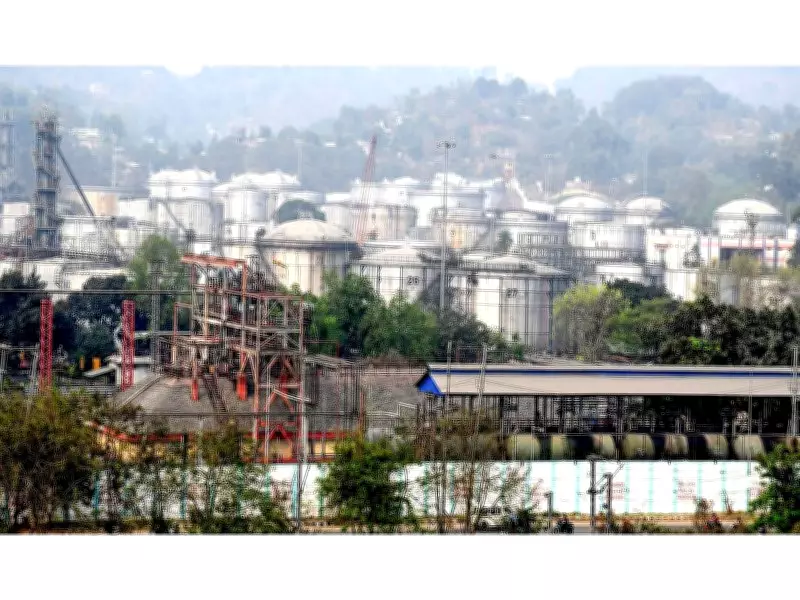
The missile strikes targeted Qatar's Ras Laffan Industrial City on March 18 and early March 19, causing extensive damage to critical production facilities. In an official statement, QatarEnergy confirmed that the attacks reduced the country's LNG export capacity by 17%, leading to an estimated annual revenue loss of USD 20 billion.

Minister of State for Energy Affairs and QatarEnergy President and CEO Saad Sherida Al-Kaabi provided an update, stating, "The missile attacks reduced Qatar's LNG export capacity by 17 per cent and caused an estimated loss of USD 20 billion in annual revenue. Extensive damage to our production facilities will take up to five years to repair and will compel us to declare long-term force majeure."
Specific Facilities Affected
The attacks damaged two key LNG production trains:
- Train 4: A joint venture between QatarEnergy (66%) and ExxonMobil (34%), with a capacity of 6.4 million tons per annum (MTPA).
- Train 6: A joint venture between QatarEnergy (70%) and ExxonMobil (30%), also with a capacity of 6.4 MTPA.
Together, these trains represent approximately 17% of Qatar's total LNG exports. Additionally, the Pearl GTL (Gas-to-Liquids) facility, operated by Shell, was targeted. This facility converts natural gas into cleaner fuels and produces base oils for lubricants. Damage to one of its trains is expected to take at least one year to repair.
Implications for India's Energy Security
The disruption poses significant concerns for India, which heavily relies on Qatar for its LNG needs. Official data from the Petroleum Planning & Analysis Cell (PPAC) and the Ministry of Commerce reveals that Qatar accounts for nearly half of India's LNG imports.
In 2024, India imported approximately 27.8 million metric tonnes (MMT) of LNG, with Qatar supplying 11.30 MMT valued at USD 6.40 billion, representing nearly 47% of total imports. This dependency underscores India's vulnerability to supply shocks amid rising geopolitical tensions.
Global and Long-Term Consequences
Minister Al-Kaabi emphasized that the damage will impact key importing nations, including China, South Korea, Italy, and Belgium. The declaration of force majeure on some long-term LNG contracts for up to five years could lead to sustained price volatility and supply constraints in global markets.
This incident highlights the fragility of global energy supply chains and the potential for geopolitical events to trigger widespread economic repercussions. As repairs are estimated to take three to five years, the Asian LNG market may face prolonged instability, affecting both producers and consumers worldwide.