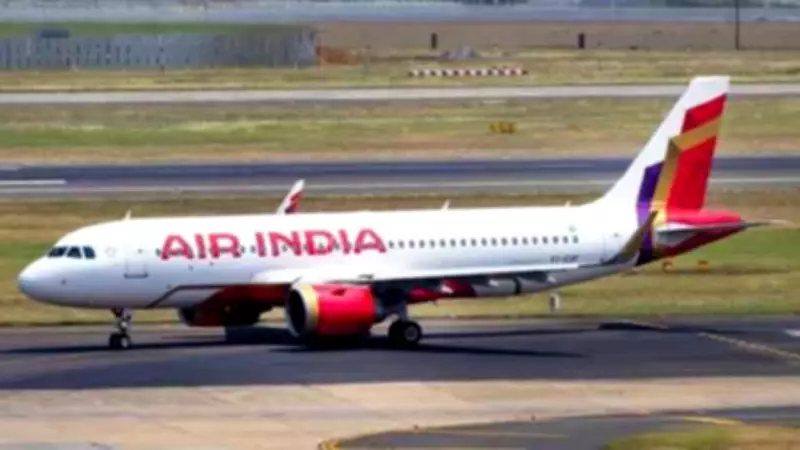
Air India’s board will convene on May 7 to evaluate cost-cutting strategies, deliberate on CEO succession plans, and review the airline’s financial performance for the fiscal year 2025-26, as mounting losses and the ongoing Middle East conflict intensify pressure on the Tata Group-owned carrier, according to a PTI report.
Board Meeting Details
Sources informed PTI that the board, chaired by Tata Sons Chairman N Chandrasekaran, is scheduled to meet in Mumbai. The meeting comes at a critical juncture for the airline, which is projected to have incurred losses exceeding Rs 22,000 crore in the financial year ended March 2026. Rising fuel costs and airspace disruptions have further exacerbated the situation.
Key Agenda Items
Among the primary topics on the agenda are measures to reduce operational costs, the selection of the next chief executive officer, and a comprehensive review of the financial outlook for 2025-26, sources said. Tata Sons and Air India declined to comment on the matter.

Campbell Wilson, the current CEO and a veteran of the Singapore Airlines Group, is expected to step down later this year, prompting the search for a suitable successor. Candidates from Air India, Singapore Airlines, and possibly European aviation executives are reportedly under consideration. One source indicated that a joint managing director or CEO structure might also be explored.
Singapore Airlines holds a 25.1 percent stake in Air India. Apart from Chandrasekaran and Wilson, the airline’s board includes Singapore Airlines CEO Goh Choon Phong, Sanjiv Mehta, Alice Vaidyan, P R Ramesh, and P B Balaji.
Cost-Cutting Proposals
As part of efforts to contain expenses, Air India is considering unbundling meals from ticket prices and making lounge access optional for business class passengers. Under this plan, passengers who do not wish to have meals could be offered a lower fare category, while business class travelers might choose whether to pay for lounge access. Sources emphasized that these proposals are still under discussion and no final decisions have been made.
Impact of Middle East Conflict
The airline has also been significantly impacted by airspace restrictions linked to the West Asia conflict, forcing longer international routes and increasing fuel consumption. In a message to staff on May 1, Wilson described the airspace and fuel cost situation as highly challenging.
“There has been a massive rise in jet fuel prices which, together with airspace closures and longer flying routes, has caused many of our international flights to become unprofitable to operate,” he said, as quoted by PTI. Wilson noted that cuts in international flights implemented in April and continuing in May may need to be extended into June and July.
“We very much regret the disruption to our customers' plans and our crew's rosters, and hope that the Middle East situation settles -- and the Strait of Hormuz opens -- soon so that we can get back to a more normal state,” he added.
Wilson also mentioned that domestic profitability had been affected, though to a lesser extent, due to the government’s cap limiting domestic fuel price increases to 25 percent. “To partially compensate for the huge spike in costs, we have increased airfares and imposed fuel surcharges but, understandably, these higher airfares impact customer demand, so we can only raise fares so far before people decide to stay home,” he explained.
Industry-Wide Stress
On April 26, Air India, IndiGo, and SpiceJet informed the government that the Indian aviation sector was under extreme stress and close to “stopping operations,” urging changes in jet fuel pricing and financial support. Jet fuel prices for international flights were raised by a little over 5 percent in the monthly revision on May 1.
Globally, airlines are also facing pressure from the West Asia turmoil, with several carriers adopting cost-cutting measures. US ultra low-cost airline Spirit Airlines has shut operations. IATA Director General Willie Walsh stated on April 29 that Asia and Europe could face jet fuel shortages in the coming months, with elevated fuel costs increasingly being passed on to passengers through ticket prices.