Adani Energy Solutions to Commission Critical HVDC Transmission Link for Mumbai by March
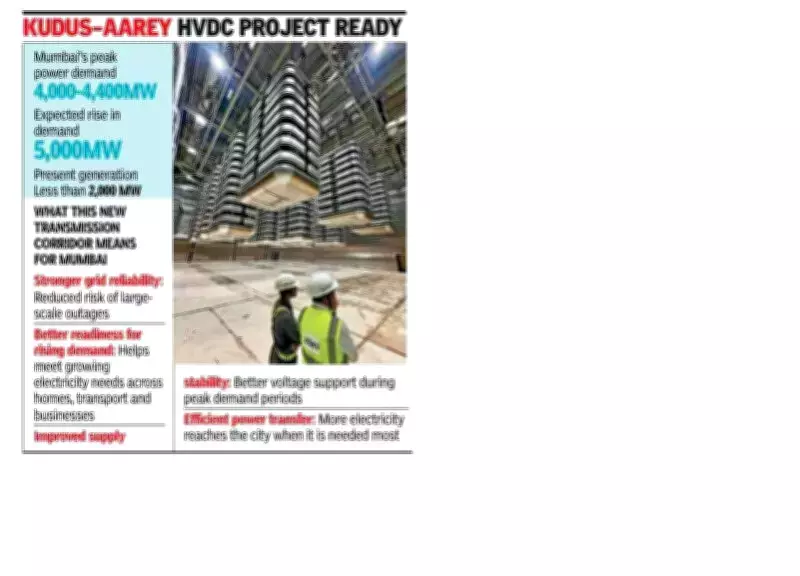
Mumbai's power infrastructure is poised for a significant upgrade with the imminent commissioning of the Kudus–Aarey High Voltage Direct Current (HVDC) project. Executed by Adani Energy Solutions Ltd (AESL), this 320kV transmission link is scheduled to be operational by March, injecting an additional 1,000 megawatts of renewable energy into the city's grid. This infusion includes power sourced from renewable projects across the national grid, marking a pivotal step toward enhancing Mumbai's energy sustainability.
Addressing Mumbai's Growing Power Demand and Grid Vulnerabilities
Mumbai currently faces a substantial power deficit, with total demand hovering around 4,300MW while embedded generation capacity remains under 2,000MW. This gap necessitates heavy reliance on imported power, making the city vulnerable to grid instability and constraints during peak periods. In May 2024, peak demand reached 4,307MW, and projections indicate it could surpass 4,500MW this summer. Looking ahead, demand is expected to approach 5,000MW in the coming years, driven by factors such as new housing developments in the Mumbai Metropolitan Region, commercial expansion, Mumbai Metro network growth, the Mumbai-Ahmedabad bullet train initiative, and an expanding cluster of data centers.
An AESL official emphasized the project's critical nature, stating, "The Kudus–Aarey HVDC link represents one of the most vital upgrades to Mumbai's transmission infrastructure in nearly 25 years. As an island city, Mumbai has inherently limited transmission corridors for electricity import, making this enhancement essential for future resilience."

Advanced Technology and Engineering Feats Behind the Project
The project leverages cutting-edge Voltage Source Converter-based HVDC technology, which enables precise and rapid control of power flow into Mumbai while bolstering voltage stability during demand fluctuations. This technological edge is crucial for managing the city's dynamic energy needs efficiently.
From an engineering perspective, the undertaking involved substantial complexities. It encompassed the construction of approximately 30 kilometers of overhead transmission lines and 50 kilometers of underground cables. Key challenges included laying underground cables along the Western Express Highway and a national highway, which required meticulous planning and extensive traffic coordination. Another major hurdle was crossing the Vasai creek under the seabed, a process that spanned eight months. Despite these obstacles, AESL successfully completed the project within the stipulated timelines, underscoring their execution capabilities.
Building on Previous Infrastructure Milestones
This project follows another significant transmission enhancement by AESL in October 2023: the Kharghar–Vikhroli transmission line. That initiative added 1,000MW of electricity to Mumbai's grid, featuring about 74 circuit kilometers of 400kV and 220kV lines. It also included Mumbai's first 400kV gas-insulated substation at Vikhroli, with towers constructed in creeks using heavy rigs on floating barges. Together, these projects reflect a concerted effort to modernize Mumbai's power infrastructure amid escalating demand.
In summary, the Kudus–Aarey HVDC project is a transformative endeavor that promises to bolster Mumbai's grid stability, integrate more renewable energy, and support the city's burgeoning power requirements. As AESL moves toward its March commissioning date, this initiative stands as a testament to innovative engineering and strategic planning in India's energy sector.