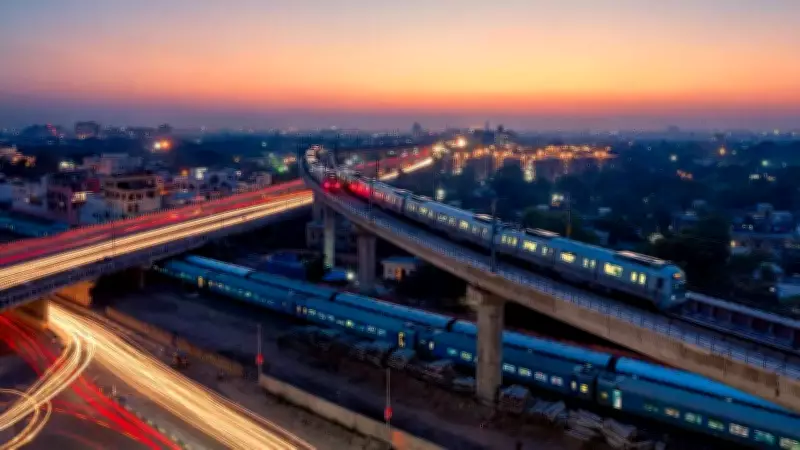
India's urban landscape is undergoing a major transformation, with metro rail services playing a pivotal role. Beyond easing daily commutes, these corridors are reshaping residential real estate by opening up previously less accessible areas for developers and homebuyers. Here are eight major metro corridors that have significantly impacted residential growth across India's leading cities.
Noida–Greater Noida Aqua Line, NCR
The Aqua Line project has become a key growth driver for residential sectors along the Noida Expressway and Greater Noida. Enhanced connectivity from residential sectors to business districts and educational institutions has made this route highly popular. Future planned expansions are expected to further increase its value.
Pune Metro Line 3 (Hinjawadi–Shivajinagar)
Pune Metro Line 3, connecting Hinjawadi and Shivajinagar, is catalyzing residential growth in micro-markets such as Hinjawadi, Wakad, Baner, and Balewadi. Improved connectivity between IT hubs, residential neighborhoods, and commercial centers is boosting appeal for homebuyers and investors. As the corridor progresses, it is expected to sustain residential development and strengthen Pune's position as a fast-growing real estate market.

Mumbai Metro Line 4 (Thane–Wadala)
Mumbai Metro Line 4 enhances accessibility to the eastern suburbs and Thane. Areas like Mulund, Thane, and Ghatkopar are seeing increased residential development due to shorter commute times. This development is expected to boost real estate demand and property values continuously.
Navi Mumbai Metro, Mumbai Metropolitan Region
The Navi Mumbai Metro improves mobility in rapidly growing nodes such as Kharghar, Taloja, Panvel, and Ulwe. Combined with infrastructure projects like the Navi Mumbai International Airport, the metro is helping developers increase residential properties in the region.
Whitefield–KR Puram Metro Line, Bengaluru
Bengaluru's Purple Line Metro extension has greatly improved access to Whitefield, India's largest IT cluster. Reduced travel time has made adjoining residential areas more attractive to professionals. Housing demand, property prices, and rents along metro-connected corridors have seen considerable boosts.
North Bengaluru Metro Extension
The ongoing metro expansion toward northern Bengaluru is expected to offer excellent opportunities in newly developed areas. Easy connectivity, combined with proximity to industrial belts and the international airport, will soon make this corridor a preferred housing area.
Miyapur–LB Nagar Metro, Hyderabad
One of Hyderabad's busiest metro routes, the Miyapur–LB Nagar corridor connects several established residential and commercial zones. Improved mobility has strengthened housing demand along the route and encouraged new residential developments in emerging neighborhoods with better access to employment centers.
Chennai Metro Corridor 3 (Madhavaram–SIPCOT)
Chennai Metro Corridor 3, connecting Madhavaram to SIPCOT, is expected to significantly influence residential development in micro-markets like Sholinganallur, Perumbakkam, Navalur, and Siruseri. By improving connectivity between the IT corridor, business districts, and residential neighborhoods, it enhances attractiveness for homebuyers and investors. As construction progresses, the project is expected to support long-term real estate growth and create new opportunities in Chennai's housing market.
Metro rail corridors are no longer just about transportation improvements; they have become effective tools for triggering urban growth and residential development. These corridors have unlocked new residential growth areas in metropolitan cities like Delhi NCR, Mumbai, Bengaluru, Hyderabad, and Chennai. As India's urbanization continues, metro-driven development will remain a key influencer in residential real estate in the years ahead.