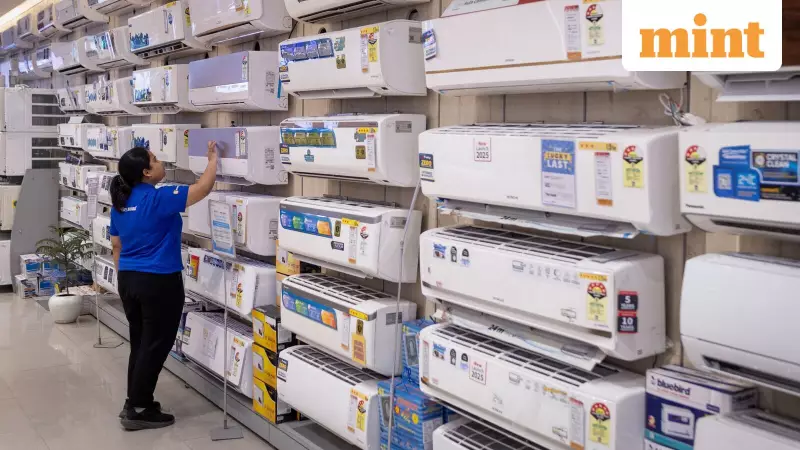
India's consumer durables sector is gearing up for a significant transition in 2026, with the air conditioner market poised at the crossroads of regulatory changes and tax reforms. A combination of stricter energy efficiency standards and a recent reduction in the Goods and Services Tax (GST) is expected to reshape pricing dynamics and consumer demand for cooling appliances in the coming year.
Regulatory Overhaul and Direct Cost Impact
Starting 1 January 2026, the Bureau of Energy Efficiency (BEE) will enforce heightened energy performance standards for cooling appliances like air-conditioners and refrigerators. This shift to stricter star ratings necessitates the use of more advanced and costly components by manufacturers, which will inevitably push production costs upward.
Industry executives have confirmed the impending price adjustments. Sanjay Chitkara, co-chief sales and marketing officer at LG Electronics India Ltd., stated that the BEE rating changes will lead to a price increase. However, he pointed out that this higher cost would be counterbalanced by the recent GST reduction on ACs to 18% from 28% and a price drop observed in September 2025. "The new prices will effectively be the same as those of old AC prices in place in the pre-GST cut period," Chitkara explained.

Market Forecasts and Conflicting Pressures
While the GST cut provided an estimated 8% reduction in market prices according to Jefferies, other cost pressures are looming. Kamal Nandi, business head at Godrej Appliances, highlighted sustained challenges like currency depreciation and adverse commodity costs, compounded by the energy regime changeover.
"Cumulatively, this will lead to a significant cost increase in cooling categories, with ACs being most impacted," Nandi said. He projected near-term price hikes of 5–7% for ACs and 3–5% for refrigerators.
Rating agency ICRA has provided a detailed market outlook. It forecasts a 10-15% year-on-year decline in Indian room air-conditioner (RAC) volumes for FY2026, translating to 11.0–11.5 million units compared to a record 12.5–13.0 million units estimated for FY25. This dip follows unseasonal rainfall during the peak April-July 2025 demand period in north and central India, which reduced heatwave days.
Short-Term Revival and Long-Term Strategy
Analysts anticipate a potential short-term demand revival. Jefferies noted expectations of a strong third quarter driven by festive sales, the GST-led demand boost, and the liquidation of older inventory before the new BEE norms take effect. Kinjal Shah, senior vice-president at ICRA, suggested the regulatory transition may spur pre-buying in Q3 FY2026, helping manufacturers recover some sales lost during the dampened 2025 summer.
ICRA expects a partial recovery in the second half of FY2026, fueled by southern and western markets and forecasts of a warmer 2026 summer. The agency believes the GST reduction will more than offset the price increases stemming from the new star labelling norms, which are estimated to raise RAC prices by Rs. 500–2,500 per unit.
Beyond immediate pricing, the market is preparing for broader structural changes. The gradual implementation of the Quality Control Order (QCO) for RACs, which mandates compliance with Indian standards and the BIS quality mark, will increase manufacturing indigenization over a 12-month phase-in period.
Despite near-term volatility, the medium-term outlook remains positive. ICRA estimates manufacturing capacity will expand by 40–50% over the next two years from the current 24–26 million units, supported by a planned capital expenditure of ₹4,500-5,000 crore. This indicates strong underlying confidence in the long-term growth trajectory of India's air-conditioner market, even as it navigates the price resets of 2026.