

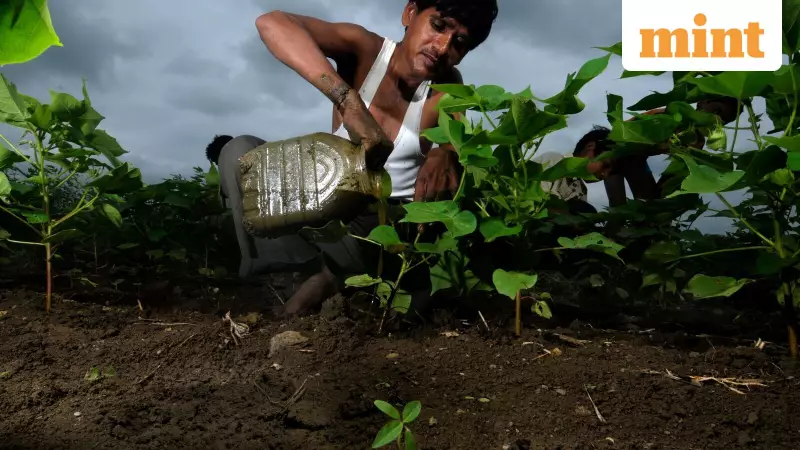
In a major push to revitalize its agricultural sector, the Indian government ushered in the new year with the release of approximately 185 new high-yielding seed varieties and hybrids. The significant notification, issued on January 1, 2026, covers crucial crops including rice, maize, cotton, millets, pulses, oilseeds, and sugarcane, aiming to enhance farm-level productivity and seed quality nationwide.
A Strategic Focus on Cotton Revival
Among the newly notified seeds, cotton has received particular attention with around two dozen hybrids and varieties approved for cultivation. These seeds are cleared for major cotton-growing states like Telangana, Andhra Pradesh, Maharashtra, Gujarat, Madhya Pradesh, Karnataka, Punjab, and Haryana. This move is strategically aimed at reversing the recent decline in cotton production and strengthening India's position as a global textile sourcing hub.
Notably, all the newly approved cotton varieties remain Bt-II hybrids, indicating a policy of continuity without the introduction of new biotech traits. Bt-II refers to the second-generation genetically modified cotton containing Bacillus thuringiensis (Bt) genes for pest resistance. The government order explicitly stated this continuity, and officials confirmed that no herbicide-tolerant (HT) cotton varieties have been notified, maintaining a consistent regulatory stance against such traits due to concerns over weed resistance and environmental impact.

"The focus in cotton is on yield stability, regional adaptability, and pest resistance already permitted under existing approvals," a senior government official explained. The notification enables seed companies to scale up certified production of approved Bt-II hybrids while keeping herbicide tolerance outside the legal framework.
Boosting Productivity Across Food Crops
The seed release is a multi-crop strategy designed to enhance India's food security. Rice leads the list with around 60 new varieties and hybrids, making it the largest crop group in this notification. This is followed by over 50 maize hybrids, including biofortified, baby corn, and sweet corn types suited for plains, hills, and tribal regions.
Pulses, critical for reducing India's import dependence, feature around a dozen new varieties. These include black gram (urad), green gram (moong), chickpea, and groundnut-linked varieties recommended for states like Tamil Nadu, Odisha, Andhra Pradesh, Karnataka, and Bihar, as well as the Andaman and Nicobar Islands. The pulse varieties emphasize yield improvement and adaptability for rain-fed and region-specific cultivation.
Agricultural experts have welcomed the move. Bimal Kothari, Chairman of the India Pulses and Grains Association (IPGA), stated that better seeds backed by strong research are vital to raise yields, stabilize supplies, and protect farmers from climate and market shocks, thereby reducing reliance on imports.
Field Realities and Future Impact
While the notification is a positive step, stakeholders note that the real test lies in field performance and accessibility. Ganesh Nanote, a cotton farmer from Maharashtra's Vidarbha region, expressed cautious optimism, highlighting the challenges of pest pressure and stagnant yields. He emphasized that the true efficacy of these indigenously developed hybrids will be proven by their pest control and disease resistance in actual farming conditions.
Furthermore, there is a significant time lag before farmers can access these seeds. Officials clarified that it typically takes about three years for newly notified varieties to reach farmers' fields. This period is required for seed companies and public agencies to complete the multi-stage process of breeder, foundation, and certified seed multiplication before commercial distribution can begin.

The initiative aligns with broader agricultural goals. In the Union Budget 2024-25, the government had announced plans to release 109 new high-yielding and climate-resilient varieties. The current release surpasses that target. According to the government's third advance estimates for 2024-25, India achieved a record foodgrain output of approximately 353.96 million tonnes. The new seeds aim to build on this foundation, with experts like Anand Vishwakarma from the All India Coordinated Research Project (AICRP) projecting a potential 20–30% productivity increase once these varieties are widely adopted.
For crops like cotton, higher productivity is also crucial for initiatives like India's own Kasturi Cotton brand. As noted by Binod Anand, a member of the agriculture ministry's MSP committee, the brand currently depends on imported extra-long staple (ELS) cotton due to domestic productivity declines. Enhancing local output is key to its self-sufficiency.
Beyond cereals and cotton, the notification includes biofortified maize for nutrition, climate-resilient millets and sorghum, and oilseeds like mustard and sesame, all emphasizing local agro-climatic performance over trait-based modification. This comprehensive seed push marks a determined effort by India to secure its agricultural future through innovation and self-reliance.





