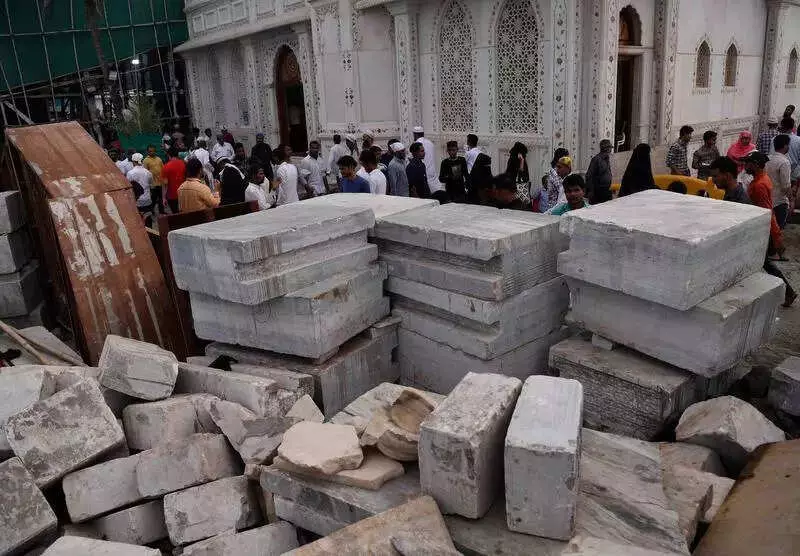
165 Marble Mines in Rajasthan Face Uncertain Future After Aravalli Polygon Classification
Mining operations at 165 marble quarries in Rajasthan's Bidiyad-Makrana-Chanan belt now hang in the balance. The state mining department has put their renewal on hold. This action follows a satellite-based survey by the Forest Survey of India. The FSI included large stretches of this mining area within the Aravalli hill range polygon.
Official Stance and Legal Proceedings
Lalit Mangal, the mining engineer for Makrana, spoke to the press about the situation. He confirmed that only mines falling within the newly drawn Aravalli Polygon have not received renewal. This decision came from central government directives.
"There are 165 such mines affected," Mangal stated. "Authorities will make a final decision on these mines once the de-limitation of the Aravalli range is fully completed. The next court hearing on this matter is scheduled for January 21."

Industry Challenges the Classification
Local mine owners and traders strongly dispute the FSI's classification. They argue the affected quarries do not actually lie within the Aravalli hills. Industry representatives point out that the Gangawa and Kinsaria hill ranges sit approximately 3.8 kilometers away from the active mining zone.
They describe the land around the quarries as largely flat terrain. No significant hills or elevated landscapes exist there. Stakeholders claim the current mapping exercise has made serious errors.
Industry representatives allege that flat plains, agricultural fields, ponds, and even factory sites were incorrectly included in the Aravalli Polygon. These areas show no hill formations whatsoever.
The Mapping Criteria Dispute
Applicable rules state that only areas within 3 kilometers of the hill range, plus an additional 500-meter buffer zone, should be treated as part of the Aravalli. Based on this criteria, stakeholders insist the Makrana mining belt was mapped incorrectly.
One mine owner made a direct allegation. "According to the criteria used by the FSI to demarcate the polygon, the Makrana mining area does not fall within it," he said. "Errors in the FSI's satellite survey led to the wrongful inclusion of our mining area."
Economic and Employment Impact
The potential shutdown carries severe economic consequences. A member of the marble association highlighted the human cost. The suspension puts an estimated 20,000 jobs at immediate risk.
"The region has around 700 mines in total," the association member explained. "Due to this flawed implementation, 165 mines face closure. Nearly one lakh people depend directly and indirectly on the Makrana marble industry. We estimate another seven lakh people work in related transport, processing, and trading activities."
Stakeholders also revealed the financial loss for the state. Rajasthan earns roughly 60 crore rupees annually from these mines. This revenue stream is now under threat.
The coming weeks will be critical. The January 21 hearing and the final delimitation report will determine the fate of these quarries and the thousands who rely on them.