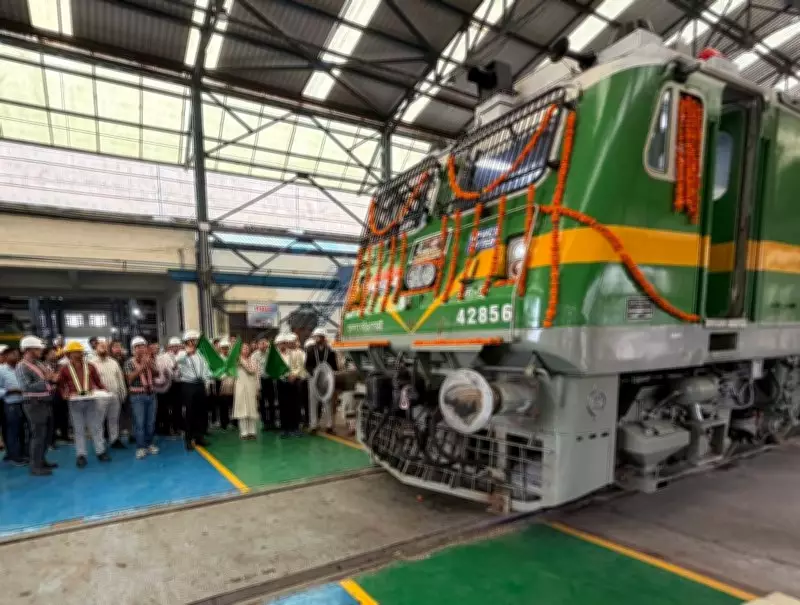
The 150th locomotive constructed at the Electric Loco Shed in Saharanpur, Uttar Pradesh, was officially flagged off on Tuesday, marking a significant milestone for the facility and Indian Railways. The event was presided over by senior railway officials, who highlighted the achievement as a testament to the growing self-reliance in locomotive manufacturing.
Milestone Achievement
The Electric Loco Shed in Saharanpur, established decades ago, has been steadily increasing its production capacity. The 150th locomotive, a state-of-the-art electric engine, is expected to enhance freight and passenger operations across the northern railway network. Officials noted that the shed has played a crucial role in maintaining and now manufacturing locomotives, contributing to the government's 'Make in India' initiative.
Technical Specifications
The newly flagged-off locomotive is a high-power electric engine designed for hauling heavy loads over long distances. It incorporates advanced features such as regenerative braking, improved traction control, and energy-efficient systems. The locomotive is expected to reduce operational costs and carbon emissions compared to older models.

Impact on Railways
With the addition of this locomotive, the Indian Railways aims to further modernize its fleet and reduce dependence on imports. The Saharanpur shed has become a hub for indigenous manufacturing, creating jobs and fostering technical expertise in the region. Railway authorities have praised the workforce for their dedication and skill in achieving this milestone.
Future Plans
Looking ahead, the Electric Loco Shed plans to increase its production capacity to meet the growing demand for electric locomotives. The facility is also exploring the possibility of manufacturing next-generation engines with higher efficiency and lower maintenance requirements. This aligns with the Indian Railways' goal of achieving 100% electrification and reducing its carbon footprint.
The flagging-off ceremony was attended by local dignitaries, railway employees, and media personnel. The event underscored the importance of indigenous manufacturing in strengthening the nation's railway infrastructure.