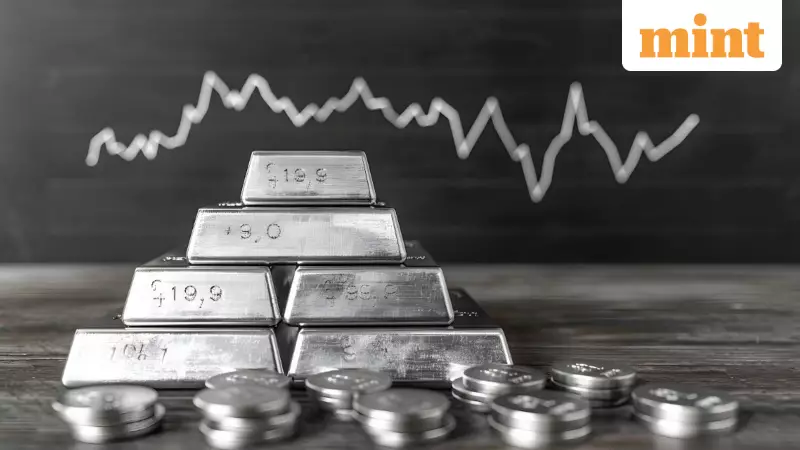
Platinum's Dramatic Rise from Market Obscurity
For many years, platinum remained largely invisible to most investors. It never quite fit into the neat categories that defined other precious metals. Gold served as the classic safe haven during crises. Silver attracted traders with its sharp price swings. Platinum, however, occupied a different space entirely. Industries used it daily, specialists set its prices, and it rarely entered everyday market discussions.
This ambiguity worked against platinum for a long time. Then, everything changed in 2025.
A Stunning Price Rally
By early January 2026, platinum prices were hovering near US$2,296.70 per troy ounce. This represented an incredible increase of more than 135% from just one year earlier. Such a massive move does not simply indicate a good year. It forces the entire market to reassess its views.

When a metal that most investors had written off suddenly becomes one of the strongest performers across global commodities, people naturally ask questions. Is this the end of the move, or just the beginning of a new phase?
The rally was not just about percentage gains. During December 2025, platinum prices reached their highest level since 2008. They jumped approximately 77% from the start of 2025. This firmly established the 2025 surge as a move to multi-year highs, not a temporary rebound.
The Quiet Beginning of a Major Rally
Looking at the price chart now, it is easy to miss how quietly this rally started. Platinum did not surge because it became fashionable. It surged because the market was running short year after year.
According to the World Platinum Investment Council (WPIC), the global platinum market was expected to end 2025 with a deficit of roughly 692,000 ounces. This was close to 9% of total annual demand. This gap did not appear suddenly from a single shock. It resulted from supply failing to keep pace with demand over multiple years.
In commodity markets, deficits do not always show up immediately in prices. Inventories first absorb the strain. This can continue longer than most people expect. But once inventories thin out, the market changes character. Prices stop drifting and start reacting. That is exactly what happened to platinum in 2025.
Why Supply Could Not Keep Up
Platinum is not a metal that producers can create on demand. Mining is concentrated in just a few regions. Bringing new capacity online takes years, not quarters.
In 2025, total platinum supply was estimated at around 7,129 koz. This was 2% lower than the previous year. Mine production struggled under rising costs and operational limits. Recycling did increase, as higher prices usually encourage, but the rise was modest. It was nowhere near enough to close the gap left by mining.
What mattered was not just lower supply, but the lack of responsiveness. Even as prices rose sharply, supply could not expand fast enough to cool the market. That rigidity allowed the deficit to persist and prices to climb further.
The Surprise: Demand Held Strong
When prices move this quickly, demand usually blinks first. Buyers hesitate. Orders get pushed out. People wait for calmer levels. With platinum in 2025, that hesitation never really set in.
In Q3 2025, demand at the overall market level actually picked up even though supply barely changed. This left a 179,000-ounce deficit at a point when prices were already rising. Exchange-held platinum stocks grew by 358,000 ounces during the quarter. This was a clear sign that higher prices were still attracting interest rather than forcing people to step aside.
Automotive demand, which often sets the tone for platinum, eased only at the edges. Global automotive platinum demand slipped 2% year-on-year in Q3 2025. This was largely because light-duty ICE production softened and non-road activity slowed. But the fundamentals did not shift dramatically.
Platinum remains critical for emissions control, and that role has not disappeared. Heavy-duty vehicle production increased during the quarter. Internal combustion and hybrid vehicles continued to dominate sales across major markets. Electric vehicles are clearly gaining ground, but the transition has been slower and less tidy than early forecasts once implied. This kept platinum firmly part of the automotive picture through 2025.

Jewellery and industrial demand added nuance rather than weakness. Global platinum jewellery demand fell 4% year-on-year in Q3. This reflected higher prices and more cautious consumers. But that top-line number hides important differences.
China and parts of Europe still recorded growth in fabrication after heavy stock-building earlier in the year. Looking at the year as a whole, jewellery demand was forecast to rise about 7% to roughly 2.16 million ounces. This was the strongest level since 2018. China was expected to grow 44% year-on-year to around 594,000 ounces as buyers shifted away from increasingly expensive gold.
Industrial demand told a similar story of contrasts. It fell 8% year-on-year in Q3, weighed down by glass and chemical applications. But demand tied to medical devices, petroleum refining, data centres, AI-related electronics, and early hydrogen projects either held steady or grew.
In the end, higher prices did not scare demand off. They just changed where it showed up. This allowed platinum's underlying imbalance to keep doing the heavy lifting into late 2025.
Putting the 135% Gain in Perspective
A 135% rise in a single year inevitably invites dramatic labels. But platinum's longer history puts that number in perspective.
Platinum last traded near US$2,100 per ounce in 2008 before dropping heavily to under US$800. What followed was not a recovery, but a long period of stagnation. Gold moved to repeated highs. Silver went through multiple boom-and-bust cycles. Platinum spent much of the 2010s well below its earlier peak, rarely attracting sustained investor interest.
Seen against that backdrop, the 2025 rally looks less like an extreme breakout and more like a long-delayed adjustment. Prices moved back toward levels that existed before years of supply strain were fully reflected.
That does not guarantee future gains. But it does explain why the move feels sudden. It followed years of inertia.
The Market Outlook for 2026
The platinum market looks different as 2026 comes into view. The tightness that defined much of 2025 begins to ease. This is not because the story breaks, but because supply finally starts responding.
WPIC expects the market to move close to balance, with a small surplus of roughly 20,000 ounces. This shift comes from a gradual pickup on the supply side. Total supply is forecast to rise about 4%. Mine output is expected to increase around 2% as delayed material is released. Recycling is projected to jump close to 10% as high prices pull more spent autocatalysts and jewellery scrap back into the system.
Demand, meanwhile, is expected to cool, but in a very specific way. Total platinum demand is projected to fall about 6% to roughly 7.39 million ounces. This is largely because the surge in investment activity seen in 2025 is unlikely to repeat.
WPIC estimates that around 385,000 ounces of that decline comes from lower investment demand. Exchange stock outflows and profit-taking are expected to replace last year's heavy inflows. Automotive demand is expected to soften by about 3%. Industrial demand is forecast to rebound roughly 9% after a weak patch in 2025.
Put together, this points to a market that is easing into balance rather than tipping into oversupply. Prices are more likely to pause and find their footing than unwind the gains made during platinum's unusually tight year.
Price Expectations and Risks
More cautious estimates place average prices around US$1,375 per ounce. This assumes supply normalises and investor interest cools. More optimistic views see platinum averaging closer to US$1,800. Potential moves toward US$2,000 are possible if supply remains constrained or demand holds up better than expected.
What stands out is that even conservative projections sit well above where platinum spent much of the previous decade. The market is no longer pricing platinum as an afterthought.
None of this removes the risks. A faster shift toward electric vehicles would eventually weigh on automotive demand. Sustained high prices could bring more recycling or incremental mine supply. A global slowdown could soften industrial consumption. Geopolitical disruptions could affect both production and investment flows.
These forces are not new. They are part of what makes platinum cyclical rather than defensive.
How Investors Use Platinum
Platinum rarely sits at the centre of a portfolio. It tends to function better on the edges. It offers a way to gain exposure to supply constraints and industrial demand that behave differently from equities or bonds.
For Indian investors, access typically comes through international instruments rather than physical bullion. Platforms make it possible to invest in U.S.-listed global products linked to commodities, including platinum. With access to over 8,000 U.S. stocks and ETFs, fractional investing allows allocations with as little as ₹1. Low-cost trade execution without remittance or withdrawal fees enables participation without operational friction.
As always with commodities, the size of the allocation and the time horizon matter far more than short-term price moves.
The Most Important Question
Platinum has already delivered multibagger-level returns for those positioned ahead of 2025. Expecting the same scale of gains again, immediately, would require a fresh imbalance of similar size.
What seems more likely is that platinum has moved into a different phase. Prices now reflect tighter supply and steadier demand than in the past. Whether that leads to further outsized gains will depend on how those fundamentals evolve through 2026 and beyond.
What is clear is this: platinum is no longer invisible. And once a market stops being ignored, it rarely goes back to being priced the same way again.