

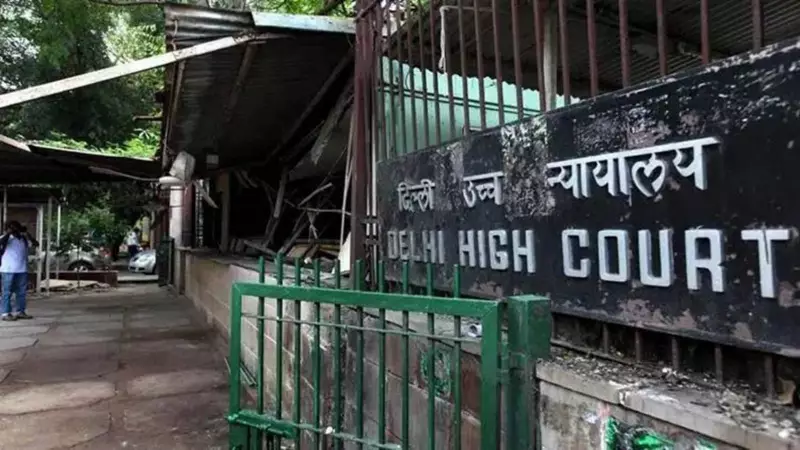
The Central government has firmly opposed a petition in the Delhi High Court seeking to classify air purifiers as 'medical devices' to slash the Goods and Services Tax (GST) levied on them. In an affidavit, the Centre argued that such a reclassification would impose stringent regulatory burdens, potentially restricting market entry and affecting supply at a time of high demand due to hazardous pollution levels.
PIL Seeks Lower GST, Centre Cites Regulatory Overreach
The Public Interest Litigation (PIL), filed by advocate Kapil Madan, sought a directive to notify air purifiers as medical devices under a 2020 notification from the Ministry of Health and Family Welfare (MOHFW). This, the petitioner argued, would place them in the lowest GST bracket of 5%, down from the current 18%, making them more affordable for citizens grappling with severe air quality.
However, in its affidavit filed through the Ministry of Finance on January 4, 2026, the Centre rejected the core argument. It clarified that medical devices attract a lower GST rate not because of their MOHFW classification, but due to a rate rationalisation exercise undertaken by the GST Council in September 2025.

"Counter-Productive" Move Would Harm Supply, Says Government
The Centre warned that treating air purifiers as medical devices under the Drugs and Cosmetics Act (DCA) and Medical Devices Rules (MDR) would be "counter-productive." It stated this would subject a freely available consumer product to additional regulatory compliances, licensing, and quality control norms meant for medical equipment.
"It would regulate what is presently freely available in the market, restrict market entry, and increase compliance burdens that would inevitably narrow participation," the affidavit contended. The government emphasised that this could "further affect supply in a market already facing constraints," especially in pollution-hit regions like Delhi.
HC Urges GST Reconsideration, Centre Defends Council's Authority
During the proceedings, the Delhi High Court, acknowledging the critical pollution levels in the national capital and surrounding areas, urged the Centre to consider the proposition of lowering GST rates on air purifiers. The matter is scheduled for a further hearing on Friday, January 9, 2026.
In its response, the Centre also firmly pushed back against judicial intervention in GST rate-setting, a domain it reserves for the GST Council. It reiterated that the Council is a "constitutional body and an instrument of cooperative federalism," and the sole authority for making recommendations on GST rates and exemptions.
"Judicial interference in such matters would necessarily bypass the constitutionally mandated process and disturb the federal equilibrium," the affidavit stated. It added that if courts were to issue directions on GST rates, the Council would be reduced to a "mere rubber stamp."
The Centre further argued that even if air purifiers could be considered beneficial for health in a specific high-pollution region, that would not justify a nationwide classification as a medical device, complicating the regulatory landscape across the country.






