

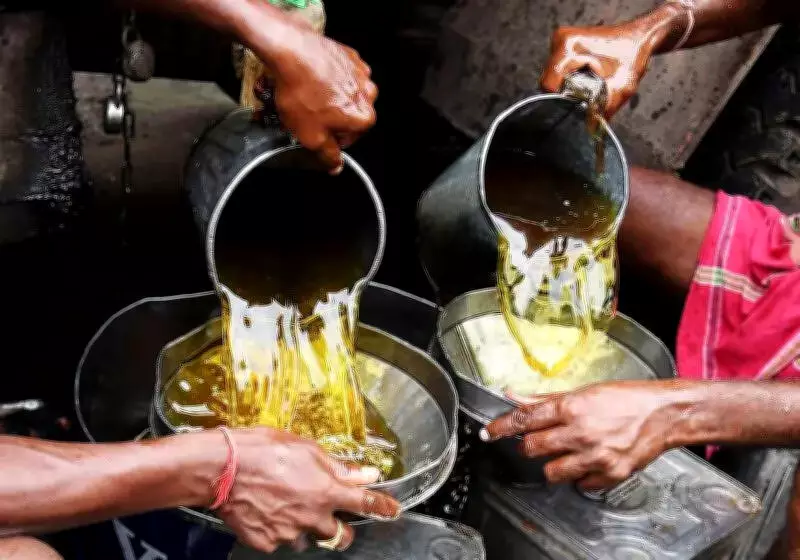
West Asia Conflict Triggers Sharp Rise in Cooking Oil Prices Across Andhra Pradesh
The escalating conflict in West Asia is now directly impacting household budgets in Andhra Pradesh, with cooking oil prices experiencing a dramatic surge over the past month. Essential commodities, particularly widely used edible oils, have become significantly more expensive, placing considerable strain on middle-class families as they struggle to manage their daily expenses.
Market Data Reveals Steep 30% Price Increase
According to comprehensive market data, prices for refined sunflower oil and palm oil—staples in many Andhra kitchens—have risen by nearly 30% since early March. Refined sunflower oil, which was priced at ₹130 per litre on March 1, has climbed sharply to ₹185 per litre by March 31. Similarly, palm oil prices have witnessed a steep increase from ₹117 per litre on March 1 to ₹160 per litre by March 31. This price escalation is hitting low- and middle-income families the hardest, forcing difficult adjustments to household budgets.
Global Supply Chain Disruptions Cited as Primary Cause
Traders and market analysts directly attribute this significant price spike to severe disruptions in global supply chains caused by the ongoing conflict in West Asia. "Imports have taken a major hit due to the war situation, and the availability of oil inputs has reduced drastically. This supply shortage is the main reason for the skyrocketing prices we are observing in the market today," explained Kusuma Harinath, a prominent local oil trader from the One Town market in Vijayawada.

Households Forced to Alter Consumption and Dietary Habits
The relentless price rise has compelled numerous households to fundamentally rethink their consumption patterns and dietary choices. "Our family of five typically consumed around five litres of cooking oil every month. Given the current prices, we are now limiting our usage to just three litres. We have significantly cut down on preparing fried foods for our children because it has simply become too expensive," shared A. Vanajashree, a homemaker from Ramalingeswara Nagar in Vijayawada.
Ripple Effect Extends to Locally Produced Oils
The inflationary pressure is not confined to imported oils alone. The ripple effect is clearly visible in the market for locally produced oils as well. Prices for raw materials like groundnut, sesame, and sunflower seeds have surged, subsequently pushing up the cost of cold-pressed oils. For instance, the rate for cold-pressed groundnut oil has increased from approximately ₹320 to around ₹400 per litre, adding another layer of financial pressure on consumers who prefer these traditional options.
With no immediate relief in sight from the turbulent global markets, residents across Andhra Pradesh are growing increasingly anxious. Families are fervently hoping for a swift de-escalation of the conflict and a return to stability in international trade to alleviate the heavy burden currently weighing on their kitchen budgets and overall household finances.






