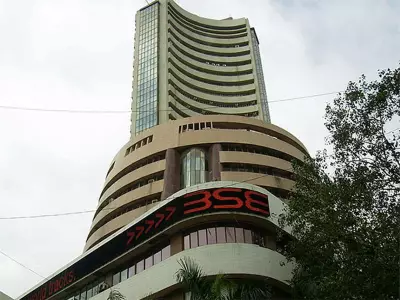
US-India Trade Deal Sparks Market Rally and Investor Optimism
The recent announcement of a US-India trade agreement, featuring a significant rollback of reciprocal tariffs, has injected renewed confidence into Indian financial markets. Equity indices and the rupee have both demonstrated strong positive momentum following months of trade-related uncertainty. To provide expert insight into this development, Feroze Azeez, Joint Chief Executive of Anand Rathi Wealth, offers a detailed analysis of the macroeconomic implications and portfolio strategies for investors.
Beyond Sentiment: A Structural Market Shift
Feroze Azeez emphasizes that the market reaction is not merely sentiment-driven but represents a meaningful structural change. The tariff overhang, which began with a 25% duty in April 2025 and extended through subsequent tranches, created prolonged uncertainty. Negotiations stretched from September to November 2025, with hopes dimming until President Donald Trump's positive remarks on January 21, 2026, signaled a breakthrough.
"Given the six-month period of uncertainty, the market arguably deserved a 4-5%, even a 10% move," Azeez notes. He points out that while foreign institutional investors (FIIs) were heavily short in index futures, potential rally momentum was somewhat constrained by SEBI's restrictions on long options positions implemented in June 2025. Nevertheless, the resolution is expected to improve key economic variables, including GDP growth and the current account deficit, substantiating the rally's foundation.

FII Inflows and Equity Attractiveness
With the rupee strengthening and markets holding gains, expectations are building for the return of foreign institutional investor inflows. Azeez confirms that Indian equities are poised to become more attractive relative to global peers. This attractiveness stems from an anticipated incremental GDP boost of 0.3-0.4% and a potential 1.2% improvement in the current account deficit, supported by nearly $700 billion in forex reserves and currency stability.
However, he cautions that attractiveness does not automatically translate to immediate price performance. "When FIIs return, they will not get stocks at the same prices they sold them at," Azeez explains, highlighting that FIIs sold approximately ₹1.6 trillion in equities last year while domestic investors bought close to ₹7.8 trillion. He anticipates gradual FII inflows possibly beginning in March 2026, building on net positive flows observed in February after a prolonged hiatus.
Retail Investor Discipline and SIP Performance
Retail investors have demonstrated remarkable resilience during a largely flat market phase since the September 2024 peak. Systematic Investment Plan (SIP) inflows have surged from ₹19,000-20,000 crore monthly to over ₹31,000 crore by December 2025, reflecting sustained commitment. Azeez credits retail investors for their sensible approach, noting that SIPs have already delivered returns of 9-10% over the past one to one-and-a-half years through rupee-cost averaging, even as the headline Nifty remained marginally lower.
"SIP investors have benefited from volatility," he states, pointing out that when the Nifty dipped to 21,000-21,800 levels, high net-worth individuals sold while retail investors continued buying, enhancing long-term portfolio value.
Large-Caps vs. Mid- and Small-Caps: Investment Opportunities
While FIIs traditionally favor large-cap stocks, where they hold about 22% of the Nifty 50, Azeez clarifies that this preference is largely due to index-heavy investment strategies rather than a dislike for smaller companies. FII ownership stands at approximately 14% in mid-caps and even lower in small-caps, yet global institutions actively track broader indices like the MSCI India Small Cap Index, which includes nearly 500 stocks.
He advises that while large caps may see initial benefits from FII flows, mid- and small-caps continue to offer substantial long-term opportunities. "Foreign investors track and invest in a broader universe of Indian small-caps than domestic investors do," Azeez reveals, suggesting diversified exposure across market capitalizations.

Sectoral Benefits and Short-Term Investment Guidance
The US-India trade deal is expected to disproportionately benefit sectors that previously underperformed due to tariff pressures. Azeez identifies pharmaceuticals, seafood, gems and jewellery, and energy as the four key sectors poised for gains. These industries stand to benefit directly from reduced tariffs and improved access to foreign markets, potentially driving stock performance.
For individual investors, Azeez recommends maintaining a long-term perspective. "Equity markets correct 10-15% almost every year," he notes, advising against waiting for perfect entry points. He encourages investors to embrace volatility and consider systematic investment approaches, especially given that muted returns over the past year and a half may enhance future return prospects.
STT Hike: Implications for Market Efficiency
Addressing the recent securities transaction tax (STT) increase announced in the Budget, Azeez downplays its direct monetary impact but highlights broader implications. He argues that the hike has a negligible effect on curbing speculation, with minimal additional costs for retail traders. However, higher transaction costs can reduce market efficiency, adversely affecting arbitrage funds and institutional strategies.
"The unintended consequences outweighed the stated objective," Azeez remarks, referencing the market's negative reaction. Nonetheless, he interprets the policy as a signal favoring long-term investing over excessive trading, aligning with India's goal to increase equity participation in household savings from 6-7% to 30-40%. This shift towards an investor-friendly ecosystem is viewed as a positive development for sustainable market growth.