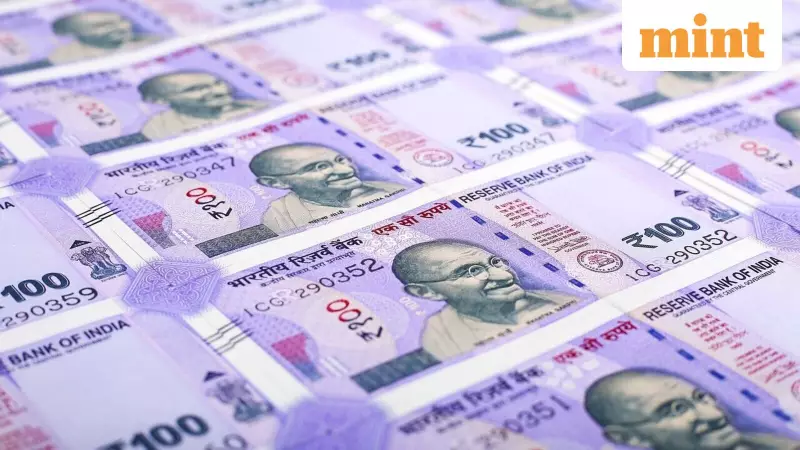
The United Nations has delivered a significant vote of confidence in India's economic momentum, sharply upgrading its growth projection for the country in 2025. According to the global body's latest report, India's economy is now estimated to expand by a robust 7.4% in the calendar year 2025, a substantial upward revision from earlier forecasts.
UN's Upward Revision and Key Growth Drivers
Released on Thursday, the World Economic Situation and Prospects 2026 report from the UN's Department of Economic and Social Affairs marks a sharp upward revision of 1.1 percentage points from its September 2025 forecast of 6.3%. For the following year, 2026, the growth projection has also been raised by 20 basis points to 6.6%. This assessment is based on information available up to 1 December 2025.
The UN attributes this strong performance to two primary pillars: resilient consumption and strong public investment. These domestic forces are expected to largely cushion the Indian economy against the potential adverse impacts of higher US tariffs. The report further notes that recent tax reforms and monetary easing are likely to provide additional near-term support to growth.

Navigating Global Trade and Regional Risks
While acknowledging that increased US tariffs may pressure select product categories, the UN analysis suggests that India's key export segments should remain largely unaffected. Strong demand from other major international markets is also anticipated to partially offset any negative impact.
However, the report sounds a note of caution for the broader region. It states that risks to the economic outlook for East and South Asia remain tilted to the downside. "Trade policy uncertainty is a key near-term risk," the report warns, highlighting that a slowdown in major economies like China, the European Union, and the United States could further dampen regional trade, investment, and tourism.
The UN added that while a partial easing of trade tensions has helped limit disruptions, the impact of higher tariffs and elevated macroeconomic uncertainty is expected to become more evident in 2026.
Global Context and Domestic Anchors
At a global level, the UN has also revised its 2025 growth forecast upwards to 2.8% from 2.5%. Global growth in 2026 is expected at 2.7%. The report projects that while growth in developed economies like Europe, Japan, and the US will hold steady at a moderate pace, several large developing economies—including India, China, and Indonesia—will continue posting solid growth, driven by resilient domestic demand.
This optimistic national assessment aligns with recent official Indian data released on Wednesday, which showed the economy is likely to expand by 7.4% in the current financial year ending March 2026, propelled by manufacturing, services, investment, and consumption.
Echoing the sentiment of domestic demand anchoring growth, financial firm Morgan Stanley noted in an analysis that the sustained strength in high-frequency data is encouraging, as it shows domestic demand carrying the growth baton for India. The brokerage pointed to combined policy support, improved purchasing power, and a positive labour market outlook as factors ensuring a broad-based consumption recovery.
UN Secretary-General António Guterres, quoted in the report, contextualized the global scenario by stating, "A combination of economic, geopolitical and technological tensions is reshaping the global landscape, generating new economic uncertainty and social vulnerabilities." The report also flagged concerns over stretched corporate valuations, particularly in sectors linked to rapid advances in artificial intelligence.