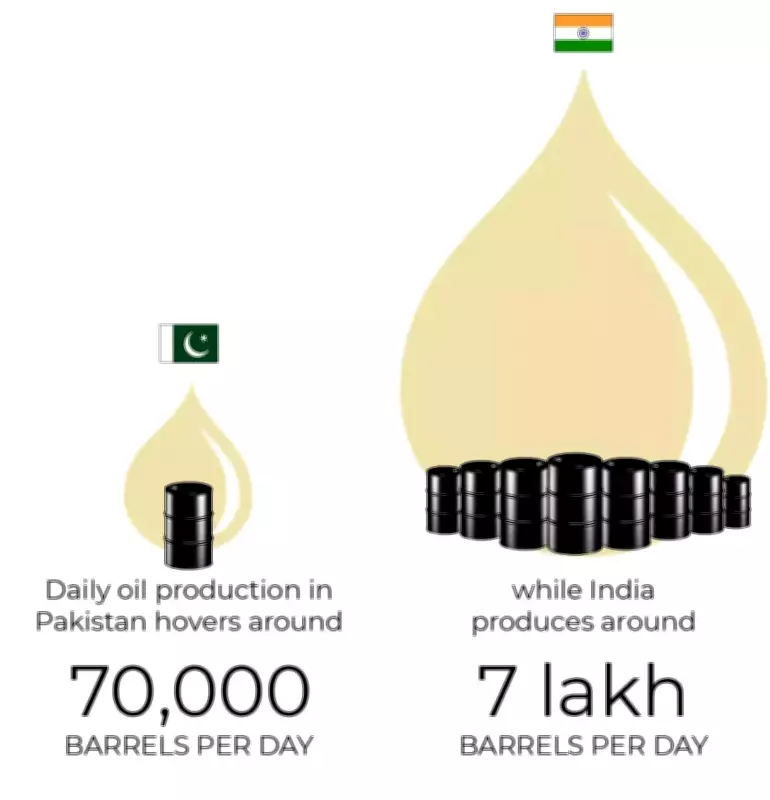
During last year's tariff war, US President Donald Trump took a jab at India, suggesting that Washington would partner with Pakistan to develop its 'massive oil reserves.' He added, 'Who knows, maybe they'll be selling oil to India someday!'
Pakistan's Vulnerability Exposed
Months later, Pakistan has acknowledged its vulnerability to the current global oil shock. In a surprising admission, Pakistan admitted it lacks 'strategic oil reserves like India,' which have helped New Delhi cushion the impact of rising crude prices triggered by the West Asia conflict.
India's Strategic Advantage
India's strategic petroleum reserves have played a crucial role in stabilizing its economy amid global oil price volatility. The country has built underground storage facilities to store crude oil for emergency use, providing a buffer against supply disruptions and price spikes.

Pakistan's admission underscores the significant gap between the two nations' energy security strategies. While India has invested heavily in building strategic reserves, Pakistan has lagged, leaving it exposed to global oil market fluctuations.
This development also highlights the reality behind Trump's earlier boast. Despite his claims, Pakistan's oil reserves are not as 'massive' as portrayed, and the country is far from being able to supply oil to India. In fact, Pakistan's own energy needs remain unmet, and it relies heavily on imports to meet domestic demand.
India, on the other hand, has diversified its oil sourcing and built robust storage infrastructure, ensuring energy security even during crises. This strategic foresight has allowed India to weather the current oil shock better than many other nations, including Pakistan.