

Surat Diamond Artisans Face Dual Crisis as War and Gas Shortage Crush New Ventures
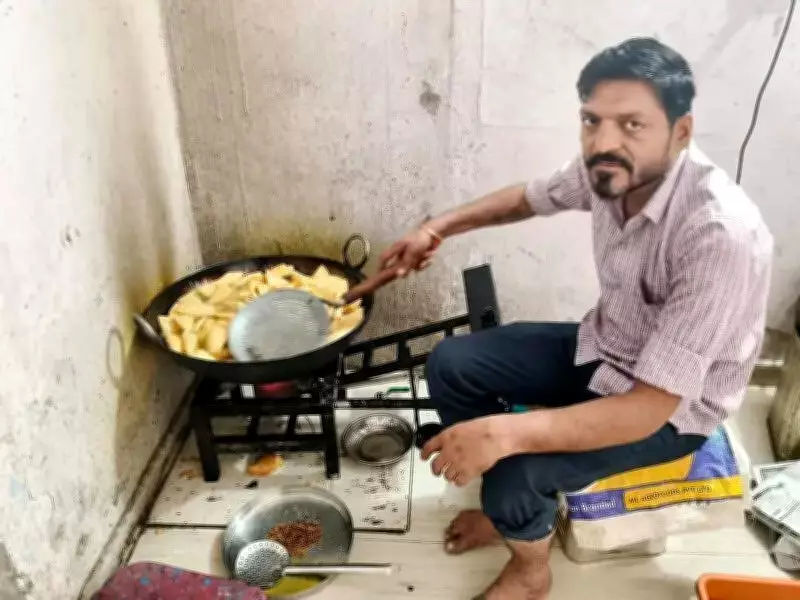
In Surat, the heart of India's diamond industry, workers are navigating a turbulent transition from polishing gems to new entrepreneurial paths, only to be hit by unforeseen global and local challenges. The story of Dipak Ghetia exemplifies this struggle, as he shifted from a 22-year career in diamond polishing to selling ghughras, a popular fried snack, in July 2024, seeking stability amid declining work hours and income.
From Diamonds to Ghughras: A Hopeful Start Dashed
Dipak Ghetia began his new venture modestly, selling homemade ghughras from his two-wheeler. Initially, he experienced quick success, with daily earnings soaring to around Rs 7,000. Encouraged by the demand, he rented a shop to scale up production, planning to operate both from the outlet and his vehicle. However, the Iran war delivered a severe blow, disrupting supply chains and leading to a critical shortage of commercial gas cylinders.
This shortage forced Ghetia to shift production back to his home, drastically cutting output. "I used to earn around Rs 7,000 a day just before the gas shortage started. Now I struggle to earn even Rs 2,500 a day since I have limited resources at home and have to reduce production," Ghetia told TOI. Before the slowdown in diamond manufacturing, he earned about Rs 60,000 monthly, but this dropped to Rs 15,000 as work became scarce, prompting his move into snack sales.

Broader Industry Impact: Textiles and Beyond
Ghetia's plight is not isolated. Many diamond cutting and polishing unit owners, facing reduced work and profits, have diversified into sectors like textile weaving and embroidery. Yet, they are encountering fresh obstacles due to the ongoing crisis. Rising raw material prices and labour shortages, exacerbated by the cooking gas crunch, are making operations increasingly difficult.
"Textile weaving is affected by high yarn prices and labourers facing the cooking gas shortage. Due to high costs, production is affected and there is no demand in the market as well," said Savji Bharodiya, a diamond manufacturer who expanded into textiles in search of better opportunities. Hiren Dabhi, from a family of diamond traders, started a textile weaving unit with 600 machines three years ago. "I went into textiles considering the business potential. But in the current situation, the industry is badly impacted. Those with better holding capacity can manage, but people without planned investment are facing serious issues," Dabhi explained.
Reinventing Business Models Amidst Adversity
For some entrepreneurs, the shift has meant repeatedly adapting their business models to survive. Kishore Suhagiya, with 30 years of experience in diamond polishing, set up a live ice-cream candy stall on the Outer Ring Road two years ago. The gas shortage forced him to discontinue products requiring cooking on a gas stove. "Now we sell more ice-candy, which does not require boiling milk using gas. Our business model has changed completely, affecting our earnings as well," Suhagiya said.
Union Voices and Deepening Distress
Trade union representatives highlight that the crisis has intensified the distress of an already vulnerable workforce. Bhavesh Tank, vice-president of the Diamond Worker Union Gujarat, noted, "Workers in the diamond industry are in a major crisis, and those trying to find a way on their own are also facing challenges due to the war. Some were trying to do their own work to support their families, but now they are dealing with new problems."
With global uncertainty, gas shortages, and weak demand converging, many who left the diamond industry hoping for relief are discovering that their escape routes are narrowing. This dual crisis underscores the fragile state of small businesses in Surat, as former artisans grapple with the compounded effects of economic slowdown and geopolitical tensions.






