

Supplementary Demands for Grants Reach Rs 4.13 Lakh Crore, Expenditure Within Budget: Finance Minister
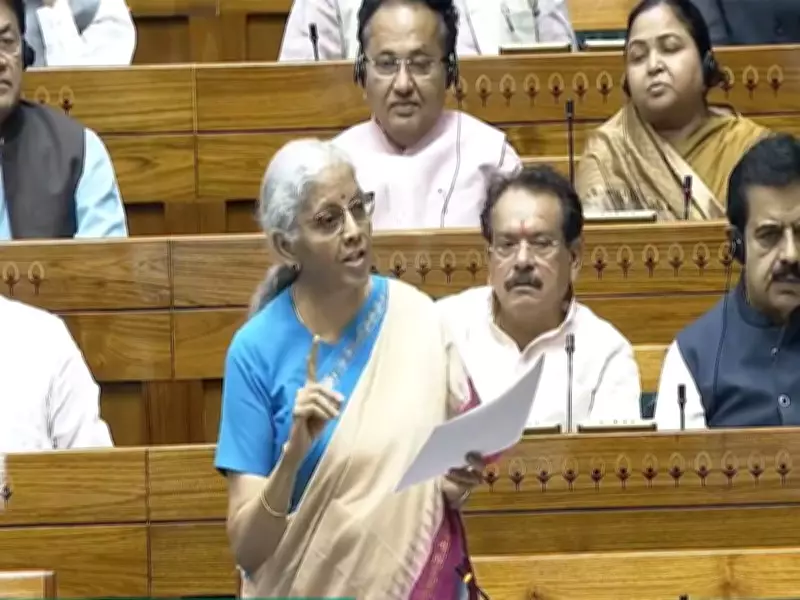
Union Finance Minister Nirmala Sitharaman presented a detailed account of the government's supplementary financial requirements in the Lok Sabha today, revealing that the total supplementary demand for grants for the 2025-26 fiscal year amounts to Rs 4.13 lakh crore. This figure combines both the first and second batches of supplementary demands, yet the Minister was quick to clarify that the overall expenditure remains firmly within the original budget limits.
Technical Adjustments and Fiscal Prudence
In her statement, Sitharaman explained that a substantial portion of the headline number does not represent new cash outgo. "Out of the total Rs 4.13 lakh crore, Rs 1.71 lakh crore is technical supplementary," she stated. These technical requirements are primarily managed through internal reallocations, such as utilizing savings from one section of a grant to cover needs in another, or via additional receipts and recoveries, ensuring minimal impact on the fiscal framework.
The Finance Minister further highlighted that the Revised Estimates for the year are actually lower than the original Budget Estimates, underscoring the government's commitment to maintaining fiscal discipline despite the supplementary requests. "This demonstrates that our expenditure is well within the prescribed limits," she affirmed.

Key Allocations for Rural and Agricultural Sectors
Sitharaman emphasized that the supplementary demands are crucial for fulfilling the government's commitments to rural workers and farmers. A significant allocation of Rs 30,000 crore has been earmarked to clear pending MGNREGA dues up to March 31. "Without this move, these payments would remain unpaid, affecting millions of rural households," she noted, stressing the importance of timely wage disbursements under the employment guarantee scheme.
In the agricultural domain, the Minister reported proactive measures to bolster fertiliser stocks to record levels. Current stocks for April 2026 stand at 163 lakh metric tons, a 26% increase compared to 128.54 lakh metric tons last year. "This has been possible only because of the foresight of the government," she remarked, adding that additional allocations in the second supplementary demand will ensure sufficient stock for both the upcoming Rabi season and the subsequent Kharif season.
Contrasting with previous administrations, Sitharaman pointed out that sugarcane farmers in Uttar Pradesh no longer face delayed payments, with 9.3 crore farmers now receiving money through Direct Benefit Transfer (DBT). Including PM-KISAN disbursements, over Rs 4.27 lakh crore has been transferred directly to farmers, reflecting enhanced financial capacity as GDP grows.
Defense and Infrastructure Priorities
The supplementary demands also include substantial allocations for security and infrastructure. Key provisions are:
- Rs 41,430.48 crore for defense services revenue.
- Rs 35,290 crore for spectrum charges to the Department of Telecommunications, driven by defense requirements.
- Rs 6,140 crore for the Ex-Servicemen Contributory Health Services (ECHS) scheme to ensure healthcare for veterans.
Sitharaman stated, "Money is being allocated for defense and economic stability, ensuring our nation's preparedness."
Addressing Global Challenges and Political Criticism
The Finance Minister called for national unity in response to international economic pressures, noting that developments abroad pose challenges for India. "The question before us is how we should face these challenges," she said, defending the supplementary demands as a proper financial response rather than poor budgeting.
She highlighted the creation of a fiscal buffer, including an equalisation fund of over Rs 50,000 crore, to manage global volatility. "Is the opposition suggesting that, in times of unforeseen challenges, the government should not create a fiscal buffer?" she questioned, criticizing the Opposition for taking what she termed irresponsible positions instead of standing together in the national interest.

Concluding her reply, Sitharaman remarked, "You keep writing poetry; we are writing history. We are changing the picture," emphasizing the government's proactive approach to economic management and welfare initiatives.





