Finance Minister Sitharaman Elaborates on FY27 Budget's Job Creation and Economic Strategy
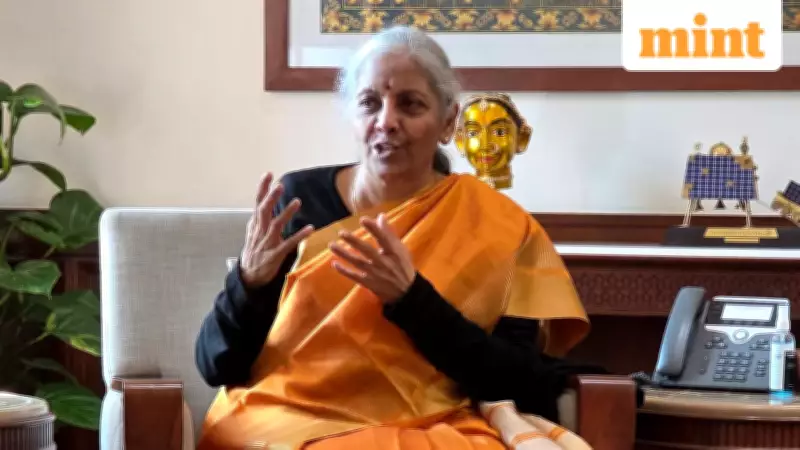
Finance Minister Nirmala Sitharaman, in a comprehensive interview following her record ninth budget presentation, outlined the government's multifaceted approach to fostering job creation, enhancing industrial competitiveness, and facilitating cross-border trade amidst global uncertainties. The FY27 budget, presented against a backdrop of economic challenges, aims to propel India toward becoming the world's fourth-largest economy while addressing per-capita income disparities.
Broadening the Scope of Job Creation
Sitharaman emphasized that the concept of 'jobs' extends beyond traditional government positions to include productive engagements that enable individuals to support their families and improve their livelihoods. The budget introduces special announcements to cultivate entrepreneurship, equipping young people with skills and an entrepreneurial spirit. "We have taken on the task of job creation with a much broader scope," she stated, highlighting initiatives in medical hubs, education with skilling components, rare earth corridors, animal husbandry, and programs for fishermen.
"When we establish medical hubs, every radiologist, anesthetist, and paramedic will find opportunities. Similarly, rare earth corridors and rural development projects will create employment," Sitharaman explained, countering the notion that these sectors might operate without human involvement.

Empowering Women and MSMEs
The budget also focuses on empowering women through initiatives like SHE-Marts, designed for women entrepreneurs, building on the success of the Lakhpati Didi scheme. Hostels for women in STEM fields aim to facilitate their entry into demanding jobs, ensuring they secure employment post-education.
For Micro, Small, and Medium Enterprises (MSMEs), which contribute 40% of India's exports, the government is providing three types of support: professional, equity, and liquidity. "We want to make champions out of medium-sized industries," Sitharaman noted, adding that policy enhancements like the TReDS platform will help MSMEs monetize bills. Additionally, 200 legacy industrial clusters will receive technical and AI-driven upgrades to boost productivity.
Fiscal Strategy and Trade Agreements
Addressing fiscal policy, Sitharaman clarified that while the budget pivots to a debt-to-GDP ratio anchor, fiscal deficit figures will continue to be reported. She attributed the lower assumed tax-to-GDP ratio for FY27 to realistic projections, considering income tax rebates and GST adjustments. Trade agreements with the EU, EFTA countries, the UAE, Oman, and Australia are expected to provide tailwinds, with the EU-India deal hailed as a significant milestone.
On foreign direct investment (FDI), Sitharaman observed that flows do not always follow commercial logic, despite India's strong fundamentals. "Fund flows seem to be waiting for some kind of signal," she remarked, expressing hope that ongoing dialogues, such as with the US, will attract capital back to India.
Defence Sector and Reforms
The defence production sector is witnessing substantial investor interest, driven by success in manufacturing equipment for both domestic use and exports. Sitharaman highlighted that customs reforms will continue, focusing on mechanization and reducing human interface in processes. A high-level banking commission will be established to strengthen funding routes until 2047, with terms of reference to be determined.
Regarding state-level reforms, Sitharaman praised states for their proactive efforts in attracting FDI and creating a competitive environment. However, she acknowledged that global equity trends impact their performance. On cesses, she affirmed that they are constitutionally mandated for the Centre and are utilized for state-specific purposes, with transparency maintained in Parliament.
In conclusion, Sitharaman stressed the need for continuous monitoring of outcomes, particularly with the upcoming GDP series release, which may necessitate budget recalibrations. "We'll have to wait and see," she said, underscoring the government's adaptive approach to economic management in a volatile global landscape.