

The past week presented a compelling narrative of India's economic resilience and evolving global partnerships, underscored by key data points. From the stock market's steady performance to a significant boost in factory output and a landmark trade development with Australia, the numbers painted a picture of an economy navigating external challenges. This weekly data digest delves into the charts and figures that made headlines.
Market Resilience and Industrial Rebound
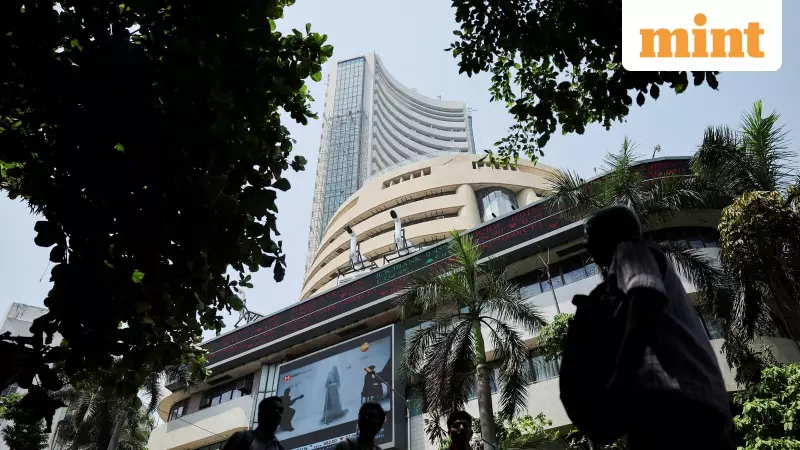
The Indian stock market demonstrated notable fortitude in 2025. Despite facing persistent external headwinds such as US tariffs, the BSE Sensex delivered a 9.1% return for the year, gaining 7,082 points. This performance followed a sharp correction that began in September 2024 and lasted until April 2025. After rebounding, the index moved within a range before ultimately reaching a record high of 86,159 points on 1 December 2025. Analysts noted that the year was marked by uneven gains, with rallies frequently facing sharp pullbacks. Market experts point to the growing depth of domestic capital as a key buffer insulating Indian markets from global volatility.
In a parallel sign of economic strength, India's industrial sector surged. Data for November 2025 showed the fastest growth in industrial output in two years, clocking an impressive 6.7% rise. This was the highest growth rate since October 2023. The momentum was primarily fuelled by a robust 8% expansion in manufacturing output, a significant jump from 1.95% in October. The mining sector also turned around, growing by 5.3% after a contraction the previous month. This strong performance is largely attributed to anticipations of higher consumer demand following recent reductions in the Goods and Services Tax (GST).

A New Chapter in Trade and a Surge in Financial Frauds
India's trade relations with Australia entered a transformative phase on 1 January 2026. Commerce Minister Piyush Goyal announced that Indian exporters now enjoy duty-free access to Australian markets for all products. This milestone results from the phased elimination of tariffs under the India-Australia Economic Cooperation and Trade Agreement (ECTA), signed three years ago in December 2022. Since the pact was implemented, bilateral trade has expanded substantially, though India has maintained a trade deficit with Australia. The new, comprehensive duty-free regime is expected to boost Indian exports and help narrow this trade gap.
On a concerning note, the Reserve Bank of India (RBI) reported a sharp increase in the value of banking frauds. In the financial year 2024-25, the total amount involved in frauds rose by 30.8% to ₹34,771 crore. This increase occurred even as the number of reported cases fell by 33.8%, indicating that the average financial loss per incident grew significantly. This trend reversed the pattern seen in recent years. For perspective, however, the fraud amount remains far below the peak of ₹1.85 lakh crore reported in FY20. The pattern continued into the first half of FY26, with the amount defrauded rising by 30% to ₹21,515 crore, despite fewer cases.
Global Shift: US Cuts UN Humanitarian Aid
Internationally, a significant shift in funding was observed. The United States, under the renewed administration of President Donald Trump, pledged $2 billion for UN humanitarian work in 2025, its lowest commitment in 26 years. Data from the UN Financial Tracking Service reveals that the US contribution constituted just 14.5% of global humanitarian funding, also a 26-year low and a steep drop from approximately 38% in prior years. The US administration has defended these cuts as a strategic move towards greater burden-sharing among developed nations. Secretary of State Marco Rubio stated that this new model aims to encourage other countries to contribute more while pushing UN agencies to improve efficiency and accountability.
The week's data collectively highlights India's domestic economic momentum amidst a changing global landscape, where trade opportunities are expanding even as traditional international aid frameworks undergo recalibration.






