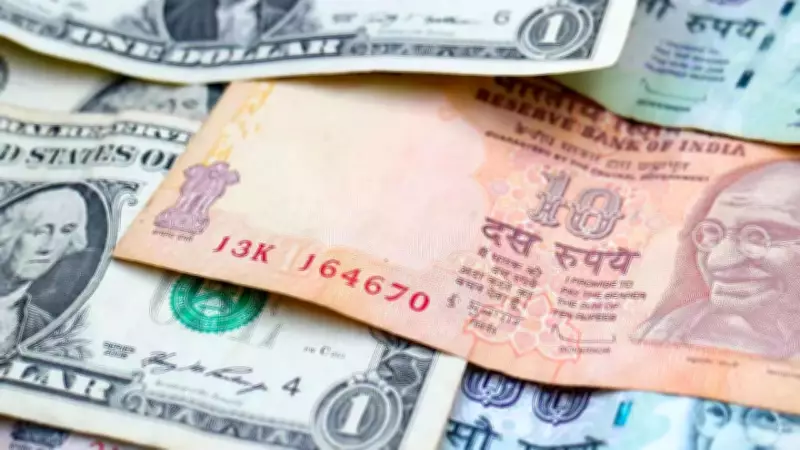
Rupee Braces for Turbulent March Opening Amid Gulf Escalation
Following a relatively stable performance in February, the Indian rupee is poised to commence March on a highly volatile trajectory. This shift is primarily driven by escalating geopolitical tensions in the Gulf region, which are prompting global capital to rapidly migrate toward safe-haven assets.
Geopolitical Unrest Triggers Capital Flight to Safety
Recent attacks involving Israel and Iran, including incidents affecting Dubai, Doha, and Manama, have intensified regional instability. In response, global investors are swiftly reallocating funds, with significant flows expected into short-term US treasuries, where yields have already plummeted. This capital flight is anticipated to exert substantial pressure on the rupee through portfolio outflows.
Forex consultants and dealers highlight multiple compounding factors:

- Concerns over India's widening trade deficit due to disrupted trade flows with the Gulf, a critical hub for merchandise trade.
- Anxiety regarding energy supplies, as the region is central to India's crude oil imports.
- High oil prices, which are inflationary and threaten to worsen India's current account deficit, given the nation's heavy reliance on energy imports.
Market Expectations and Central Bank Role
Dealers project the rupee to open significantly lower, potentially around 91.25 against the US dollar. KN Dey, a forex consultant, noted, "The rupee is likely to open lower at 91.25. It's not just oil or portfolio outflows—the Gulf region is central to India's trade flows, so any escalation there adds another layer of pressure. I expect a gap-down opening, but it's hard to put levels on it because once key stop-losses get triggered, the move can accelerate quickly."
The Reserve Bank of India (RBI) is expected to intervene to smooth volatility, but questions linger about the extent of its willingness to deploy foreign exchange reserves if outflows persist. Additionally, a potential gap-down opening in equity markets could further unsettle currency markets, according to dealers.
Broader Economic Implications
The pressure on the rupee is likely to ripple through other financial sectors. Bond yields are anticipated to rise as currency strain complicates the RBI's ability to maintain ample liquidity for effective transmission of interest rate cuts. This scenario underscores the interconnected risks of geopolitical events, capital movements, and domestic economic stability.
In summary, March begins with the rupee navigating a perfect storm of Gulf tensions, capital flight, and structural vulnerabilities in India's trade and energy sectors, setting the stage for a challenging period ahead.