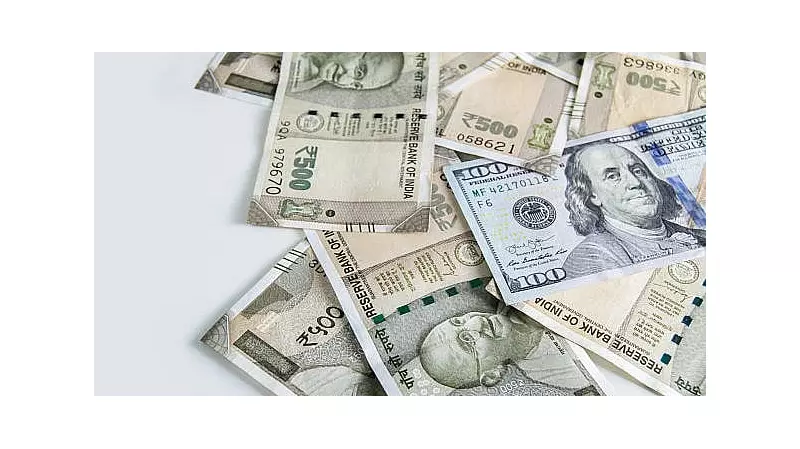
The Indian rupee tumbled to a historic low against the US dollar on Wednesday, breaching a critical psychological barrier and setting off alarm bells in financial circles. The domestic currency slumped to an unprecedented 91.01 against the greenback, marking its weakest-ever closing level.
Government Points to Trade Deficit and Stalled Negotiations
In response to the rupee's sharp depreciation, government officials pointed to two primary external pressures. A senior finance ministry representative highlighted that the widening trade deficit is exerting significant downward pressure on the currency. Simultaneously, officials acknowledged that the much-anticipated India-US trade deal has faced delays, creating an atmosphere of uncertainty that forex markets have reacted to negatively.
The official clarified that while discussions with the US are ongoing, a conclusive agreement has not been reached. This delay, combined with the broader trade imbalance, has made the rupee particularly vulnerable to global dollar strength and risk-off sentiment among investors.

Market Dynamics and Global Context
The rupee's fall is not occurring in isolation. It mirrors a broader trend of emerging market currencies facing headwinds from a resurgent US dollar. The dollar index, which measures the currency against a basket of peers, has been climbing, driven by expectations of tighter monetary policy from the US Federal Reserve to combat inflation.
For India, a higher trade deficit—where the value of imports exceeds that of exports—means more dollars are flowing out of the country than coming in, naturally depreciating the rupee's value. The delay in the trade pact with the United States, which was expected to boost exports and improve trade terms, has removed a potential support pillar for the currency.
Implications for the Economy and Policy Outlook
A weaker rupee has a dual impact on the Indian economy. On one hand, it makes imports, including crucial items like crude oil and electronics, more expensive, potentially fueling domestic inflation. On the other hand, it can provide a boost to exporters, making Indian goods and services cheaper for foreign buyers.
The Reserve Bank of India (RBI) likely intervened in the forex market to curb excessive volatility, as it has done in past episodes of sharp currency movement. However, analysts suggest that the central bank may allow a gradual depreciation to align with economic fundamentals rather than defending a specific level, which would deplete foreign exchange reserves.
The government's statement indicates a focus on addressing the root causes—bridging the trade gap and advancing strategic trade agreements—rather than resorting to short-term measures. Investors and businesses will be closely watching for progress on the US trade deal and any new policy announcements aimed at supporting the currency and managing the economic fallout from its decline.