

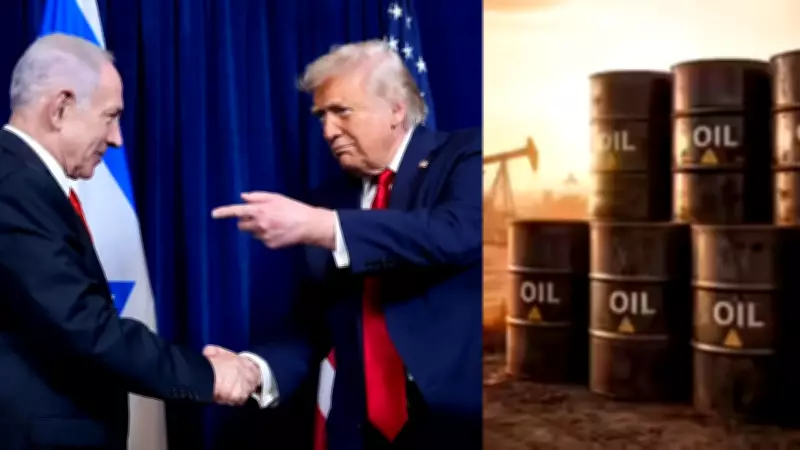
Global Crude Prices Retreat After Surge as Trump, Netanyahu Statements Ease Market Tensions
Global crude oil prices edged lower on Friday following a significant surge, as statements from US President Donald Trump and Israeli Prime Minister Benjamin Netanyahu helped alleviate market concerns about further escalation in attacks on energy infrastructure. This pullback comes after a sharp rally driven by supply disruptions in the volatile Persian Gulf region.
Price Movements and Market Dynamics
Brent crude slipped toward $107 per barrel after reaching its highest closing level since July 2022, while West Texas Intermediate (WTI) for May delivery hovered around $94. According to Bloomberg, this retreat follows a dramatic rally that saw Brent gain nearly 50% this month alone. The price gap between Brent and WTI has widened to approximately $13 per barrel, reflecting stronger global supply concerns compared to the relatively insulated US market.
"I thought there was a chance it could be much worse," President Trump said during a meeting with Japan's prime minister. "It's not bad, and it's going to be over pretty soon." When questioned about potential deployment of US ground forces, Trump explicitly stated he is "not putting troops anywhere."

Geopolitical Developments and Energy Infrastructure
The price movements occur against a backdrop of significant damage to key energy assets following a wave of attacks earlier this week. Most notably, Qatar's largest liquefied natural gas plant sustained damage that may require years to repair. These attacks have caused near-total disruption of flows through the critical Strait of Hormuz, a vital route for approximately one-fifth of global oil supplies.
Prime Minister Netanyahu indicated Israel would avoid further strikes on Iranian energy facilities, stating Israel had acted independently in targeting Iran's South Pars gas field but would pause additional energy-related strikes. "I could see this war ending a lot faster than people think," he remarked, though he provided no specific timeline for resolution.
Government Responses and Market Interventions
Multiple governments have initiated measures to contain fuel prices and stabilize markets:
- US Treasury Secretary Scott Bessent indicated Washington is considering steps to ease oil prices, including potentially removing sanctions on Iranian oil and further tapping strategic reserves
- A White House official confirmed there are no plans to restrict US oil and gas exports following discussions with industry leaders
- The International Energy Agency (IEA) has outlined emergency stockpile releases by member countries, with Japan, Canada and South Korea among key contributors
According to IEA estimates, the conflict has disrupted approximately 10 million barrels per day of output across Gulf producers, representing one of the largest supply shocks in oil market history.
Broader Market Impacts and Analyst Perspectives
The disruption has created ripple effects across global energy markets:
- European natural gas prices have nearly doubled from pre-conflict levels
- Fuel costs have risen globally, raising concerns about inflationary pressures
- Brent crude is on track for a weekly gain of around 4%, while WTI is heading for a roughly 5% decline
Market participants remain cautious about future developments. "As the fighting and the conflict continues and energy infrastructure continues to be in play, it's going to be very hard for the markets to calm down," Rebecca Babin of CIBC Private Wealth Group LLC told Bloomberg. "It just becomes a game of what is the next target."
Analysts emphasize that oil markets are likely to remain volatile as long as risks to Gulf infrastructure and critical shipping routes persist. The combination of physical supply disruptions, geopolitical uncertainty, and coordinated government responses continues to create a complex trading environment for global energy commodities.






