

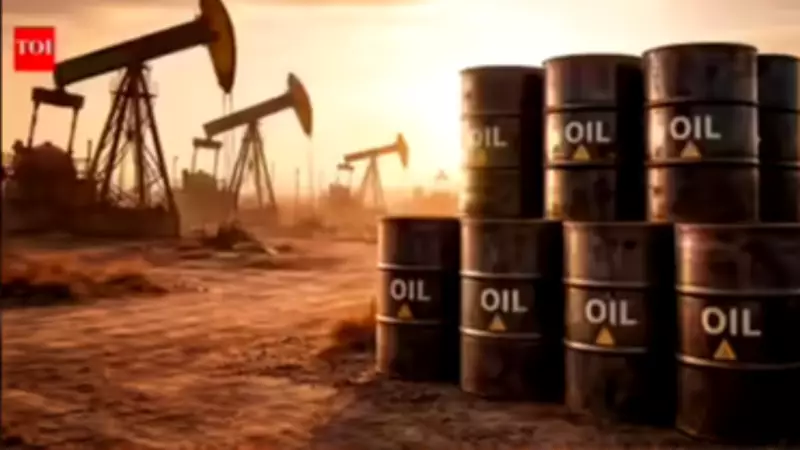
Oil and Gas Prices Skyrocket Following Iranian Strikes on Gulf Energy Hubs
Global oil and natural gas prices experienced a sharp surge on Thursday after Iran launched fresh military strikes on critical energy infrastructure across the Gulf region. The attacks targeted key facilities, including Qatar's main liquefied natural gas (LNG) hub at Ras Laffan, raising immediate concerns over prolonged supply disruptions and potential inflationary pressures worldwide.
Energy Markets React Violently to Supply Shocks
Brent crude, the international benchmark for oil, climbed close to $114 per barrel, a significant jump from below $73 recorded just before the conflict escalated. Meanwhile, the US benchmark crude rose by 1.1% to $96.45 per barrel. In the natural gas sector, US prices tracked by the Henry Hub contract gained 3.3%, reflecting heightened market anxiety.
European natural gas markets witnessed the most dramatic reaction, with the Dutch TTF benchmark—the region's primary gas contract—surging as much as 35% to around 74 euros before paring some gains. According to reports, it was still trading approximately 24% higher on the day, underscoring the severity of the supply shock.

Critical Infrastructure Damage and Shipping Disruptions
The price spikes followed two waves of Iranian strikes that caused extensive damage at Ras Laffan in Qatar, which is the world's largest LNG hub. This facility handles roughly one-fifth of the global LNG supply and was forced to shut down completely after a drone attack. The disruption has been compounded by the near closure of the Strait of Hormuz, a vital shipping route for oil and gas. With tanker traffic severely restricted, LNG shipments from Qatar have been halted, tightening global supply significantly.
In addition to Qatar, two oil refineries in Kuwait were also targeted in the attacks, as reported by news agencies. This escalation comes as Iran intensifies its offensive on energy infrastructure in Gulf countries, following earlier strikes on its own gas facilities in South Pars. The disruption to the Persian Gulf's energy network, a key supplier to global markets, has heightened fears that the current energy shock could be prolonged, with lasting damage to production capacity.
Inflation Concerns and Global Market Fallout
Analysts are warning that sustained high oil and gas prices could trigger a fresh wave of global inflation, complicating economic recovery efforts and monetary policy decisions worldwide. Financial markets reacted negatively to the surge in energy prices, with Asian equities declining sharply in response to losses on Wall Street.
- Japan's Nikkei 225 fell 3.4% after the Bank of Japan held its benchmark interest rate at 0.75%, citing geopolitical tensions.
- South Korea's Kospi dropped 2.7%, Hong Kong's Hang Seng declined 2%, and China's Shanghai Composite fell 1.6%.
- Australia's S&P/ASX 200 lost 1.7%, while Taiwan's Taiex slipped 1.9%. In India, the Sensex also fell 2.3%.
Stephen Innes of SPI Asset Management commented to the press, "The combination of higher oil, rising U.S. yields, and a stronger dollar is acting as a macro wrecking ball across Asian assets and currencies."
Wall Street Declines Amid Rising Uncertainty
US markets had already closed lower on Wednesday, with the S&P 500 falling 1.4%, the Dow Jones Industrial Average down 1.6%, and the Nasdaq Composite slipping 1.5%. Investor sentiment has been weighed down by rising inflation risks and reduced expectations of interest rate cuts. A recent report showed US wholesale inflation accelerated to 3.4% last month, indicating price pressures were building even before the conflict escalated.
Federal Reserve Chair Jerome Powell acknowledged the uncertainty surrounding the economic outlook, stating, "We just don't know," in reference to oil prices and the broader impact of tariffs. Currency markets reflected the shift in risk sentiment, with US Treasury yields rising and supporting the dollar. The US currency has strengthened against major peers since the conflict began, though it edged slightly lower to 159.71 yen in early trade. The euro was marginally higher at $1.1467.

Volatility Expected to Persist in Coming Months
With key energy infrastructure under attack and critical supply routes like the Strait of Hormuz disrupted, markets are likely to remain volatile in the near term. The scale of damage to facilities such as Ras Laffan and the duration of shipping disruptions will be crucial factors in determining the trajectory of oil and gas prices moving forward.
If these disruptions persist, analysts predict that the global economy could face sustained energy-driven inflation and tighter financial conditions in the months ahead, posing significant challenges to policymakers and investors alike.





