Maharashtra Records 13.1% Youth Unemployment, Female Joblessness Spikes to 19.1%
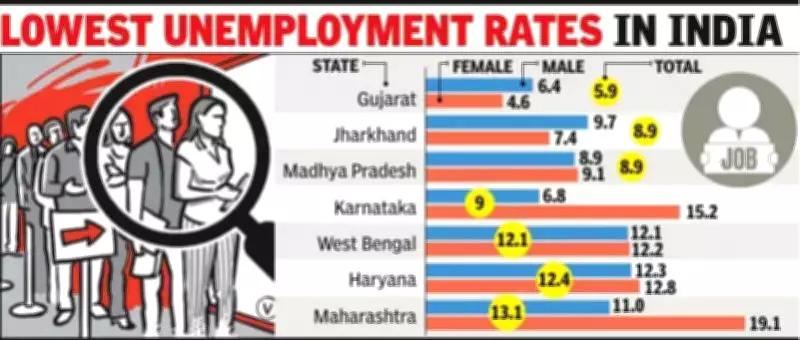
According to the latest Periodic Labour Force Survey (PLFS) released by the Ministry of Statistics and Programme Implementation, Maharashtra has emerged as the seventh least-unemployed state in India. The state recorded an overall unemployment rate of 13.1% among the 15-29 age group, which is notably better than the national average of 14.3%. This indicates that Maharashtra has relatively stronger job absorption capabilities compared to several other large states across the country.
Sharp Rise in Female Unemployment Drives Overall Increase
However, the data reveals a concerning trend: female unemployment in Maharashtra has surged dramatically to 19.1%, which is significantly higher than the male unemployment rate of 11%. This figure marks a steep increase from the 16.4% recorded in the July–September 2025 quarter, representing a jump of nearly three percentage points within a single quarter.
The Quarterly PLFS for October-December 2025, which was released on February 10, 2026, highlights that this spike is particularly pronounced in rural areas. Rural female unemployment rose sharply from 9.8% to 15%, while rural male unemployment increased only marginally from 8% to 8.7%. This pushed the overall rural unemployment rate in Maharashtra to 10.4%.

Urban Unemployment Patterns Show Significant Shifts
In urban areas, the trends were equally striking. Urban male unemployment more than doubled from 6.2% to 13.4%, while urban female unemployment inched up slightly from 23.3% to 23.7%. At the aggregate level, while male unemployment in Maharashtra declined slightly from 11.8% to 11%, the surge in female joblessness drove the total unemployment rate up from 13% to 13.1%.
In contrast, national averages remained relatively stable during the same period. Rural unemployment nationally stood at 12.4% for males and 12.9% for females, while urban female unemployment remained high at 25.2% across India.
State-Wise Comparison Reveals Varied Unemployment Landscapes
The PLFS report provides a comprehensive state-wise perspective on unemployment rates:
- Gujarat recorded one of the lowest overall rates at 5.9%
- Jharkhand and Madhya Pradesh both stood at 8.9% each
- Karnataka reported 9%, though with high female unemployment at 15.2%
- West Bengal (12.1%) and Haryana (12.4%) posted comparable figures
- Higher overall unemployment rates were seen in Bihar (14.8%), Uttar Pradesh (15.1%), and Delhi (15.8%)
Officials Attribute Female Unemployment Rise to Social Factors
According to state additional labour commissioner Kishor Dahiphalkar, the rise in female unemployment in this specific age group in Maharashtra can be attributed to social and demographic factors rather than a complete withdrawal from the workforce. He explained that a significant number of women relocate to their in-laws' homes after marriage — a trend particularly prevalent in districts situated near state borders.
"Women often move to the city where their husbands are employed. This migration plays a major role in the temporary rise in unemployment figures," Dahiphalkar stated.
The official further pointed out that career interruptions due to pregnancy also contribute to the dip in employment numbers. Many women take a planned break during pregnancy and the early stages of childcare, typically resuming work a year or so later once the child is older.
"They gradually re-enter the workforce, often beginning with work-from-home assignments or flexible engagements before transitioning back into full-time roles," he added.
Dahiphalkar emphasized that the numbers in the survey reflect transitional phases in women's employment journeys rather than a long-term disengagement from the labour market. This perspective suggests that the current unemployment figures may represent temporary adjustments rather than permanent workforce reductions.