

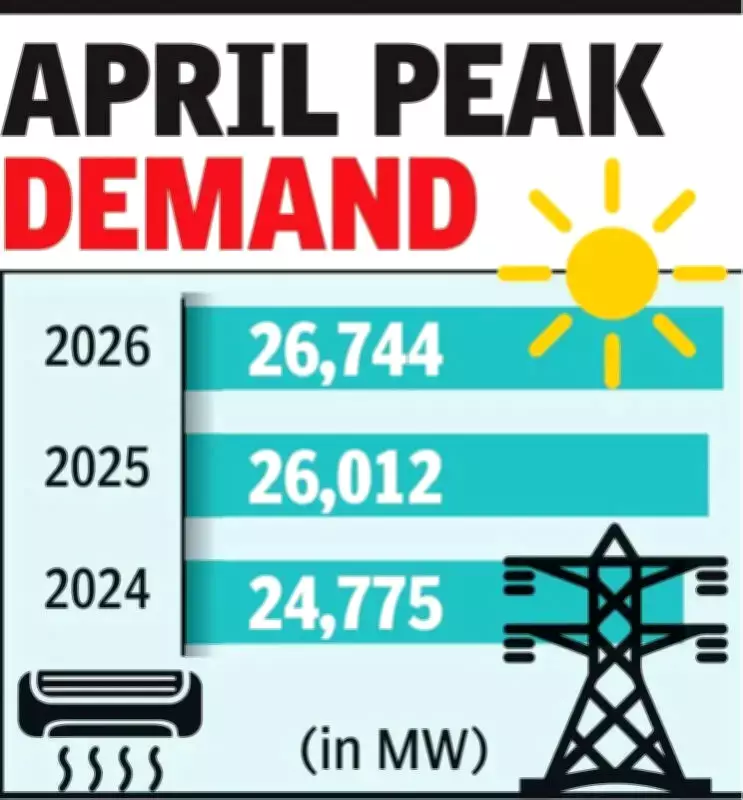
Nagpur: As heatwave-like conditions grip Maharashtra, the state's power demand has surged to 26,744 MW — the highest recorded during the summer season in the last two years — putting significant strain on the electricity distribution network.
According to officials from Maharashtra State Electricity Distribution Company Ltd (MSEDCL), the peak demand was recorded on April 18 this year. The sharp spike has increased load on the utility's infrastructure, resulting in multiple breakdowns and tripping incidents across several parts of the state.
Rising Consumption Trend
Comparative data highlights the rising trend in electricity consumption. In April 2025, the peak demand stood at 26,012 MW, while May recorded 25,230 MW. In 2024, the highest summer demand was comparatively lower, with April witnessing 24,775 MW and May around 24,146 MW. The steady increase reflects growing consumption driven by rising temperatures and increased use of cooling appliances.

Vidarbha Faces Extreme Heat
The situation is particularly challenging in Vidarbha, where temperatures have soared over 45 degrees Celsius in many cities. To manage the excessive load and prevent equipment failures, MSEDCL has initiated several emergency measures. These include deploying air coolers to prevent transformers from overheating and intensifying preventive maintenance efforts across vulnerable locations.
Power Cuts and Technical Issues
Despite these measures, several areas have been experiencing frequent power cuts and outages. Officials attributed these disruptions to a combination of technical issues, scheduled maintenance work, and the strain caused by high demand. Sources within the utility pointed to overheating transformers, ageing infrastructure and localised faults as key factors behind the recurring tripping incidents.
Revised Maintenance Schedule
In a bid to minimise inconvenience to consumers, MSEDCL has revised its maintenance schedule. The utility has directed all its divisions to carry out necessary maintenance work between 7am and 11am, instead of extending it till 2pm or 4pm, as was the practice earlier. The move aims to reduce prolonged daytime outages, which often leave residents without fans, air conditioners or coolers during peak heat hours.
With temperatures expected to remain high, officials anticipate continued pressure on the power network, underlining the need for both immediate management and even restraint from consumers.






