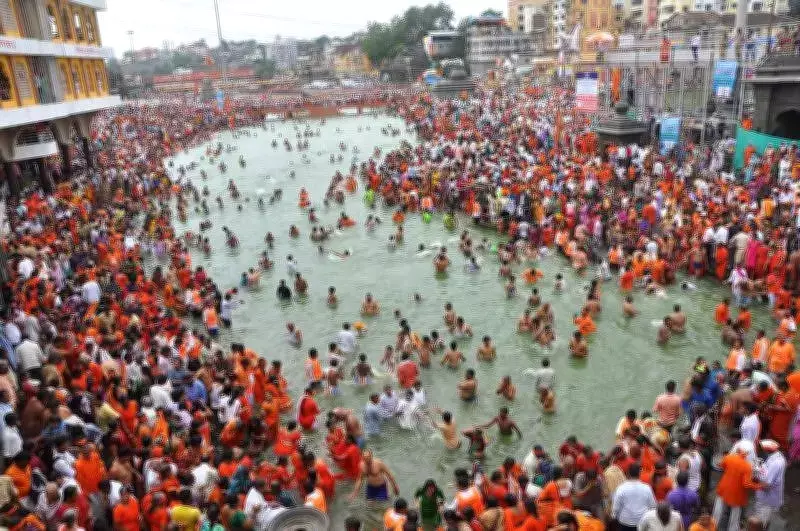
Simhastha Kumbh Mela Poised to Generate Massive Rs 27,000 Crore Economic Impact in Nashik
The upcoming Simhastha Kumbh Mela in Nashik is projected to generate economic transactions worth nearly Rs 27,000 crore, according to a comprehensive report prepared by the deAsra Foundation in partnership with the Nashik–Trimbakeshwar Kumbh Mela Authority (NTKMA). This significant religious gathering is expected to create substantial economic waves across multiple sectors.
Detailed Breakdown of Economic Projections
The report provides detailed estimates of how this massive economic impact will be distributed across different categories of spending and economic activity:
- Direct Spending by Pilgrims: Visitors attending the religious congregation are projected to spend between Rs 8,500 crore and Rs 11,000 crore on essential services including food, accommodation, local transportation, and religious purchases.
- Indirect Economic Impact: This direct spending is expected to trigger an indirect economic impact of approximately Rs 7,830 crore across various supply chains, trade networks, and allied service sectors that support the Kumbh Mela operations.
- Induced Economic Impact: The report further projects an induced economic impact of about Rs 10,530 crore, driven by increased household spending by workers, vendors, and businesses that benefit from Kumbh-related economic activities.
When combined, these three economic components—direct, indirect, and induced—are expected to generate a total economic output of around Rs 27,000 crore during the event period.

Economic Multiplier Effect and Local Benefits
Officials from the Kumbh Mela Authority emphasized that the projections demonstrate a powerful economic multiplier effect. According to their analysis, every rupee spent directly by visitors has the potential to generate more than double its value in the broader economy through secondary and tertiary economic activities.
To ensure that this substantial economic opportunity benefits local communities, the deAsra Foundation, in collaboration with NTKMA, is developing a comprehensive policy framework specifically focused on strengthening nano and small enterprises. This strategic initiative aims to enable local businesses to meaningfully participate in and benefit from the Kumbh economy.
Strategic Framework for Local Business Participation
The policy framework identifies five key sectors where local entrepreneurs can capture maximum economic value during the Kumbh Mela:
- Religious Retail: Businesses selling religious items, souvenirs, and pilgrimage essentials
- Food Services: Restaurants, food stalls, catering services, and beverage providers
- Accommodation: Hotels, guest houses, temporary lodging facilities, and homestays
- Recreation: Entertainment services, cultural activities, and leisure facilities
- Local Transport: Transportation services including taxis, auto-rickshaws, and shuttle services
As part of the proposed incentive structure, the initiative will provide free skill training to more than 30,000 individuals to prepare them for employment and entrepreneurial opportunities during the event.
Official Perspectives on Economic Transformation
NTKMA commissioner Shekhar Singh emphasized that Simhastha represents much more than just a religious gathering. "Our focus is to ensure that this economic activity translates into tangible benefits for local vendors, service providers, and small entrepreneurs across all levels," he stated, highlighting the administration's commitment to inclusive economic development.
Pradnya Godbole, CEO of deAsra Foundation, explained the broader economic implications: "The Kumbh creates a strong multiplier effect throughout the regional economy. By preparing nano enterprises to participate across direct, indirect, and induced economic channels, we can ensure that the benefits of this large-scale economic activity are widely distributed and sustained even beyond the event period."

The comprehensive approach outlined in the report suggests that the Simhastha Kumbh Mela could serve as a model for how major religious and cultural events can be leveraged for sustainable economic development while maintaining their spiritual significance.