

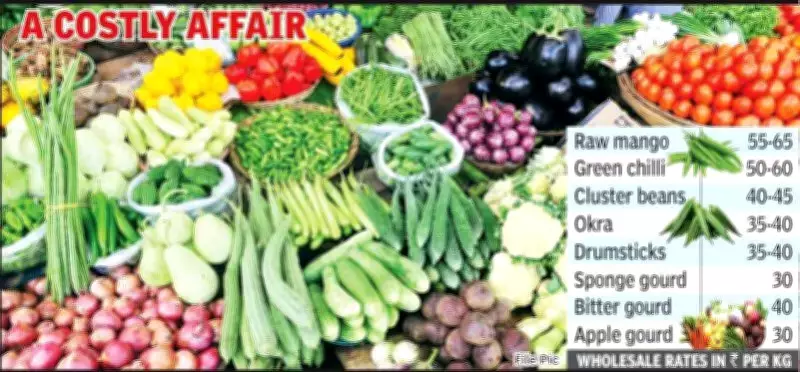
Indore Vegetable Prices Spike 20% as Heatwave Disrupts Harvests and Supply Chains
Vegetable prices in Indore have experienced a sharp increase of approximately 20% over the past five days, with key items like green chilli, cluster beans, raw mango, okra, and drumsticks becoming significantly more expensive. This sudden price surge is directly attributed to declining arrivals in wholesale markets caused by rising temperatures affecting harvesting in nearby producing regions.
Heatwave Severely Impacts Vegetable Arrivals and Market Supply
Traders and market operators report that the intense heat has dramatically reduced harvesting activities in surrounding agricultural areas, leading to substantially lower daily arrivals in Indore's wholesale vegetable markets. Asif Mansori, a vegetable seller at Choithram market, confirmed that supplies from nearby farms and villages have declined significantly due to weather conditions.
"Supplies from the Nimar region, which contributes more than 60 percent of vegetable arrivals in Indore markets, have slowed considerably because of the heat," explained Mansori. "Arrivals in the market have fallen sharply, and that has directly led to a jump in vegetable prices across multiple categories."

Current Wholesale Price Levels for Key Vegetables
The price increases have been particularly noticeable for several staple vegetables:
- Raw mango is currently selling at Rs 55-65 per kg in wholesale markets
- Green chilli prices have reached Rs 50-60 per kg
- Cluster beans are trading at Rs 40-45 per kg
- Okra and drumsticks are selling at Rs 35-40 per kg
These represent increases of Rs 10-15 per kg across these vegetable categories compared to prices just five days ago.
Weak Hotel and Caterer Demand Prevents Even Steeper Price Increases
Interestingly, the price surge could have been even more dramatic if not for reduced demand from institutional buyers. Rakesh Patidar, a vegetable supplier in the Choithram wholesale market, explained that disruptions in LPG cylinder supplies have significantly reduced purchases from caterers and hotels.
"The prices could have gone much higher, but reduced bulk demand from food businesses has capped the gains," said Patidar. "Disruptions in LPG cylinder supplies have particularly affected hotel and caterer purchases, creating an unusual market dynamic where reduced supply is partially offset by reduced institutional demand."
Consumers Feel the Pinch on Household Budgets
Local residents are already feeling the impact of these price increases on their daily household budgets. Rinki Gupta, a resident of Indore, expressed concern about the sudden change in vegetable prices.
"Vegetable prices have increased noticeably in the past few days," said Gupta. "Items like chilli and okra have become significantly more expensive compared to just last week, which affects our regular meal planning and grocery budgeting."
Market Outlook: Prices Likely to Remain Firm
Wholesale market operators and traders warn that if temperatures continue to rise and vegetable arrivals remain limited, prices are likely to stay firm or potentially increase further in the coming days. The combination of weather-related supply constraints and ongoing market dynamics suggests that consumers may need to prepare for sustained higher vegetable prices until weather conditions improve and harvesting activities can return to normal levels.
The situation highlights how environmental factors like temperature fluctuations can directly impact agricultural supply chains and urban food prices, creating ripple effects throughout local economies and household finances.






