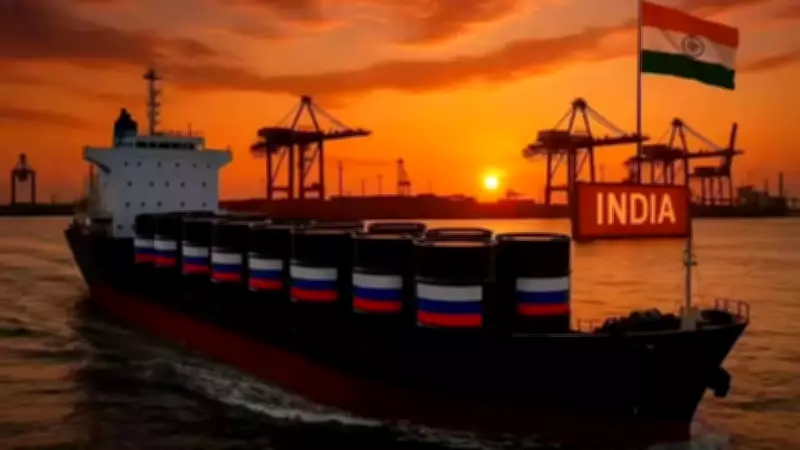
India's Oil Strategy Shifts as Russian Imports Decline Sharply
India, the world's third-largest oil importer and consumer, has significantly altered its crude sourcing approach. According to data from industry sources reported by Reuters, Russian crude shipments in January constituted the smallest portion of New Delhi's oil imports since late 2022. During the same period, supplies from the Middle East increased to their highest share in recent months.
Historical Context and Recent Changes
In 2022, Russia became India's top crude supplier after Indian refiners began purchasing large volumes of discounted Russian oil following Moscow's invasion of Ukraine. Over that period, Russian crude imports surged from less than 1% of India's total imports to nearly 40% at their peak. However, recent developments have prompted a strategic recalibration.
The data indicates that US sanctions on Russian suppliers and pressure to secure a trade deal with the United States have compelled New Delhi to reduce its Russian oil purchases. Consequently, China has replaced India as Russia's leading buyer of seaborne crude since November.

Detailed Import Figures and Projections
India imported approximately 1.1 million barrels per day of Russian crude last month, marking the lowest level since November 2022. Moscow's share in India's overall oil imports declined to 21.2%, the smallest proportion since October 2022. January imports from Russia fell by 23.5% compared to December and by about one-third relative to the same period a year earlier.
Sumit Ritola, lead research analyst for refining and modelling at Kpler, provided insights into future trends. He stated that import levels are likely to decrease further, with averages projected at 1 million to 1.2 million barrels per day in February and around 800,000 barrels per day in March. Ritola explained, "February numbers may appear slightly lower due to timing, as some end-month cargoes discharge in the following month." He added that Kpler expects Russian flows to India to gradually decline in the medium term rather than cease entirely.
Implications for Global Energy Markets
This shift in India's oil import strategy underscores broader geopolitical and economic dynamics. The reduction in Russian crude purchases aligns with efforts to navigate international sanctions and strengthen trade relations with the United States. Meanwhile, the increased reliance on Middle Eastern supplies highlights the region's enduring role as a key energy provider for major economies.
The data reflects a cautious approach by Indian refiners, who are adjusting their procurement patterns in response to external pressures and market conditions. As global energy trade continues to evolve, India's sourcing decisions will likely influence pricing and supply chains in the international oil market.