

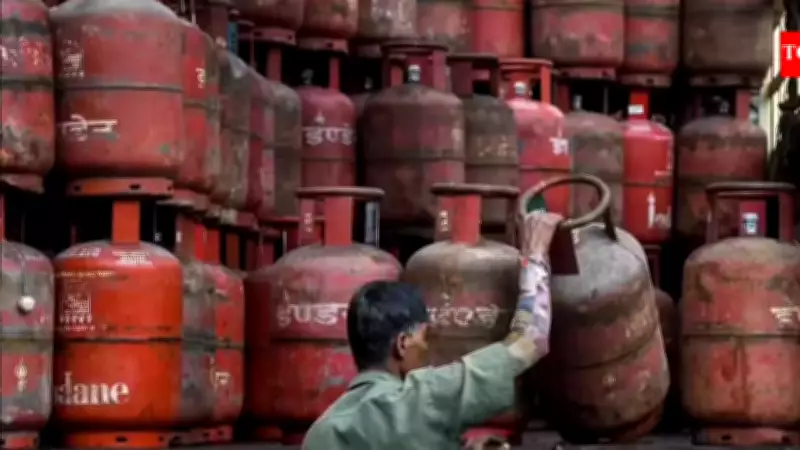
India's LPG Crisis: Government Forms GoM and Pushes PNG Adoption to Tackle Supply Disruptions
In response to escalating fuel supply challenges, the Indian government has initiated a multi-pronged strategy to stabilize cooking gas availability and reduce dependency on imports. A high-level Group of Ministers (GoM) has been established to oversee strategic issues arising from global conflicts affecting energy supplies, while a parallel policy mandates a shift from liquefied petroleum gas (LPG) to piped natural gas (PNG) for eligible households.
Formation of Group of Ministers to Monitor LPG and LNG Supply
Union Home Minister Amit Shah is leading an informal GoM tasked with addressing "overall strategic issues" linked to the ongoing West Asia conflict, which has disrupted supplies of cooking gas and liquefied natural gas (LNG)—a critical input for urea production. Shah has convened meetings with key ministers, including Fertiliser Minister J P Nadda and External Affairs Minister S Jaishankar, to review the availability of fertilisers and petroleum gas.
Additionally, a separate informal GoM under Power and Urban Affairs Minister Manohar Lal Khattar has been formed to focus on energy supply concerns. This group recently met to deliberate on "piped gas supply to homes," with attendance from Food and Renewable Energy Minister Pralhad Joshi, Heavy Industries Minister H D Kumaraswamy, and Petroleum Minister Hardeep Singh Puri.

Prime Minister Narendra Modi has directed the formation of dedicated groups of ministers and secretaries to adopt a whole-of-government approach, leading to the creation of seven empowered groups of secretaries to tackle crisis-related challenges. Officials indicate that greater clarity on action plans is expected in the coming days.
Policy Shift: Phasing Out LPG for Households with PNG Access
In a major policy shift, the government has decided to discontinue LPG cylinder supply to households that have access to piped natural gas (PNG) but have not opted for a connection. Consumers will be given a three-month window to switch to PNG, after which LPG refills will be halted. This rule applies broadly, including to rented accommodations, where property owners are responsible for installing PNG connections.
An exemption will be granted only in cases where authorized agencies certify that a PNG connection is technically not feasible. City gas distribution (CGD) companies are tasked with reaching out to eligible LPG users to facilitate the transition, ensuring a smooth shift to the alternative fuel source.
Driving Factors: Reducing Import Dependence and Accelerating Infrastructure
The move is part of a broader push to reduce India's dependence on imported LPG, nearly 60% of which is sourced from abroad, with a significant share routed through the strategically sensitive Strait of Hormuz. Officials argue that PNG offers a more stable and logistically efficient alternative, as its supply chain remains relatively comfortable despite partial reliance on imported LNG.
To support this transition, the government has mandated time-bound approvals for CGD companies to lay pipeline infrastructure, with delays leading to deemed clearances under provisions of the Essential Commodities Act. This reform aims to remove bureaucratic bottlenecks and accelerate the expansion of the piped gas network across urban and semi-urban areas.
On-Ground Impact: Surge in PNG Connections and Supply Assurance
Authorities are stepping up the rollout of PNG as LPG shortages impact households and businesses. In Dehradun, for instance, domestic PNG connections have increased from 1,800 to over 2,200 within a month, driven by policy support and operational changes such as 24-hour work permits. GAIL Gas officials project adding up to 20 domestic connections daily, with commercial units also showing increased interest.
In Delhi, Minister Manjinder Singh Sirsa assured the Assembly that LPG supply remains stable, with no signs of overbooking or shortage. The Ministry of Petroleum and Natural Gas has prioritized PNG supply while maintaining adequate petrol and diesel availability, alongside a crackdown on black marketing that has involved 2,700 raids and seizure of 2,000 LPG cylinders.

Broader Implications and Future Outlook
The government's initiatives reflect a concerted effort to enhance energy security and promote cleaner fuel usage. By incentivizing PNG adoption and streamlining infrastructure development, India aims to mitigate vulnerabilities in global supply chains and ensure reliable access to cooking gas. As the crisis unfolds, continued monitoring by the GoM and rapid implementation of policy measures will be crucial in stabilizing the fuel landscape and supporting households through the transition period.





