

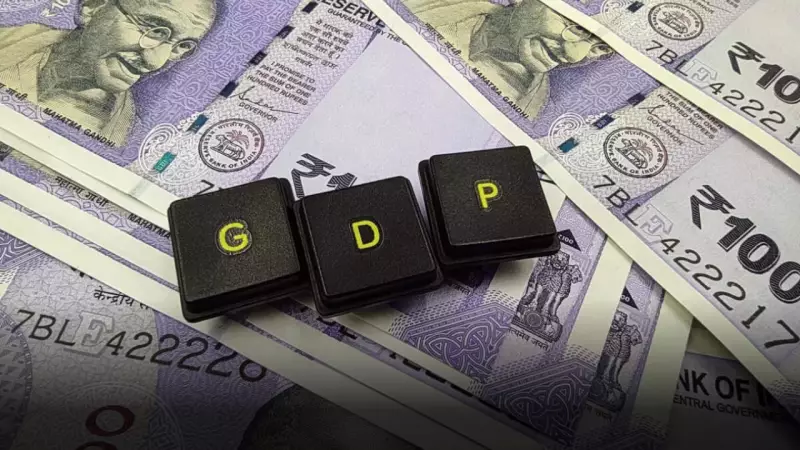
The latest economic data has brought a nuanced sense of optimism to the government's budget planners. According to the first advance estimates released by the National Statistics Office (NSO) on Wednesday, India's nominal Gross Domestic Product (GDP) for the current fiscal year 2024-25 is projected to be marginally higher than the Centre's initial budget projection, even though the growth rate is slower than anticipated.
A Mixed Bag: GDP Value Up, Growth Rate Down
The NSO estimates the full-year nominal GDP at Rs 3,57,13,886 crore. This figure is slightly above the government's budget estimate of Rs 3,56,97,923 crore. However, the underlying growth story reveals a challenge. The nominal GDP growth is now estimated at 8%, which is notably slower than the 10.1% growth assumed when Finance Minister Nirmala Sitharaman presented the budget.
This slower nominal growth, largely attributed to lower inflation, creates a complex scenario for tax collections and deficit calculations. As ratings agency Crisil pointed out, the gap between real and nominal GDP growth estimates is at its lowest level in the 2011-12 series, putting some pressure on deficit targets which are measured as a percentage of nominal GDP.

The Fiscal Deficit Tightrope Walk
The Centre had budgeted for a fiscal deficit of Rs 5,23,846 crore, or 4.4% of GDP. Based on the new GDP estimate, the absolute deficit figure could be marginally lower, but only if the government strictly adheres to its receipts and expenditure projections for the remainder of the year.
Analysts note that while tax revenue growth has been weak, there is support from a higher dividend transfer by the Reserve Bank of India (RBI) to the government. Furthermore, the government's expenditure strategy has shown a clear pattern this fiscal year. "The government has gone slow on revenue expenditure, while strongly pushing capital expenditure," added Rajni Sinha, chief economist at CareEdge.
Policy Decisions and Revenue Implications
The government's recent policy moves add another layer to the fiscal math. In the last budget, direct tax cuts were announced while still aiming to stick to the deficit reduction plan. Additionally, the decision to reduce GST rates on 375 items is expected to impact tax collections for both the Centre and the states.
Despite these headwinds, Finance Minister Nirmala Sitharaman has maintained a strong track record of sticking to her deficit targets in the post-Covid period. This history gives analysts hope that the revised estimates for this year will not deviate from the planned path. The final outcome will depend heavily on the government's ability to manage its spending and navigate the softer nominal growth environment as it prepares the final numbers for the fiscal year.






