India's Energy Security Under Scrutiny Amid Middle East Conflict
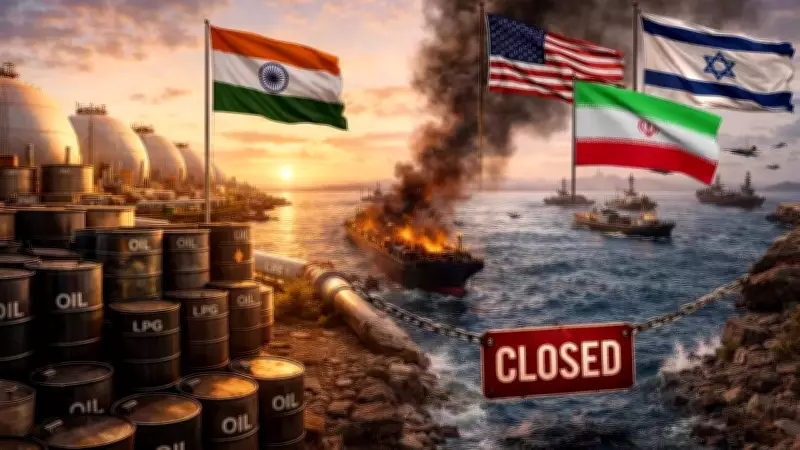
India, ranking among the top five global economies, faces heightened concerns over its energy security due to the ongoing US-Israel-Iran war. This conflict has triggered significant disruptions in global oil, gas, and trading shipments, particularly with the potential closure of the critical Strait of Hormuz. Despite these challenges, the Indian government has asserted a comfortable position, with Oil Minister Hardeep Singh Puri highlighting sufficient energy reserves to manage the situation. Authorities are closely monitoring the global energy market to ensure uninterrupted supplies for the nation.
High Dependency on Middle East Crude Imports
India's energy landscape is marked by a substantial reliance on external sources, importing approximately 90% of its crude oil requirements. Around 45–50% of these imports are sourced from the Middle East, making the country structurally sensitive to disruptions in Gulf flows. Sumit Ritolia, Lead Research Analyst for Refining and Modelling at Kpler, notes that while India has near-term buffers through strategic petroleum reserves and commercial inventories, this high external dependence poses inherent risks. Estimates indicate that about 50% of India's oil imports depend on the Middle East and the Strait of Hormuz, underscoring the vulnerability to geopolitical tensions.
Strategic Reserves and Diversification Efforts
In response to these vulnerabilities, India has adopted a pragmatic oil import strategy over the past five years, diversifying its supplier base. Following Russia's invasion of Ukraine, India shifted its crude oil basket from Middle East dominance to increased purchases from Russia. However, recent months have seen a resurgence in Middle East supplies, accounting for 45-50% of total imports as Indian refiners reduce Russian oil purchases amid US sanctions, according to Sourav Mitra, Partner in Oil and Gas at Grant Thornton Bharat.

Currently, India maintains around 8 weeks of crude oil and petroleum products inventory, including strategic reserves. This comprises 25 days of crude oil inventory and 25 days of petrol and diesel inventory. Based on Kpler data, commercial crude stocks total approximately 100 million barrels, stored in facilities at Mangalore, Padur, and Visakhapatnam. These combined reserves could theoretically cover 40–45 days of imports in a disruption scenario, with additional refined product inventories extending coverage further. However, compared to China, which has built strategic reserves estimated at three months of demand, India's reserves are smaller both in absolute terms and relative to consumption.
Alternatives and Economic Implications
In a worst-case scenario where oil supplies via the Strait of Hormuz cease temporarily, India would need to explore alternatives. The country has already ramped up crude oil purchases from non-Russian sources, including the US, Canada, West Africa, and Latin America. With over 40 countries in its procurement basket, India can augment supplies from these regions and potentially increase purchases of Russian Urals if tensions persist. Additionally, plans are underway to secure crude through pipelines like the Saudi East-West and Abu Dhabi Crude Oil Pipeline to bypass the Strait of Hormuz.
Sumit Ritolia explains that a temporary stoppage of Middle East crude would primarily impact logistics and prices, with immediate effects on prompt cargo liftings. However, commercial inventories and cargoes already in transit would provide short-term cushioning. Alternatives from the Atlantic Basin involve longer voyage times and higher freight costs, while Russian crude remains viable depending on policy channels. The key constraints include voyage duration, tanker availability, risk premiums, and insurance issues, leading to higher landed costs.

If India increases procurement from alternative sources, its crude import bill could rise significantly. A $1 increase in crude oil prices may add close to $2 billion annually, based on India's current import rate of 5-5.5 million barrels per day. Sehul Bhatt, Director at Crisil Intelligence, warns that rerouting tankers via the Cape of Good Hope would lengthen transit times and increase shipping costs, culling importer margins and bloating India's oil import bill. Despite this, refinery margins might remain supported due to strong diesel and jet demand during supply uncertainty.
LPG and LNG Vulnerabilities
Energy security extends beyond crude oil to include liquefied petroleum gas (LPG) and liquefied natural gas (LNG). According to the Global Trade Research Initiative, nearly 50% of India's LNG imports and over 85% of LPG imports transited through the Strait of Hormuz in 2025. India imports 80–85% of its LPG needs, predominantly from Gulf suppliers via Hormuz. Unlike crude, India lacks comparable strategic LPG reserves, making these flows more logistically sensitive in a disruption scenario. Sumit Ritolia emphasizes that while crude can be buffered through reserves and Russian options, LPG has thinner structural buffers, increasing vulnerability.
Conclusion: Balancing Risks and Resilience
In summary, India's near-term energy security faces primarily price volatility and higher import costs rather than immediate physical shortages. The country's diversification efforts and inventory buffers provide some resilience, but sustained disruptions could materially increase the import bill and create macroeconomic pressures. As the Middle East conflict evolves, India must navigate these challenges while ensuring stable energy supplies for its growing economy.