

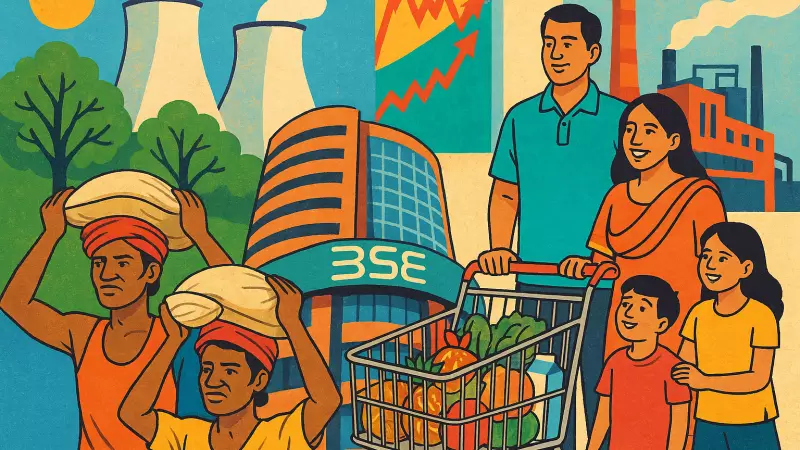
In a global landscape defined by trade uncertainties and technological competition, India has emerged as a beacon of macroeconomic stability. The year 2025 has been pivotal, marked by significant policy reforms aimed at fostering trust, simplicity, and predictability for its citizens and businesses.
A Foundation of Stability in Turbulent Times
While many nations grappled with geopolitical shifts and supply chain disruptions, India's economy demonstrated remarkable resilience. The latest quarterly data revealed a robust growth rate of 8.2%, supported by low inflation and a manageable fiscal deficit. This strong performance provided the ideal backdrop for implementing transformative domestic policies.
Tax Reforms: Putting More Money in People's Pockets
The government's strategy focused on strengthening domestic demand, the core of any stable economy. A key move came in February 2025 with the Union Budget. It effectively made salaries up to ₹12 lakh per annum tax-free, increasing the disposable income for millions of Indian households. This direct tax relief was designed to stimulate household consumption from the ground up.

GST Overhaul: Simplification for Growth
The reform momentum continued in September 2025 with a major overhaul of the Goods and Services Tax (GST). The complex multi-tier system was streamlined into a two-slab structure, accompanied by significant simplifications in governance and compliance. This move was widely welcomed by industry and consumers alike, reducing bureaucratic hurdles and creating a more predictable tax environment.
The Tangible Impact: Soaring Sentiment and Record Sales
The combined effect of these reforms has been electrifying. Consumer confidence has surged, translating into tangible economic activity. The most vivid proof came during the festive season, where sales skyrocketed to a record ₹6 lakh crore. This spending spree underscores the renewed purchasing power and optimism among Indian consumers.
Contrary to viewing tax cuts as a revenue sacrifice, experts like India's G20 Sherpa Amitabh Kant argue these are strategic investments. The resultant surge in consumption and economic activity is expected to broaden the tax base and increase overall collections in the coming years. The reforms of 2025, therefore, are not just about immediate relief but about setting the stage for sustainable, high-quality growth built on simplicity and trust.






