

BCG Chairman Urges India to Seize Green Economy Leadership
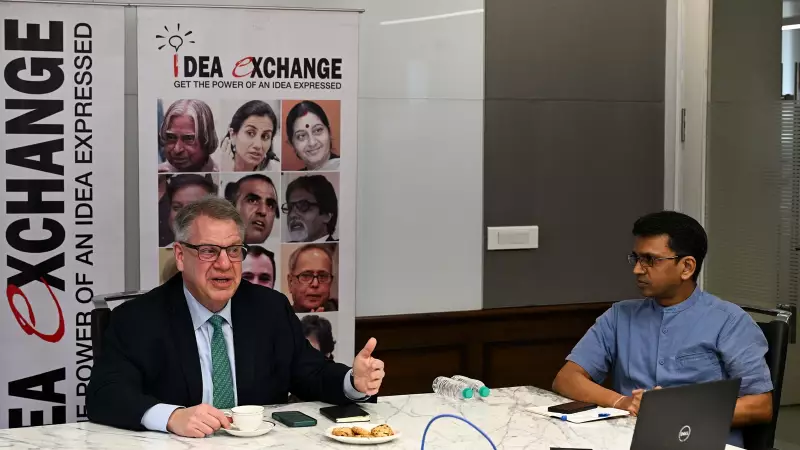
Rich Lesser, the Global Chairman of Boston Consulting Group, delivered a strong message during an Idea Exchange session in Mumbai. He emphasized that India must become a vibrant innovator and competitor in the green economy space. Lesser pointed out that China is already winning in this critical sector.
Navigating US-India Trade Tensions
Lesser addressed the ongoing trade negotiations between India and the United States. He acknowledged the current difficulties but expressed personal optimism. "Both countries have strong interests," he stated. "It's a tough negotiation, but both sides have many reasons to want a positive conclusion."
He reflected on the relationship between former US President Donald Trump and Prime Minister Narendra Modi. Lesser noted that during Trump's first term, he believed Trump had excellent relationships with both Modi and Japan's then-Prime Minister Shinzo Abe. "Both did the best job of asserting their own country's interests while working collaboratively," Lesser recalled.

China's Industrial Dominance and Lessons for India
The discussion turned to China's remarkable industrial rise. Lesser highlighted several key factors behind China's success. "China has placed an enormous premium on upskilling and upgrading its industrial capabilities," he explained. He pointed to massive investments in education, engineering talent, and research and development.
One of China's greatest assets, according to Lesser, is its highly efficient integrated supply chain. "You're not just competing plant against plant," he said. "You're competing your entire supply chain against China's supply chain." He also noted China's approach to fostering competition within industries like automotive, creating thriving ecosystems rather than simply protecting chosen companies.
The Green Economy: A Five Trillion Dollar Opportunity
Lesser presented compelling data on the green economy. He cited a recent World Economic Forum report co-authored by BCG. The global green economy currently represents about five trillion dollars in spending. This figure is projected to grow to over seven trillion dollars by 2030.
"China is doing exceptionally well in this part of the economy," Lesser stated. "They are winning on all three fronts: manufacturing, deployment, and innovation." He stressed that this should be a major area of focus for India. Given India's growth, increasing energy demands, and abundant sunshine, the country has every incentive to become a strong producer and innovator in renewable energy and electric vehicles.
Artificial Intelligence: Catalyst and Challenge
The conversation explored the dual nature of artificial intelligence. Lesser dismissed the idea of an "AI bubble," arguing that we are still in the early days of businesses learning to use AI to create real value and reshape workflows.
"AI will be both a gift and a fundamental changer of industry economics," he said. He confirmed that AI can absolutely act as a catalyst for India's higher growth rate, accelerating productivity. However, he also acknowledged the challenges. AI will both create demand for new skills and substitute for certain jobs, particularly in India's service economy sectors like coding and customer service.
Lesser emphasized the importance of responsible deployment. "AI comes with all sorts of risks if it's not deployed responsibly," he warned.
Climate Finance and Global Realities
Addressing concerns about equitable access to climate finance for countries like India, Lesser spoke bluntly. "I don't think we're providing the financing that people were hoping for to support the energy transition," he admitted. He suggested that this reality is unlikely to change soon.
His proposed solution focused on innovation to lower the "green premium"—the cost difference between conventional and green technologies. The goal should be to make green technologies cheaper to invest in, potentially aided by risk-tolerant capital from multilateral development banks.

A Call for Strategic Focus
Throughout the session, moderated by Sandeep Singh, Resident Editor of The Indian Express in Mumbai, Lesser consistently returned to strategic imperatives. He framed the green economy not just as an environmental necessity but as a massive economic opportunity where India cannot afford to be left behind. With China establishing a strong lead, the time for India to innovate and compete is now.





