

Government Addresses Fuel Supply Concerns Amid Global Tensions
Public anxiety regarding potential shortages of LPG and other essential fuels has been growing across India. However, the central government has issued firm reassurances that there is no immediate cause for alarm. The ongoing conflict involving the United States, Israel, and Iran, which has led to the strategic closure of the Strait of Hormuz, has indeed disrupted international oil supply chains. Despite this significant geopolitical development, Indian authorities emphasize that domestic fuel availability remains stable and secure.
Official Statements Urge Calm and Conservation
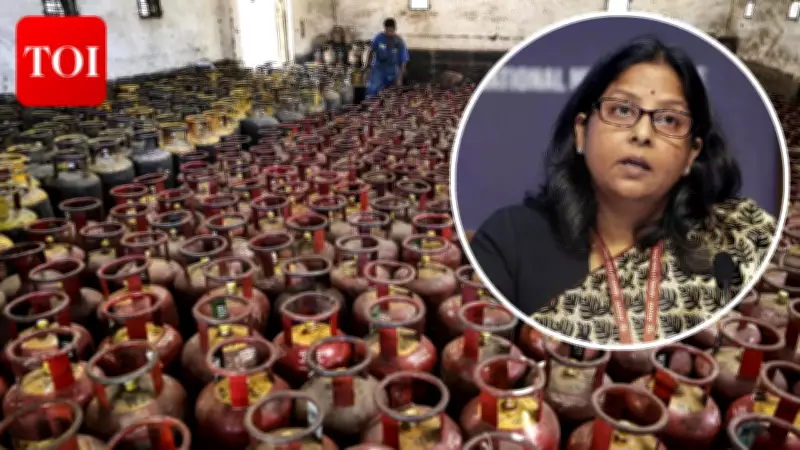
Sujata Sharma, the Joint Secretary at the Ministry of Petroleum and Natural Gas, addressed the media during a detailed press briefing. She highlighted a concerning trend of panic-driven behavior among consumers. "We have observed a manifold increase in LPG bookings purely due to public panic," Sharma stated. "We earnestly urge all citizens to refrain from panic booking. It is crucial that collective efforts are made to conserve fuel wherever possible during this period of global uncertainty."
Sharma provided concrete data to support the government's position. She confirmed that the nationwide retail fuel network is operating without significant issues. Approximately 100,000 fuel outlets across the country are fully functional, with no reports of dry-outs. Furthermore, around 25,000 licensed LPG distributors are actively supplying roughly 50 lakh cylinders every single day, ensuring that household access to cooking gas remains uninterrupted.

Strategic Measures to Secure Supply Lines
The government has implemented a multi-pronged strategy to mitigate the impact of the Hormuz closure. Sharma revealed that, despite the vital shipping lane being closed for commercial traffic for 13 days since the conflict escalated, government intervention has secured alternative import routes. "More than 70% of our crucial imports are now arriving through pathways other than the Strait of Hormuz," she explained, underscoring the success of these logistical efforts.
On the domestic production front, India's refineries have been directed to maximize their output of LPG. Sharma noted a significant increase, stating, "Our domestic LPG production has risen from 25% to 28% following the government's directive under the Essential Commodities Act." This order, issued on March 9, mandates refineries to prioritize LPG production. As the world's fourth-largest refining nation, processing nearly 55 million barrels of oil daily, India possesses a substantial buffer to absorb global market shocks.
Prioritization and Diversification of Fuel Resources
A dedicated three-member committee, comprising executive directors from major oil marketing companies, has been established. This committee oversees the allocation of commercial LPG, ensuring supplies are prioritized for critical institutions like hospitals and educational facilities while actively preventing hoarding and black-market activities.
To further ease pressure on LPG and natural gas distribution networks, the government is promoting alternative fuel sources:
- Increased kerosene allocations to various states.
- Scaling up coal distribution for small and medium-scale consumers.
- The Environment Ministry has advised state pollution control boards to temporarily permit restaurants and hotels to use biomass, Refuse Derived Fuel (RDF) pellets, kerosene, or coal for a one-month period.
Robust Monitoring and Enforcement Framework
Daily coordination meetings between oil marketing companies and state governments are being held to monitor real-time supply, track demand patterns, and ensure strict regulatory compliance. At the district level, special committees have been empowered with the specific task of preventing the diversion, hoarding, and misuse of fuel stocks. This layered approach of central oversight and local enforcement aims to maintain market discipline and equitable distribution across the country.

In summary, while global events have triggered understandable concern, the Indian government asserts that proactive measures, increased domestic production, and secured alternative import corridors have effectively safeguarded the nation's fuel supply. The consistent message to the public remains one of cautious optimism and responsible consumption.





