

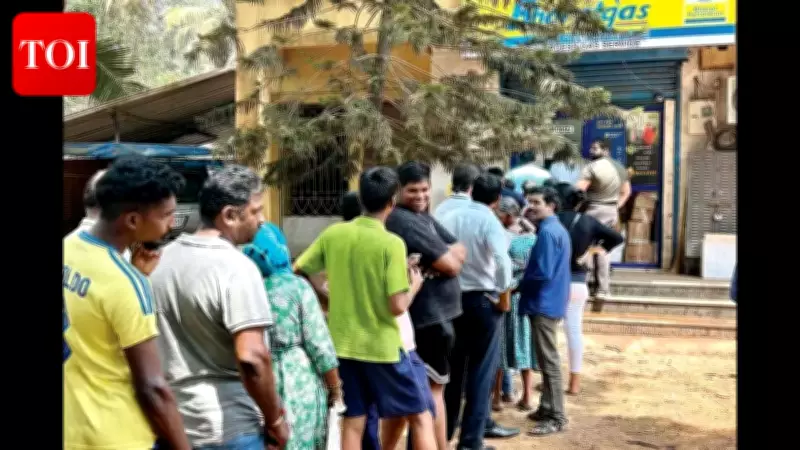
Panic Buying of LPG Cylinders Sweeps Goa Amid Global Tensions
In a surprising turn of events across Goa, residents have been forming serpentine queues outside gas agency offices, driven by fears of potential LPG cylinder shortages despite clear government assurances to the contrary. The panic buying has created chaotic scenes from Vasco to Calangute, with consumers scrambling to secure extra cylinders.
Consumers Voice Their Fears
Sarika Naik, a housewife from Vasco, expressed her concern while standing in line on Thursday. "What if the government is unable to make an LPG cylinder available when I need it next? I'm trying to secure an extra cylinder," she said, adding that she would be left with no option but to cook on firewood if LPG supply is completely stopped.
Minakshi Naik, an advocate from Vasco, shared similar sentiments. "Though I am confident the government will ensure domestic LPG supply is not interrupted, people are scared," she explained, highlighting the psychological impact of global tensions on local consumers.

Dealers Struggle with Unprecedented Demand
Gas agency managers across the state report being overwhelmed by the sudden surge in demand. A manager of a gas cylinder distributor in Calangute revealed, "We are supplying 300 cylinders every day for the last two days because people are thinking there will be no cylinders available. The supply is there, but the panic is driving this behavior."
He further explained that people are booking cylinders even when their current ones aren't empty, creating unnecessary pressure on the distribution system. "We replace for those who come with empty cylinders," he added, emphasizing that the system is designed to prioritize genuine needs.
Government Norms Being Misunderstood
Dealerships have clarified that those complaining about being unable to book a gas cylinder should understand that as per government norms, there is a mandatory one-month waiting period after the previous booking. A woman operating an Indane gas dealership described the situation: "There are people forming lines outside our shop even before we can open. There is no need to panic."
She elaborated on the misunderstanding: "People who took a cylinder just a few days ago want to take another one. But when we tell them that they can get the second cylinder only after 20-25 days of the previous one, they think that the stock is over and that is why we are not giving."
Delivery Systems Under Strain
Mohan, a gas delivery person with HP Gas, described the operational challenges. "A cylinder can be booked via a phone call, but people are coming to our shop or following our trucks. It is difficult to handle people because they are simply getting agitated. They sit in our shops for hours and refuse to leave. Some book the cylinder and want it instantly," he said.
He emphasized the structured nature of their work: "We have routines and routes to follow, and must deliver cylinders to those who ordered earlier."
Statistics Reveal the Scale of Panic
A representative of HP Gas at Caranzalem provided startling numbers: "We used to deliver around 200 cylinders a day, but because of the panic, booking has gone up to 5,000 cylinders a day. How can we deliver 5,000 cylinders in a day?" This dramatic increase illustrates how fear has distorted normal consumption patterns.
Commercial Concerns Amplify the Crisis
The panic isn't limited to household consumers. A dealer in Calangute noted that some small-time hotel operators are trying to secure domestic LPG fearing loss of business if they are unable to secure commercial LPG supply. "We have been hearing stories of hotels shutting in other parts of the country, so you can't blame them," he said, acknowledging the broader economic anxieties driving the behavior.
Coastal Areas Particularly Affected
The North Goa coastal belt of Calangute-Candolim has reported particularly intense panic buying of cooking gas. The combination of tourist areas and local communities has created a perfect storm of anxiety and demand, with residents and business owners alike participating in the rush for cylinders.

Despite repeated government assurances that there is no shortage in domestic LPG supply, the psychological impact of global conflicts and regional tensions continues to drive consumer behavior in unexpected ways.





