

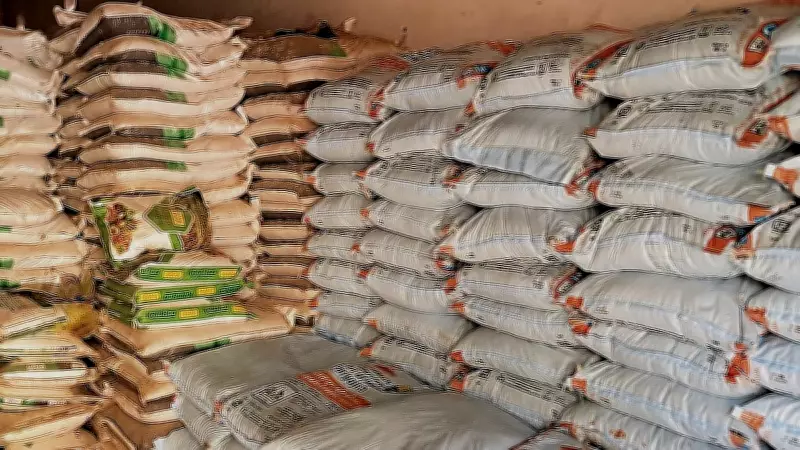
Fertilizer Stocks Provide Critical Buffer for India's Agricultural Sector
India's strategic fertilizer stocks are currently serving as a vital cushion for the nation's agricultural industry, helping to stabilize supply chains and support farmers during a period of global uncertainty. However, experts warn that significant price pressures are looming on the horizon, potentially threatening this stability in the coming months.
Urea Dependency Creates Greatest Vulnerability
According to agricultural economists Shweta Saini, T Nandakumar, and G K Sood, India's exposure is most pronounced in the urea sector. The country's heavy reliance on imports from the Gulf region, combined with its dependence on natural gas for nitrogen fertilizer production, makes this category particularly vulnerable to market fluctuations and geopolitical tensions.
The nitrogen fertilizer segment faces multiple challenges:

- Significant import dependence on Gulf countries for raw materials
- High sensitivity to global natural gas price movements
- Limited domestic production capacity relative to demand
- Vulnerability to supply chain disruptions in volatile regions
Current Stock Position Offers Temporary Relief
India's current fertilizer inventory levels are providing important temporary protection against immediate supply shocks. These strategic reserves have been carefully managed to ensure adequate availability for the crucial Kharif cropping season, when fertilizer demand typically peaks across the country's agricultural heartlands.
"The existing stock position gives us some breathing room," noted the economists in their analysis. "But this is a temporary advantage that could quickly erode if global conditions deteriorate further."
Multiple Factors Driving Price Concerns
Several converging factors are contributing to the growing concerns about fertilizer price pressures:
- Geopolitical tensions in West Asia affecting supply routes
- Volatility in global energy markets impacting production costs
- Increasing transportation and logistics expenses
- Currency exchange rate fluctuations affecting import costs
- Growing global demand for agricultural inputs
The economists emphasized that while India has managed its fertilizer stocks effectively thus far, the combination of these factors creates a challenging environment that requires careful monitoring and proactive policy responses.
Agricultural Implications and Economic Impact
Any significant increase in fertilizer prices would have far-reaching consequences for India's agricultural sector, potentially affecting:
- Farmers' input costs and profitability
- Crop yields and food production levels
- Food inflation and consumer prices
- Rural economic stability
- Government subsidy requirements
The analysis suggests that while the current stock position provides important protection, policymakers must prepare contingency plans to address potential price spikes and supply disruptions that could emerge in the coming months.






