

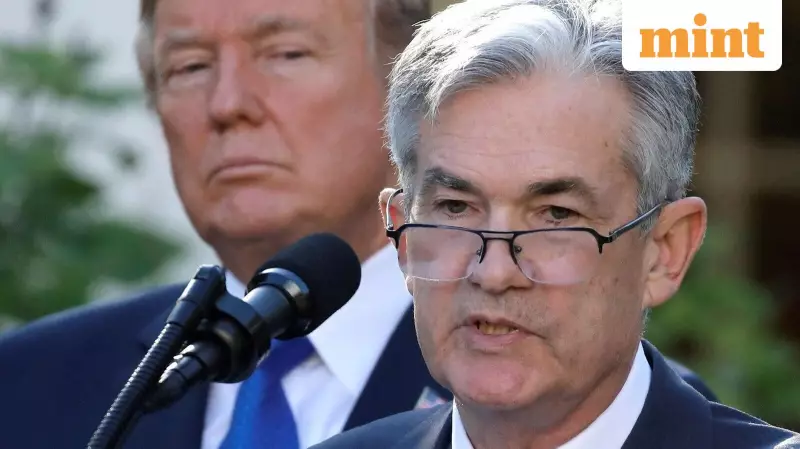
The Federal Reserve is not out of danger yet. A much larger test is approaching fast. President Donald Trump's administration has launched a criminal investigation into Fed Chair Jerome Powell, accusing him of lying to Congress. This move could have serious consequences for America's central bank and financial markets.
A Growing Threat to Fed Independence
During his second term, President Trump has repeatedly criticized Jerome Powell and the Federal Reserve. These attacks have so far caused minimal market disruption. However, the situation may change dramatically as investors process the news of the Justice Department's investigation into Powell.
For most of the past year, investors and analysts have paid surprisingly little attention to the long-term effects of the president's threats against the Fed. This includes his attempt to fire Fed governor Lisa Cook in August over alleged mortgage fraud, which she strongly denies.

Many complacent investors assume the courts will rule against the administration. Others simply hope Trump will show restraint if he wins his case against Cook. The Justice Department issued subpoenas to Powell on Friday as part of their investigation.
The Real Danger for Markets
If the court does not deliver a strong ruling in favor of the Fed, investors will likely regret ignoring this obvious risk. To date, Trump has only managed to appoint one of the seven voting members of the interest rate-setting Fed board - the extremely loyal Stephen Miran. Miran's term ends this month.
Trump won't get another chance to appoint a voting governor until Powell's term as a governor ends in 2028. Therefore, if Trump wants to make additional appointments, current governors would need to resign or be fired for cause. The president appears to be pushing for the latter option.
An Unexpected Twist in the Powell Investigation
Ironically, the new criminal investigation into Powell might actually reduce Trump's ability to gain influence on the voting board. Powell is now more likely to remain as a voting member rather than leave the Fed when his chair term ends in May.
Traditionally, Fed chairs retire immediately rather than serve out their optional tenure as a governor. Neither Paul Volcker, Alan Greenspan, Ben Bernanke, nor Janet Yellen served a single day beyond their term as chair.
The investigation into Powell almost guarantees he will break this tradition. He hinted at this in a public statement on Sunday, saying "I will continue to do the job the Senate confirmed me to do, with integrity and a commitment to serving the American people."
Changing Odds and Market Expectations
The betting platform Polymarket shows more than a 55% chance that Powell will stay on the Fed board after his chair term ends. Since last week, the odds that he will no longer be on the board by year end have fallen from 70% to less than 60%.
The higher December odds compared to May odds reflect an expectation that Powell will retire if the Supreme Court rules in Cook's favor after his term ends in May, or that Trump will fire him. The odds of Powell being fired probably haven't decreased despite the new investigation.
The reduction in odds more likely shows greater conviction that Powell will insist on staying on the board through the end of the year. However, if the court allows for Cook's removal, Trump will find it easier to remove Powell as well.
The Potential for a Packed Fed Board
Congress can hardly be expected to push back against these moves. This means that by June, when Powell must depart as chair, at least three of the seven permanent voting members, including the chair, could become ultradovish Trump loyalists.
Trump may try to expedite the firing of governors after a favorable court ruling to get ahead of potential Senate changes in the November midterms. His team has likely examined applications, taxes, investments, expense claims, and other details of all current governors.
If they find any questionable information, Trump will likely fire those governors. The odds appear to be in Cook's favor, but the crucial question isn't whether she wins her case.

The Court's Message Matters Most
The important issue is how strongly the court will constrain presidential Fed firings in its decision. What if they acknowledge the president can fire for cause, but simply argue that infractions must occur when a governor is in office?
What if Cook wins only because she wasn't given due process in her firing? Both rulings would be bad for markets because Trump would retain the power to fire other governors.
The only constraint to Trump packing the Fed will be the markets themselves. If the court rules in Trump's favor, the best-case scenario is that markets crash, deterring him from replacing other Fed governors.
Investors Face Difficult Scenarios
The worst-case scenario is that markets temporarily tolerate a packing of the Fed with dovish loyalists, only to pay an even worse structural cost when the economic cycle demands rate hikes that the new Trump Fed resists.
Even if you believe Trump will allow his loyal Fed to raise rates when necessary, that will likely only happen after punishing market action. In either case, investors will suffer.
To avoid the risk of higher future capital costs in the United States, the court should clearly affirm Fed independence. Investors are waiting for the Supreme Court's oral arguments in the Cook case on January 21 for indications of what the justices are thinking.
If investors detect any sense that Trump will be granted broad authority to fire governors for cause, this month could mark the beginning of the next bear market, if not an outright market crash.
About the author: Mike Harris is the founder of Cribstone Strategic Macro and the director of Syracuse University's Whitman School of Management London program.





