

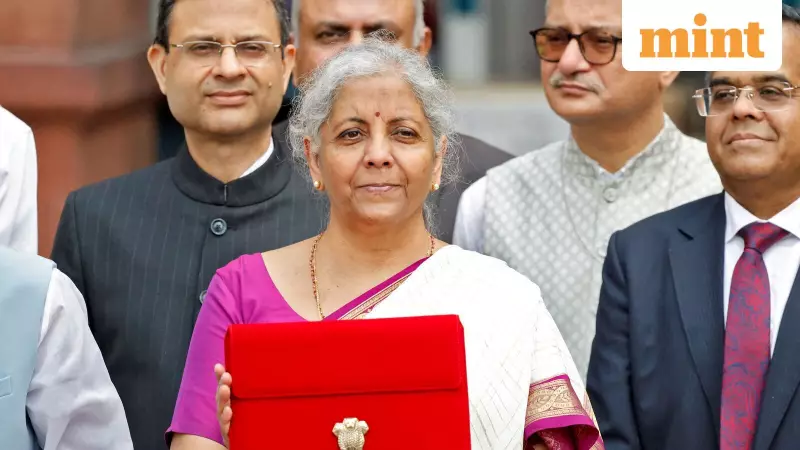
Union Budget 2026: What to Expect as Presentation Nears
India's Union Budget for the financial year 2026-2027 is just around the corner. Finance Minister Nirmala Sitharaman will present this crucial policy document on February 1. This marks her ninth consecutive budget presentation, showcasing continuity in economic planning.
Last year's budget delivered a significant consumption boost through income tax reductions. However, analysts suggest major personal tax announcements appear unlikely this time. The government is expected to maintain its focus on growth while exercising fiscal prudence.
Expert Insights on Budget Priorities
Joseph Thomas, Head of Research at Emkay Wealth Management, provides his perspective. He believes the upcoming budget will emphasize continuity and reform orientation. Key focus areas include infrastructure development, export promotion, affordable housing, and defense production.

"Despite potential constraints from projected lower nominal GDP growth, the budget will likely keep public capital expenditure allocation largely intact," Thomas explains. "For similar reasons, we probably won't see major tax overhauls in this budget."
Market Expectations and Economic Boost
A heightened focus on infrastructure, manufacturing, and job creation could significantly boost the Indian economy. Announcements in these areas might revive market sentiment.
On the consumption front, the government has already implemented several fiscal and monetary measures. However, private sector capital expenditure remains subdued due to cautious business sentiment.
Pankaj Pandey, Head of Research at ICICI Securities, shares his analysis. "A higher-than-expected allocation for capital expenditure, whether by the Centre or through states, could positively surprise markets," he states. "Some incentives targeting capital markets might also improve sentiment. Changes to personal income tax seem unlikely, while GST matters are handled separately."
Fiscal Constraints and Selective Measures
Ajit Mishra, SVP of Research at Religare Broking, points to fiscal limitations. He believes room for meaningful fiscal push appears limited, especially for infrastructure spending, given extensive measures over the past eighteen months.
Upcoming obligations like the 8th Pay Commission will remain on the government's radar, further constraining fiscal flexibility.
"We might see selective measures for export-oriented sectors facing tariff-related pressures," Mishra suggests. "Minor tax adjustments concerning securities transaction tax or double taxation aspects could provide marginal cheer. Overall, this budget probably won't be a major market driver."
Investor Hopes and Sector Focus
Investors harbor specific expectations. Many hope for reductions in Securities Transaction Tax and long-term capital gains tax. Such moves could boost investor confidence, attract foreign institutional investment, and improve market participation.
Naveen Vyas, Senior Vice President at Anand Rathi Global Finance, offers his viewpoint. He believes Budget 2026 might announce meaningful capital expenditure increases for railways. Allocations could potentially rise to around ₹12.5–13 lakh crore, compared to steady ₹11.2 lakh crore maintained over two years.
"Railways and defense should remain key focus areas," Vyas predicts. "Capex allocations in these segments might witness at least 15% year-on-year growth. This reinforces government emphasis on infrastructure development, indigenization, and long-term economic growth."
The stage is set for another significant budget presentation. All eyes will be on how the government balances growth aspirations with fiscal responsibility.






