Ayodhya's Economic Renaissance: IIM Study Reveals Massive Tourism Surge Post Ram Temple Opening
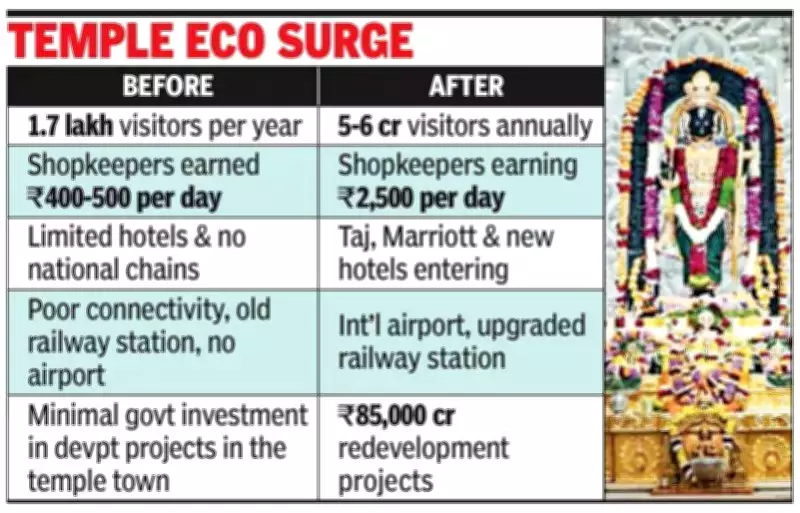
A comprehensive study conducted by the Indian Institute of Management Lucknow (IIM Lucknow) has unveiled an extraordinary economic transformation in Ayodhya following the inauguration of the Ram Temple. The research documents a staggering increase in religious tourism, with visitor numbers skyrocketing from an average of 1.7 lakh annually before the temple's opening to nearly 11 crore in just the first six months after its consecration in 2024.
Unprecedented Economic Growth and Revenue Projections
The study, titled 'The Economic Renaissance of Ayodhya, India: A Case Study on Sri Ram Mandir', reveals profound economic benefits for the holy city. Local shopkeepers have experienced a dramatic rise in daily income, increasing almost fivefold from Rs 400-500 to approximately Rs 2,500 per day. Real estate values have surged significantly, with prices rising by 25-40% across the city and an astonishing five to ten times in areas proximate to the temple complex.
In terms of revenue generation, Ayodhya has already accrued Rs 400 crore in GST collections, with projections indicating annual tourism revenue could reach an impressive Rs 10,000 crore. The study forecasts annual tourist footfall to stabilize at about 5 to 6 crore by 2025-26, with expectations that tourism revenue will cross the Rs 10,000 crore mark this fiscal year.

Infrastructure and Hospitality Sector Expansion
The research highlights substantial growth across Ayodhya's infrastructure and hospitality sectors, driven entirely by increased tourism following the temple's inauguration. The number of hotel rooms has expanded from 3,500–4,000 in 2020 to over 5,000 in 2025, with projections indicating a future requirement of 8,500–12,500 branded rooms by 2031 to accommodate anticipated tourist influx.
Professor Venkataramanaiah Saddikuti from IIM Lucknow's operations and supply chain management department, who co-led the study with UP government economic advisor KV Raju, emphasized the broader implications. "Spiritual heritage, when aligned with leadership and strategic planning, becomes a powerful engine of economic renewal," stated Saddikuti.
Remarkable Growth in Local Businesses and Services
The study provides detailed insights into the expansion of local businesses and services:
- Restaurants have multiplied from 200 in 2021 to 2,000 currently
- Rickshaw numbers have increased dramatically from 500 in 2021 to 17,000 in 2025
- Jewelry shops have grown from just 3 to over 20
- Bank branches have quadrupled from 15 in 2021 to 60 in 2025
- Clothing shops have expanded from 150 to more than 500
- Tailor establishments have doubled from 54 to 102
- Homestays have emerged from zero in 2021 to 1,136 currently
- Sweet shops have increased from 200 in 2021 to 653
Surpassing Traditional Pilgrimage Centers
The economic activity generated post-temple construction has positioned Ayodhya as a premier pilgrimage destination, surpassing established centers like Varanasi. In January 2024 alone, more than 2.5 crore tourists visited the temple, contributing to the total of 11 crore visitors recorded in the first half of 2024.
This extensive study by IIM Lucknow provides compelling evidence of how strategic development of spiritual heritage can catalyze comprehensive economic renewal, transforming local economies and creating sustainable growth opportunities for communities.