Vedanta Files Legal Challenge Against TNPCB Over Sterlite Plant Reopening
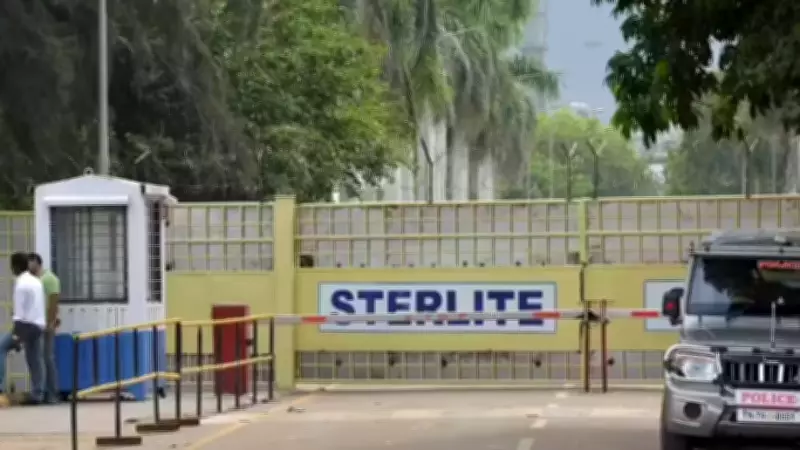
Vedanta Limited has escalated its dispute with environmental authorities by filing a petition in the Madras High Court. The company is contesting an order from the Tamil Nadu Pollution Control Board (TNPCB) that denied its application to restart the now-defunct Sterlite Copper plant located in Tuticorin. Vedanta aims to transform the facility into a unit for manufacturing 'green' copper, which involves producing copper from recycled copper scraps, aligning with sustainable practices.
Court Proceedings and Key Arguments
During the hearing on Wednesday, the first bench of the Madras High Court, comprising Chief Justice Manindra Mohan Shrivastava and Justice G Arul Murugan, admitted Vedanta's plea. The bench made a pointed observation, noting, "your (Sterlite) background seems to be haunting." In response, senior advocate Satish Parasaran, representing Vedanta, countered with a philosophical argument, stating, "my Lords, every saint has a past, and every sinner should have a future." The bench acknowledged this by remarking, "So, you are trying to come out of your past, and they are not allowing you to come."
Parasaran further emphasized the significant investment in the unit, questioning how such a facility could remain permanently closed. However, additional advocate general J Ravindran, representing the TNPCB and the state government, strongly opposed the plea. He argued that the industry is closed and accused Vedanta of attempting to "pour old wine in a new bottle and call it a green copper." Ravindran clarified that the company must first obtain consent to establish the unit before seeking consent to operate, alleging that Vedanta bypassed this crucial step. He also highlighted environmental concerns, stating, "In fact, this area is declared a contaminated area. They wanted to operate from a contaminated area. According to us, the present of the company is also haunting."

Expert Committee Proposal and Government Response
Vedanta had requested the court to form a multi-disciplinary expert committee, monitored by the judiciary, to review its application. This proposed committee would include representatives from the TNPCB, the Union Ministry of Environment, the Central Pollution Control Board (CPCB), and the Union Ministry of Mines. The company argued that the TNPCB lacked the technical understanding to properly evaluate its green copper proposal. In response, Ravindran dismissed this notion, asserting, "let the company not judge our (TNPCB) competency."
After hearing both sides, the bench directed the TNPCB and the Tamil Nadu state government to submit a detailed response by February 26. This move sets the stage for further legal deliberations on the matter.
Vedanta's Strategic Justification for Reopening
According to Vedanta's petition, the reopening of the Sterlite plant is critical for India's broader economic and environmental goals. The company cited the Union government's 'Copper Vision Document, 2025,' which recognizes copper as essential for the country's energy transition, infrastructure development, and national resource security. Vedanta proposed a comprehensive technological overhaul of the Tuticorin unit to implement a renewed 'green copper' model. This initiative aims to leverage copper scraps to produce copper, reducing waste and promoting circular economy principles. The legal battle underscores the tension between industrial growth and environmental regulations, with Vedanta positioning its plan as a forward-looking solution for sustainable manufacturing in India.