Hindustan Zinc Limited (HZL) shares jumped over 4% after the company released strong December quarter results. The financial boost came mainly from soaring silver prices, but underlying production issues threaten future growth.
Silver Drives Profits Higher
In Q3 of fiscal year 2026, HZL reported consolidated revenue of ₹11,000 crore. This marked a 27% increase compared to the same period last year. Earnings before interest, taxes, depreciation, and amortization (EBITDA) grew even faster, rising 35% year-on-year to ₹6,054 crore.
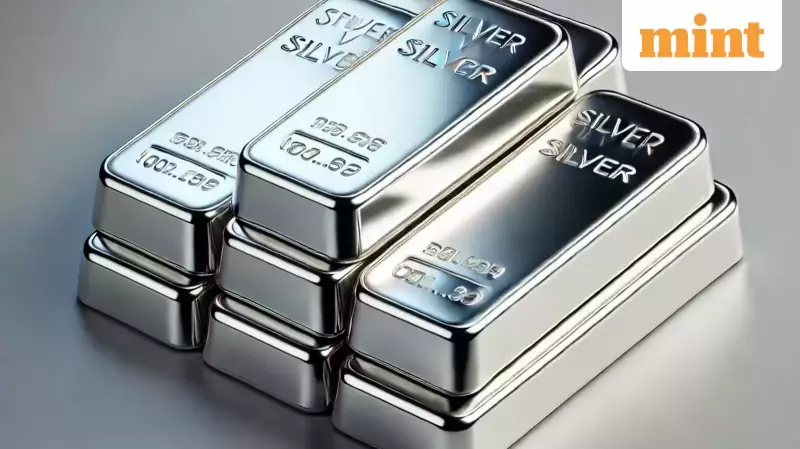
The silver business became a much larger contributor to profits. It accounted for 44% of earnings before interest and taxes (EBIT) in Q3. Just a year ago, silver contributed only 35% of EBIT.

Why Silver Prices Surged
Average silver prices on the London Bullion Market reached $54.7 per ounce during the quarter. This represented a massive 74% increase from the previous year. Several factors drove this unprecedented rally.
Industrial demand grew significantly, particularly after the United States added silver to its critical minerals list in November. Higher zinc prices also helped, rising 12% sequentially after declining in the first half of the fiscal year.
Cost Improvements Provide Relief
Beyond better metal prices, HZL achieved meaningful cost reductions. The company's cost of production dropped 10% year-on-year to $940 per tonne in Q3. This represents the lowest production cost in five years.
Management now guides to a sustainable cost range of $950-$1,000 per tonne, excluding royalties. This is lower than previous guidance of $1,025-$1,050 per tonne.
Renewable Energy Drives Savings
Renewable energy played a crucial role in cutting costs. The renewable share reached 20% last quarter and is expected to grow to 70% by fiscal year 2028. This transition should generate savings of about $25 per tonne.
Power and fuel expenses dropped from 17% to just 11% of total costs. Lower coal prices also contributed to the improved cost structure.
Capacity Constraints Loom Large
Despite the strong financial performance, HZL faces significant production challenges. The company operates near full capacity utilization, making it difficult to increase output quickly.
Management maintained its volume guidance for fiscal year 2026. This requires fourth-quarter production to grow approximately 15% over third-quarter levels. Analysts consider this a challenging target.
Limited Expansion Options
Recent debottlenecking projects added only about 2% to total capacity. A more meaningful expansion awaits completion of a 0.25 million tonnes per annum project, expected by the second quarter of fiscal year 2029.
JM Financial Institutional Securities remains positive on HZL, citing its position on the lower end of the global cost curve. The firm raised earnings guidance by 10-29% for fiscal years 2026 through 2028 to account for higher metal prices.
Investment Outlook Remains Price-Dependent
Motilal Oswal Financial Services analysts noted that near-term earnings growth will likely remain capped. They identified London Metal Exchange price inflation as the key catalyst for further upside.
HZL stock currently trades at 11.6 times estimated fiscal year 2027 EBITDA, according to Bloomberg consensus. Despite gaining about 50% over the past two months, the stock continues attracting investor attention amid the ongoing silver rally.
For the first nine months of fiscal year 2026, revenue and EBITDA growth slowed to 9% and 14% respectively. This reflects weaker performance in the first half, when lower zinc and lead realizations and declining volumes for lead and silver weighed on results.
Investors clearly remain tethered to metal price movements. The silver rally has masked production problems for now, but capacity constraints mean HZL's fortunes will continue swinging with commodity markets.