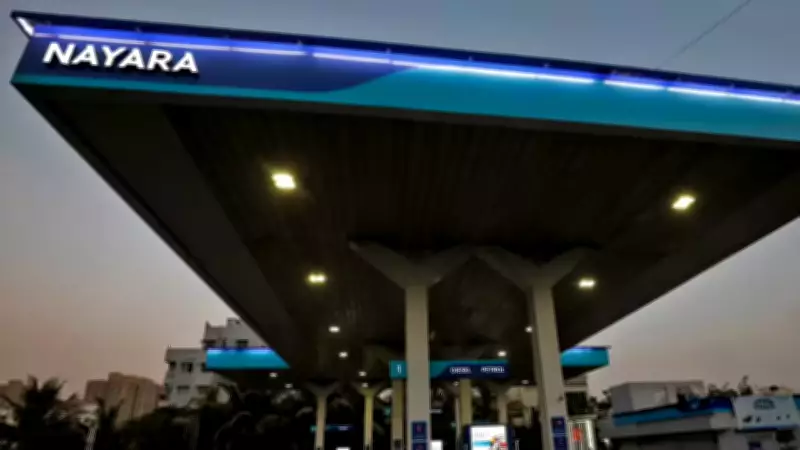
Nayara Energy Announces Significant Fuel Price Hike Amid Global Market Turmoil
Private fuel retailer Nayara Energy implemented a substantial increase in fuel prices on Thursday, raising petrol rates by Rs 5 per litre and diesel by Rs 3 per litre. This adjustment comes directly in response to a sharp surge in global oil prices, which have been significantly impacted by the ongoing conflict in West Asia.
Global Oil Market Volatility Drives Domestic Price Adjustments
The escalation of hostilities in the Middle East, including incidents such as the reported death of Iranian navy commander Alireza Tangsiri in an Israeli strike and concerns over strategic choke points like the Bab al-Mandeb Strait, has created substantial volatility in international crude markets. Nayara Energy, which is majority-owned by Russia's Rosneft, has moved to align its domestic pricing with these global trends to mitigate financial pressures.
Market Position and Competitive Landscape
Nayara Energy operates a vast network of nearly 7,000 fuel stations out of the more than 1 lakh filling stations across India, with a strong presence on national highways and in major urban centres. In contrast, another prominent private retailer, Jio-bp, has not yet raised its fuel prices, highlighting a divergent strategy within the private sector.

Industry officials have clarified that private fuel retailers like Nayara do not receive any government compensation to offset losses from holding back price increases, unlike their state-owned counterparts such as Indian Oil, Bharat Petroleum, and Hindustan Petroleum. This lack of subsidy support forces private players to respond more swiftly to international market fluctuations to maintain operational viability.
Broader Implications of the Middle East Conflict
The conflict in West Asia has had far-reaching consequences beyond fuel prices, including tragic incidents such as the death of one Indian national and injury to another from missile debris in Abu Dhabi. These events underscore the geopolitical risks that are currently influencing global energy markets and, by extension, domestic economies reliant on oil imports.
As the situation evolves, stakeholders are closely monitoring key maritime routes like the Strait of Hormuz and the Bab al-Mandeb Strait, often referred to as the 'Gate of Tears,' which could emerge as critical choke points affecting global oil supply chains. The interplay of these factors suggests that fuel price volatility may persist in the near term, impacting consumers and businesses across India.