

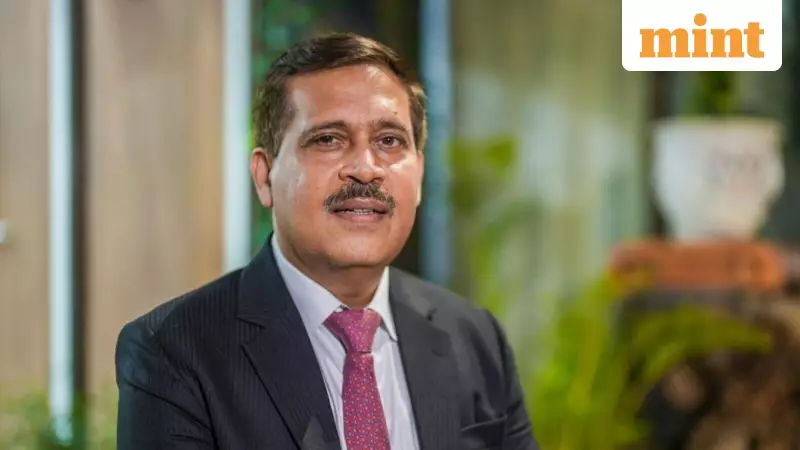
In a major strategic overhaul aimed at financial revival and investor appeal, the Maharashtra State Electricity Distribution Company Ltd (MSEDCL) has announced a significant restructuring plan. The state-owned power distributor, also known as Mahavitaran, will split its operations into two separate entities. This move is designed to manage its colossal debt burden and pave the way for a public listing of its profitable core business in the coming fiscal year.
The Split: Isolating Agricultural Power Supply
The company's chairman and managing director, Lokesh Chandra, revealed the blueprint. One new entity will take over the entire electricity supply to the agricultural sector. Crucially, this unit will also inherit the massive ₹75,000 crore in outstanding dues from farmers. This agricultural-focused company will remain a private, state-owned entity and will not be listed on the stock exchanges.
The second unit will retain the lucrative business of supplying power to residential, commercial, and industrial consumers. This profitable arm, freed from the financial drag of agricultural dues and subsidies, is the one that MSEDCL plans to list publicly. Chandra, a 1993-batch Indian Administrative Service officer, stated that this restructuring is key to transforming MSEDCL from a loss-making firm into a dividend-paying one.

Driving Factors: Debt, Efficiency, and Investor Appeal
The primary impetus behind this bold move is MSEDCL's staggering debt burden of ₹98,000 crore. The company is eyeing a capital infusion from the Maharashtra state government to manage a portion of this debt. The remaining debt will be strategically split between the two new entities to ensure both remain financially viable, though the exact allocation has not been disclosed.
Chandra highlighted that once the agricultural power distribution is carved out, MSEDCL's tariff collection efficiency is expected to soar to above 99%. Transferring the ₹75,000 crore of uncollected agricultural tariffs will clean up the listed entity's books dramatically. Furthermore, commercial and industrial consumers will no longer have to cross-subsidize power sales to the farm sector, reducing fiscal strain.
To pitch itself to investors, the company is banking on Maharashtra's economic growth, with the state aiming to become a $1 trillion economy by the end of the decade. "We are the largest distribution company in India. We have a revenue of ₹1,30,000 crore, which is going to almost double in the next five years," Chandra said. The company also plans to compete for supplying power to high-demand consumers like data centers.
A Solar-Powered Solution for Farm Sector
In an innovative parallel strategy to minimize subsidy costs for agricultural power, MSEDCL is aggressively turning to solar energy. The discom has tendered 16 GW of small-scale solar power assets to be distributed across existing substations.
About 3.5 GW of this planned capacity is already operational, with the remainder set to be commissioned within the next 18 months. Since these are smaller solar plants located near existing infrastructure, they provide power at a cost significantly lower than MSEDCL's current procurement rate.
This solar power will be supplied to agricultural consumers during the daytime, which aligns well with farming irrigation needs. Any excess power generated will be stored in energy storage systems or traded on power exchanges during peak evening hours. This model is expected to drastically cut the state's subsidy burden while eliminating cross-subsidy requirements from other consumers. MSEDCL will be the first distribution company in India to experiment with this decentralized solar model for agriculture.
The restructuring, coupled with a planned increase in renewable energy procurement from 13% now to 52% by 2030, is expected to further reduce power purchase costs. This comprehensive plan positions the soon-to-be-listed entity of MSEDCL as a potentially attractive investment, marking a historic shift for India's power distribution sector.






