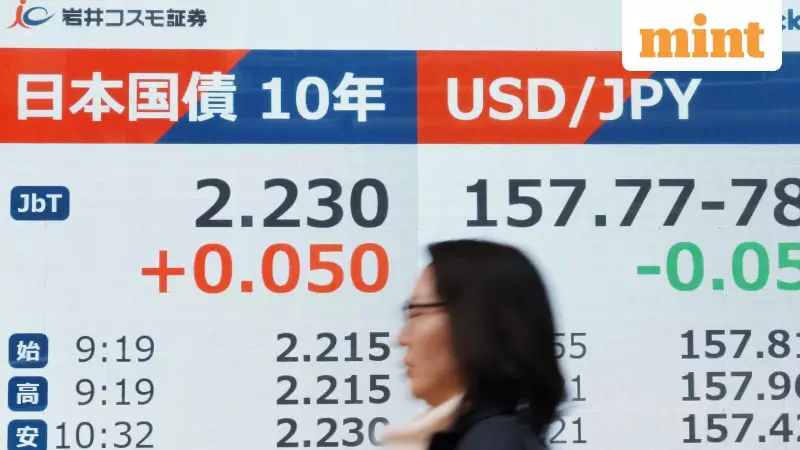
Japan's Bond Yields Hit Multi-Year Highs as Election Fuels Fiscal Fears
Japan's long-term government bond yields surged dramatically on Tuesday, reaching levels not seen in decades. This sharp increase reflects growing market anxiety about the country's fiscal health ahead of a crucial election.
Election Sparks Tax Cut Concerns
Markets are fretting over the potential outcome of the Upper House election scheduled for July 20. The ruling coalition could lose its majority, creating political uncertainty. A key campaign issue centers on possible cuts to Japan's consumption tax.
Both ruling and opposition parties are proposing measures to ease the burden of rising living costs for voters. Prime Minister Sanae Takaichi has already announced her party is considering a plan to suspend sales tax on food and beverages for two years.

On Monday, Takaichi confirmed plans to dissolve the lower house of parliament. Official campaigning will begin on January 27, with voting set for February 8.
Fiscal Sustainability at Risk
Such a tax reduction could significantly impact government revenue, raising serious questions about Japan's ability to manage its substantial debt. Analysts warn that even temporary tax cuts might become permanent, creating long-term fiscal challenges.
Michael Wan, senior currency analyst at MUFG Bank, noted in a research note that a consumption tax cut could cost approximately $31 billion annually in lost revenue. "How they are funded will be important for markets," he emphasized.
Tomohisa Fujiki, rates strategist at Citi Research, expressed concern in a report. "Even if the consumption tax cut is said to be temporary, the risk of it becoming permanent is high and the burden on public finance is significant," he wrote.
The situation could worsen if tax cuts coincide with expanded defense spending, another policy goal of the Takaichi administration. Fujiki sees this combination potentially pushing Japanese government bond yields to levels that intensify debt sustainability concerns.
Market Reaction and Yield Movements
Japan's bond markets have shown signs of worry about more aggressive fiscal stimulus since Takaichi took office in October. A victory by the ruling Liberal Democratic Party in the upcoming election could amplify these concerns.
On Tuesday, specific yield movements included:
- The 10-year JGB yield rose 4 basis points to 2.310%, after briefly touching 2.330% - the highest level since February 1999
- The 20-year yield climbed 9.5 basis points to 3.350%
- The 30-year yield jumped 10 basis points to 3.710%
- The 40-year yield increased 6 basis points to 4.005%, reaching a peak not seen since at least 2015
According to Masahiko Loo, senior fixed income strategist at State Street Investment Management, the rise in ultra-long JGB yields partly reflects fresh repricing of term and risk premium. Markets are adjusting to a more expansionary fiscal stance and persistent inflation.
Broader Economic Implications
A consumption tax cut could also affect the Bank of Japan's policy decisions. The central bank raised its policy rate to the highest level in three decades last December to combat accelerating inflation. Most observers expect the Bank to maintain current rates when it announces its decision on Friday.
Ma Tieying of DBS Group Research commented that reducing the food tax to zero could lower consumer inflation while boosting GDP growth. This might create what she called a "goldilocks" growth-inflation dynamic. However, she cautioned this would likely come with a wider fiscal deficit.
Despite current market jitters, some analysts see potential for stabilization. MUFG Bank's Wan noted that Takaichi appears to be considering financial market responses. "Fiscal concerns may abate over time assuming election uncertainty fades," he suggested.
The coming weeks will be crucial as Japan navigates political campaigning, fiscal policy decisions, and their impact on both domestic and international markets.