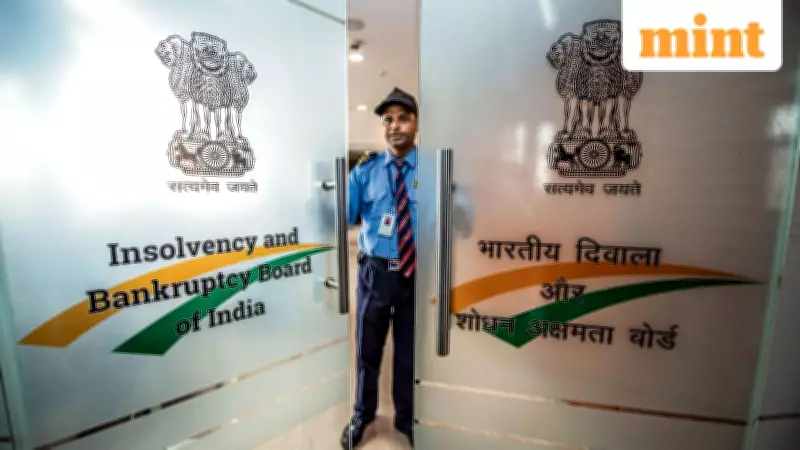
IBC 'Clean Slate' Amendment: Legal Clarity vs. Government Implementation Challenge
India's finance minister has confirmed that Parliament's Budget Session will amend the Insolvency and Bankruptcy Code (IBC) to explicitly grant insolvent companies a "clean slate." This legal revision would wipe out civil and criminal liabilities once new management assumes control through an approved resolution plan. However, the critical question remains whether legislative reform alone can overcome persistent challenges from tax authorities and investigative agencies.
Diverging Policy Priorities in Legal Frameworks
Insolvency law operates with fundamentally different objectives compared to tax and criminal legislation. The primary goals of insolvency proceedings include:
- Resolving financially distressed companies efficiently
- Maximizing value recovery for creditors, particularly public sector banks
- Repurposing productive assets to stimulate economic activity
- Freeing up bank capital for new lending opportunities
Conversely, the state maintains separate obligations to investigate economic crimes and collect tax revenue for public expenditure. While these legal domains often function as isolated silos, they remain intricately interconnected in practice.

The Investor Confidence Dilemma
When potential investors cannot be assured that acquired assets will be protected from historical claims, they inevitably discount valuations. This cautious approach directly impacts recoveries for lenders, traps bank capital in non-performing assets, and restricts credit availability for productive economic uses. The resulting fiscal consequences, including the need for public sector bank recapitalization, necessitate careful policy trade-offs during insolvency and tax law formulation.
Courts and legislators may treat insolvency, tax, and criminal laws as separate domains, but effective reform demands a cohesive, whole-of-government approach.
Current Legal Landscape and Persistent Challenges
Under existing provisions, an IBC resolution plan legally binds all third parties, including central and state governments, requiring them to relinquish claims not specifically protected by the approved plan. The liquidation waterfall structure prioritizes financial creditors above statutory dues. Despite these provisions, tax authorities frequently continue litigation even after resolution plan approval, often citing the Supreme Court's 2022 Rainbow Papers judgement regarding statutory "first charge" protections.
In criminal law contexts, Section 32A of the IBC—introduced in 2019—extinguishes corporate criminal liability while maintaining individual liability for promoters and directors. Although courts have upheld this provision, investigative agencies sometimes continue asset seizures despite ongoing insolvency proceedings, as demonstrated in the Kalyani Transco vs Bhushan Power and Steel Ltd case.
Proposed Amendments and Government Response
The IBC Amendment Bill addresses these challenges through several key provisions:
- Redefining "security interest" to specifically exclude statutory liens—the mechanism tax authorities use to claim priority over financial creditors
- Expanding Section 31 coverage to include civil liabilities, including pre-insolvency tax penalties and dues, effectively extinguishing these obligations unless expressly retained in the resolution plan
- Protecting government licenses and permits to prevent termination even when historical debts remain unpaid
The Ministry of Corporate Affairs has responded cautiously to these proposals, favoring case-by-case assessments rather than blanket liability extinguishment provisions. This approach contradicts the reality of government litigation patterns, where authorities frequently pursue appeals despite low success rates—losing 73% of tax cases in the Supreme Court and 87% in high courts according to the Economic Survey 2020-21.

International Comparisons and Policy Implications
India's approach represents a significant departure from jurisdictions like the United States, United Kingdom, and Canada, where bankruptcy and criminal forfeiture typically operate in parallel. In these countries, proceeds of crime are generally excluded from bankruptcy estates or remain subject to confiscation even after ownership changes. In contrast, Indian investigative agencies sometimes assert control over such substantial asset portions that minimal value remains for resolution applicants or lenders.
Ultimately, these reforms involve balancing competing policy objectives: recovering tax revenues, prosecuting economic offenses, and maximizing value in insolvency proceedings. While legislative clarity through the amendment bill represents a crucial step forward, meaningful change will also require executive directives, standard operating procedures, and inter-agency coordination to ensure the "clean slate" principle achieves its intended economic benefits.