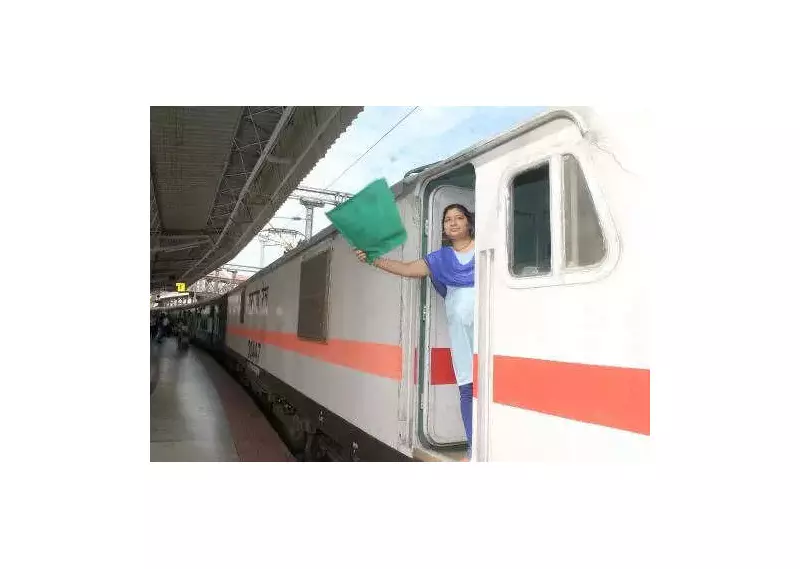
In a significant escalation of their protest, loco pilots from the Hubballi division of Indian Railways commenced a 48-hour hunger strike on Tuesday. The action, initiated at the Divisional Railway Manager's (DRM) office, is a direct response to a nationwide call by the All India Loco Running Staff Association (AILRSA), the primary trade union representing the country's loco pilots.
Decades of Neglect and Mounting Frustration
T Sabu, the divisional secretary of AILRSA in Hubballi, expressed deep anguish over the administration's continued apathy. He stated that the loco running staff, whom he described as the backbone of Indian Railways, have repeatedly approached the Railway Board and other authorities seeking solutions to their long-standing issues. "However, no fruitful result has emerged so far," Sabu lamented. He highlighted the growing demoralization among a category of workers directly responsible for the safety of millions of passengers daily, who now feel completely unheard.
Arduous Duty Hours and Harsh Working Conditions
Union functionaries detailed the extreme pressures faced by the running staff. They pointed out that their duty has been officially declared more arduous and fatigue-inducing than any other railway category, a recognition dating back to the Rajadhyaksha Committee of 1968. Despite this, they are systematically deprived of reasonable work limits.

The staff are legally subjected to 12-hour duty shifts and, in practice, are often forced to work unlimited hours under the threat of disciplinary action. The officials contrasted their schedule with other railway employees, stating, "We are booked for four continuous nights while all others have two nights spread over a week. We are detained at outstations for more than three days while all others return home every day and are with their family for 16 hours after every day duty."
Increased Workload and Critical Vacancies
The protestors outlined a perfect storm of factors drastically increasing their workload. Technological and infrastructural advancements, while modernizing the network, have introduced new challenges. These include:
- Operating longer trains exceeding 3.5 kilometers.
- Handling faster trains with speeds up to 160 kmph.
- Managing frequent train movements on close parallel lines.
- Navigating an increased number of signals.
- Dealing with hundreds of human and cattle trespass incidents.
Furthermore, duties previously handled by train examiners, engineering, and traffic staff have been shifted onto the loco pilots, alongside the burden of managing in-service equipment failures.
The situation has been severely exacerbated by a five-year-long recruitment ban, leading to a high number of vacancies. The union alleges that every existing loco pilot is forced to work 20% extra to cover these gaps, routinely sacrificing their entitled leave and rest periods. This combination of excessive hours, heightened responsibility, and staff shortages has created what they term a "deplorable" working atmosphere, pushing them to take the drastic step of a hunger strike to demand immediate redressal.