HR Faces Viral Backlash Over Value and Purpose
A provocative social media post from workforce strategist Amanda Goodall has set corporate America ablaze with fresh debate about Human Resources departments. Known online as @thejobchick, Goodall delivered a blunt assessment that resonated across professional networks.
The Tweet That Started It All
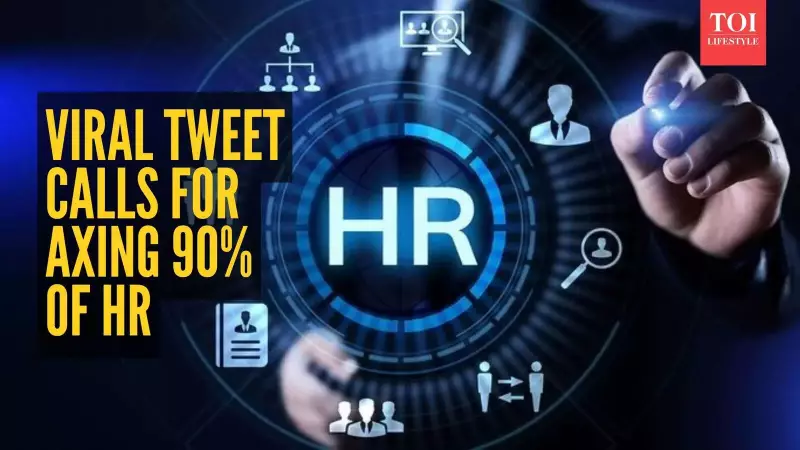
Goodall took to her X account and wrote something that would quickly go viral. "HR is the only department that gets a free pass for being completely useless," she declared. "They produce zero revenue, kill morale with endless policies, protect the company NOT you, and somehow still get invited to every meeting like they're essential."
Her conclusion proved particularly incendiary. "Remove 90% of HR tomorrow and the business would run smoother, faster, and happier," she challenged readers. "Change my mind."

Perfect Timing for a Raw Nerve
The timing of Goodall's tweet proved crucial. It arrived after a year marked by widespread layoffs, AI-driven efficiency pushes, and growing distrust between leadership and workers. Her words crystallized feelings many employees already harbored but rarely expressed so directly.
Within hours, the post spread rapidly across X, LinkedIn, and executive Slack channels. It tapped into raw emotions about workplace dynamics that have simmered for years.
Why Anti-HR Sentiment Is Surging Now
The anger directed at Human Resources departments didn't emerge from nowhere. Over recent years, HR teams have frequently become the public face of unpopular corporate decisions.
- Redundancies delivered through impersonal Zoom calls
- Return-to-office mandates framed as "culture" initiatives
- Compliance-heavy policies introduced in the name of risk management
For many workers, HR has become synonymous with corporate self-protection rather than employee support. Goodall's claim that HR "protects the company, not you" struck a nerve because it reflects structural reality. HR departments report to leadership, not employees. Their mandate focuses on legal risk mitigation and policy enforcement rather than advocacy.
The Core Accusation: Revenue Versus Relevance
At the heart of the backlash lies a fundamental question about value. In today's business environment obsessed with measurable outputs, HR's contributions prove harder to quantify than sales figures or product launches.
Critics argue that HR expands headcount, introduces bureaucracy, and slows decision-making while avoiding direct accountability for business performance. This perspective gave traction to Goodall's "remove 90%" argument.
Many business leaders privately acknowledge that bloated HR structures developed during years of cheap capital and rapid hiring. Companies invested heavily in policy frameworks, engagement surveys, and wellness initiatives. As margins tighten today, these layers feel increasingly expendable.
HR Defenders Push Back
HR professionals responded quickly to defend their work. They argue that effective HR becomes invisible precisely when functioning well. Without HR departments, organizations risk:
- Costly compliance failures and discrimination lawsuits
- Toxic management environments going unchecked
- Chaotic, inconsistent hiring processes
These problems can cost companies far more than HR budgets ever do, defenders contend. They also point to a quieter truth: HR often executes decisions it didn't make. Layoffs, pay freezes, and restructures typically originate at executive or board levels, yet HR becomes the messenger and therefore the villain.
A Proxy War Over Workplace Power Dynamics
This heated debate extends beyond HR alone. It represents a proxy war about who holds power in modern workplaces. Employees feel increasingly disempowered and disposable. Executives face pressure to deliver efficiency at all costs. HR sits uncomfortably between these forces, translating corporate priorities into human consequences.
Goodall's tweet resonated because it voiced broader frustration with corporate language that prioritizes "alignment" and "policy" over empathy and agency. For critics, HR has become the embodiment of that disconnect.

Reckoning or Reinvention for HR?
The viral backlash may signal not the death of HR but its next evolution. Companies already experiment with new approaches:
- Leaner people teams with clearer accountability
- HR partners embedded directly into business units
- Separation of compliance functions from employee advocacy roles
The future of HR, if it survives this scrutiny, may involve smaller, more specialized teams with greater accountability. Goodall's challenge, "change my mind," captures the current moment perfectly. HR no longer enjoys automatic trust, respect, or immunity from scrutiny.
In today's post-layoff, AI-accelerated corporate world, every function must justify its existence. Whether HR can successfully do this may determine not just its own future but how humane or transactional work becomes in coming years.