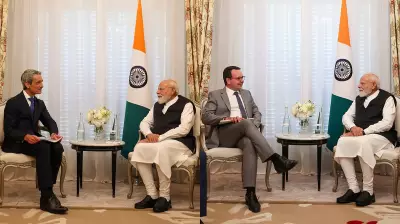
For over a decade, Fang Fenglei was the ultimate bridge between Wall Street and China's corridors of power, a legendary dealmaker who co-founded giants like China International Capital Corp. (CICC) and built Hopu Investment Management into a private equity powerhouse. Today, that legacy faces its sternest test. As Hopu prepares to raise a new $1.5 billion to $2 billion fund in 2026 under the leadership of Fang's son-in-law and handpicked successor, Gunther Hamm, even its most loyal backers are having second thoughts.
A Changing of the Guard in a Tough Climate
Longtime investors like Singapore's Temasek Holdings and GIC, as well as China's sovereign wealth fund, China Investment Corp., are re-evaluating their commitments to Hopu, according to sources familiar with the matter. This caution stems from a period of mediocre returns, subdued dealmaking, and significant leadership turnover at the firm. Hopu's story now epitomizes the broader challenges facing Asia's founder-led private equity shops, where the era of easy money and blockbuster China profits has ended, and aging rainmakers are passing the baton with uncertain outcomes.
"When you have a change of leadership, investors get nervous," said Hong Kong billionaire Richard Li, an investor in a smaller Hopu growth fund. While expressing confidence in Fang's ability to overcome challenges, Li noted the importance of Hopu attracting fresh capital from other blue-chip investors and said he hasn't decided on investing in the next fund.

The firm's last flagship US dollar fund, Fund III, closed in 2018 after raising $2.63 billion. Its lukewarm performance, along with that of its predecessor, and the departure of several senior leaders have made many investors wary. Adding to the concerns, Hopu has not made any significant new investments since mid-2022, a period coinciding with global asset allocators pulling back from China due to economic and geopolitical worries.
Internal Tensions and a New Strategy
The transition of power to 45-year-old American executive Gunther Hamm has not been entirely smooth. Hamm, who joined Hopu in 2017 and rose rapidly to become sole president by 2025, represents a shift from Fang's relationship-driven, network-based style to a more direct, Western approach to management. This change has caused friction with some Hopu veterans, who question his ability to secure lucrative deals with his comparatively limited local ties.
In response, Hamm told Bloomberg News that the firm has been "laser focused" on portfolio performance and monetization. "Returning capital productively to our investors is the best demonstration," he stated. Fang, 73, remains defiantly engaged, calling himself Hopu's "super key man" and defending the recent lack of investments as a prudent move during market volatility that saved the firm from losses in sectors like tutoring and internet platforms.
The firm's internal dynamics have been turbulent. Key figures like former CIO Lau Teck Sien and former partner Cliff Chau left in 2023 after disagreements with Fang over strategy and control. Co-chairman Lee Zhang, recruited in 2018, was prosecuted in China in 2024. Consequently, Hopu's investment team shrank by nearly half from its 2021 peak as the firm pivoted away from venture capital to focus on buyouts.
The Road to Fund IV and a Singapore Base
Hopu is now in rebuilding mode. The investment team has grown back to 36 people after 11 hires in 2025, though many are junior positions. A major priority has been returning cash to existing investors to rebuild trust. The firm reported that by end-2025, Fund III's investors would have received back 66% of their capital, aided by a $1 billion distribution during the year and profitable exits from stakes like insurer FWD Group and Ceva Animal Health.
Looking ahead, Hopu is pitching its next vehicle, Fund IV, not as a China-focused fund but as a broader Asia fund that includes China. In a significant strategic shift, the firm is planning to move its headquarters to Singapore and is awaiting a license from the city-state's financial regulator. At a recent annual meeting in Hong Kong, Fang and Hamm outlined a strategy focused on overseas acquisitions, buying assets from multinationals in China, and taking controlling stakes.

The success of the 2026 fundraise will be the ultimate verdict on this high-stakes transition. It will test whether the formidable legacy of Fang Fenglei and the new operational discipline of Gunther Hamm can convince a skeptical investor community that Hopu's best days are not behind it.