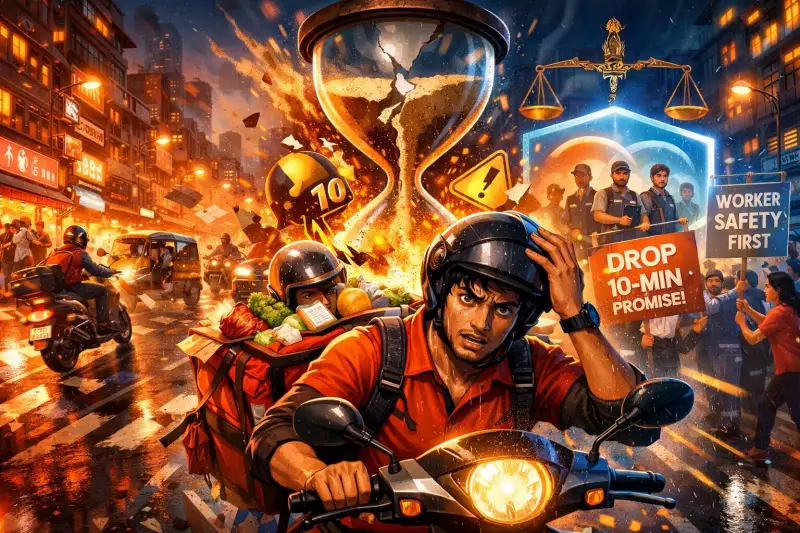
Government Steps In to Protect Delivery Workers
The Indian government has taken decisive action to address growing safety concerns in the country's booming quick commerce sector. Following widespread protests by delivery agents, the Union Ministry of Labour and Employment has instructed major platforms to eliminate their public promises of 10-minute deliveries.
Strikes Spark Regulatory Response
In December 2025, delivery workers across multiple cities staged strikes during the peak holiday season. They protested against excessive workloads and increasingly demanding delivery timelines. This unrest brought long-simmering labour issues to the forefront, forcing regulators to confront serious safety problems within the industry.
The ministry officially flagged that rigid ultra-fast delivery guarantees place dangerous pressure on gig workers. Officials stated these promises often force delivery partners to take unnecessary risks on roads and work under unsafe conditions to meet impossible deadlines.

Labour groups and safety advocates had been criticizing these aggressive timelines for some time. They argued that the 10-minute delivery culture normalized unsafe driving practices and set unrealistic productivity expectations for workers. The government's intervention directly responds to this sustained criticism from various stakeholders.
Ministry officials clarified that their move does not aim to ban quick commerce entirely. Instead, they want to discourage delivery guarantees that could compromise worker welfare. The focus remains on protecting those who power these services while allowing the industry to continue operating.
What Actually Changes for Consumers
Industry experts explain that most quick-commerce orders come from nearby dark stores. This operational model makes fast turnaround times feasible even without public 10-minute guarantees. What changes fundamentally is the messaging platforms use to attract customers.
Platforms are now being asked to step back from selling speed as an explicit promise. The government wants them to adopt more flexible approaches that don't incentivize risk-taking behavior by delivery workers. Speed can remain a feature, but not a guaranteed commitment.
Platforms Begin Compliance ProcessFollowing government consultations, major quick commerce players have started adjusting their marketing. Blinkit, Zepto and Swiggy have either removed or begun removing '10-minute delivery' claims from their apps and promotional materials.
Blinkit has already eliminated the phrase across all its platforms. Other companies have indicated they are complying with the government's directive. The ministry has emphasized that while fast delivery models may continue, publicly committing to rigid timelines should not.
Root Causes of the Pushback
Several factors contributed to this regulatory intervention:
- Public criticism of working conditions in the gig economy
- Escalating safety concerns about delivery riders on roads
- Mounting pressure from gig workers organizing for better conditions
- The pervasive '10-minute' delivery culture creating unrealistic expectations
- Year-end surge in orders increasing pressure on delivery networks
- Aggressive scaling by platforms prioritizing growth over worker welfare
The government's action represents a significant shift in how India regulates its rapidly expanding quick commerce sector. It balances consumer convenience with essential protections for the workers who make these services possible.