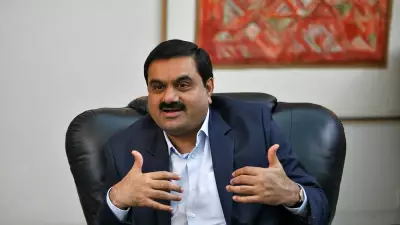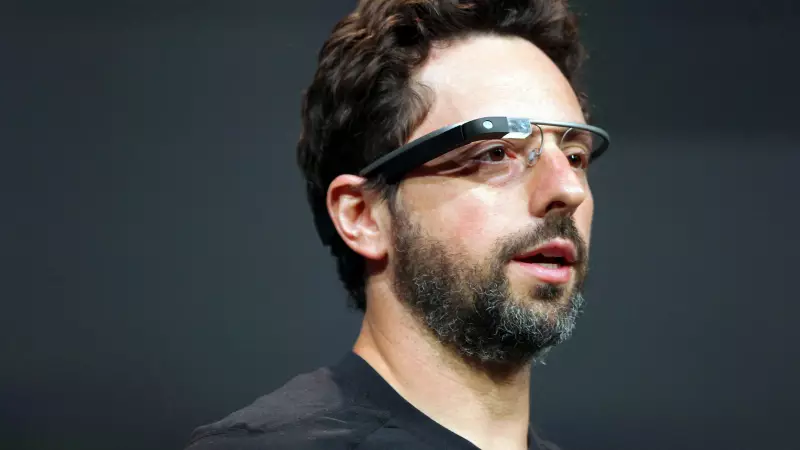
The iconic founders of Google, Sergey Brin and Larry Page, are significantly reducing their business footprint in California, the state where they built their internet empire. This move comes as a direct response to a potential ballot measure that could impose a one-time tax on the state's wealthiest residents, those with a net worth exceeding $1 billion.
The Unwinding of a California Legacy
For over 25 years, the story of Google has been inseparable from Silicon Valley lore. The company was famously founded by two Stanford University graduates in a Menlo Park garage in 1998. Today, however, the founders are actively distancing their financial interests from the Golden State.
In the ten days before Christmas, 15 California limited liability companies (LLCs) connected to Sergey Brin's investments were either terminated or moved out of the state, according to documents reviewed by The New York Times. Notably, seven of these entities, which appear to manage assets like Brin's superyacht and his stake in a private air terminal at San Jose's airport, were converted into Nevada-based companies.

Larry Page is undertaking a similar retreat. State records show that more than 45 California LLCs linked to Page filed paperwork last month to become inactive or relocate. Adding to this shift, a trust associated with Page recently purchased a lavish $71.9 million mansion in Miami's Coconut Grove neighborhood. Furthermore, an entity jointly managed by both founders officially moved from California to Nevada on Christmas Eve.
The Catalyst: California's Proposed Billionaire Tax
The driving force behind this corporate reshuffling is a ballot initiative proposed by the Service Employees International Union-United Healthcare Workers West. The measure seeks to impose a one-time tax equivalent to 5% of the assets on Californians worth more than $1 billion. If it garners enough signatures for the November ballot and is approved by voters, it would apply retroactively to anyone living in the state as of January 1, 2026, giving them five years to pay.
This potential wealth tax has already prompted other tech billionaires to diversify their geographic ties. Venture capitalist Peter Thiel recently opened a Miami office for his family investment firm, while tech investor David Sacks established a new base for his venture firm, Craft Ventures, in Austin, Texas.
The actions of Brin and Page, however, carry exceptional weight due to their immense wealth—a combined net worth of over $518 billion—and their deep identification with California's tech landscape. Although they stepped down from day-to-day roles at Alphabet in 2019, both remain on the board, and Brin has recently re-engaged with the company's artificial intelligence projects.
Silicon Valley's Divided Reaction
The proposed tax has sparked intense debate within California's business and political circles. Governor Gavin Newsom has criticized it as bad policy, warning it will incentivize billionaires to relocate to states with friendlier tax regimes.
Reid Hoffman, the billionaire co-founder of LinkedIn, called the measure a "horrendous idea" on social media, arguing it could force founders to sell company shares just to meet the tax obligation, leading to capital flight. In contrast, Nvidia CEO Jensen Huang, one of California's wealthiest residents, publicly stated his acceptance. "We chose to live in Silicon Valley and whatever taxes they would like to apply, so be it," he said in an interview.
The union behind the proposal has downplayed fears of a billionaire exodus. Suzanne Jimenez, chief of staff at SEIU-UHW, stated that "the overwhelming majority of billionaires have chosen to stay in California past the Jan. 1 deadline," calling talk of a mass departure an overreaction.
While Brin and Page still maintain personal homes in California, their recent corporate maneuvers signal a profound shift. Their decision to legally disentangle significant portions of their fortunes from the state marks a pivotal moment, highlighting the growing tension between California's fiscal policies and the ultra-wealthy individuals who helped define its modern economy.